By releasing the EJ 2020 Action Agenda earlier this week, the U.S. EPA has taken on a more ambitious role in pursuing environmental justice.



Ben Adler and Aura Bogada report on a new effort from the U.S. Environmental Protection Agency to recommit to the cause of environmental justice. The article breaks the news about a new four-year plan from E.S. EPA "to tackle lead poisoning, air pollution, and other problems."
"The effect would be to take environmental justice considerations into account at every step in the EPA’s rulemaking and enforcement process, from going after violators to issuing permits for polluting industries," according to Adler and Bogado.
The U.S. EPA released the EJ 2020 Action Agenda, as the plan is called, earlier this wee, and Adler and Bogada spoke with EPA Administrator Gina McCarthy in an exclusive interview prior to the release, touting the plan's ambitious scope.
The article notes that this isn't the U.S. EPA's first attempt at establishing a plan to tackle environmental justice, but the new plan seems to be "more ambitious and far-reaching" than Plan EJ 2014.
Read the full story: Exclusive: EPA’s top official commits to doing right by communities of color
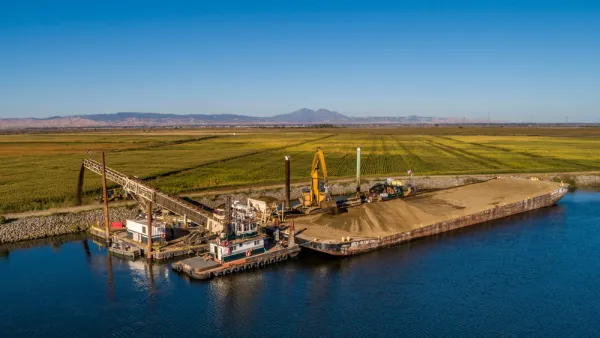
Complaint Blames Bay Delta Ecological Crisis on Racism
Advocates hope to enlist the federal government in forcing state regulators to set clean water standards for the San Francisco Bay Delta.
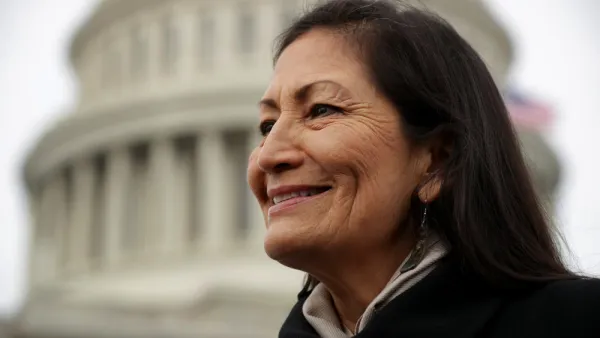
Biden Diversifies Cabinet With EPA Administrator, Interior Secretary Picks
President-elect Biden made two historic cabinet selections: Michael Regan, who heads the North Carolina Department of Environmental Quality, to run the U.S. EPA, and Rep. Deb Haaland of New Mexico, to head the Interior Department.
Environmental Agencies Failing at Civil Rights, Report Says
A report from the U.S. Environmental Protection Agency's Office of Inspector General calls out state environmental agencies for a lack of civil rights enforecement and makes recommendations for resolving shortcomings.

Planetizen Federal Action Tracker
A weekly monitor of how Trump’s orders and actions are impacting planners and planning in America.

Eastern Nebraska is running out of electricity
Data centers and electrification are straining eastern Nebraska’s grid, throttling economic development.

Move over, LA: St. Louis gears up for Olympics, invests millions in downtown redevelopment
The Missouri city will host the 2028 Olympic soccer group stage and knockout matches.

Dallas releases zoning code overhaul to officials
The drafted overhaul is over 400 pages long.

NYC renovations for dangerous, ‘mercilessly crammed’ street delayed until 2027
Construction was supposed to begin this fall.

San Diego’s Midway Rising project gets greenlight from city council
The project looks to become the largest affordable housing development in California's history.

FREE Course: Walkable City 1: Why Walkability?
After describing his path towards focusing on walkability as the essence of good planning, Jeff Speck marches through his five principal reasons for making more walkable places.
Reinventing Malls: Planning Alchemy—Turning Gray Fields Into Gold
The course focuses on the opportunities and imperatives that shape reinvention of mall sites.

City of Rosemead
Rutgers University, Edward J. Bloustein School of Planning and Public Policy
One Hundred Miles
University of Michigan School for Environment and Sustainability (SEAS)
Hunter College, City University of New York (CUNY)
The Architects Foundation
City of Cambridge
The Pocatello Development Authority
The Urban Renewal Agency of the City of Pocatello