A new study has found that just a handful of people are responsible for the majority of noise complaints directed toward airports.


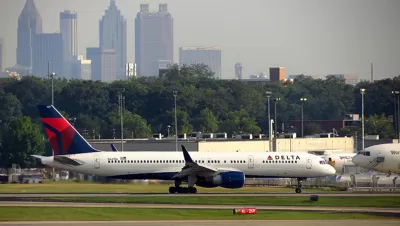
Are expensive noise mitigations at airports being constructed just to keep a small number of complainers happy? That's what a new study from the Mercatus Center at George Mason University claims. Tim Fernholz of Quartz reports that the report authors found, among other things, that three callers made up 88 percent of complaints against Los Angeles International Airport in June and one caller made up 73 percent of complaints against Denver International Airport in all of 2015.
These aggrieved citizens may feel justified in reporting their displeasure, but their complaints can produce policies that leave everyone else holding the bag.
According to [researcher Eli Dourado], when the Federal Aviation Administration (FAA) makes rules to limit noise—based in part on complaints like these—it can prevent improvements in airport infrastructure, increase the cost of flights, and increase the carbon footprint of air travel.
FULL STORY: A handful of cranky people risk making air travel costlier and more polluting for everyone


Meet the Hollywood YouTuber who exposed the LAX people mover "fiasco"
Nick Andert uncovered the "brazen and unethical behavior" that has mired the Los Angeles International Airport people mover in years of delays and cost overruns.

LA City Council Approves Extra Funding for LAX People Mover
The automated electric rail system is expected to carry up to 30 million passengers per year to points in and around the Los Angeles International Airport.

Helicopter Noise Complaints Surge in New York
Residents argue the city and state must do more to regulate the hundreds of flights that criss-cross the area on a daily basis.

Planetizen Federal Action Tracker
A weekly monitor of how Trump’s orders and actions are impacting planners and planning in America.

The state-sanctioned urbicide of Austin
People don’t kill cities. Freeways do.

US to reduce Colorado River water deliveries to Mexico
A new Colorado Treaty amendment reduces Mexico’s Colorado River water allocation by 250,000 acre feet.

5 New England states march closer to 800 megawatt wind energy project
Securing federal approval for the project may be complicated under the Trump administration, which has historically been hostile towards domestic wind power.

Baltimore to break ground on $50 million Transit Priority Project
The project will bring faster bus trips, safer streets and better bike connections to Baltimore.

Airbnb launches $250 million 'last-dollar financing' housing accelerator, makes first investment in Austin
The company will put $6.4 million towards affordable housing development in Texas’ capital.

FREE Course: Walkable City 1: Why Walkability?
After describing his path towards focusing on walkability as the essence of good planning, Jeff Speck marches through his five principal reasons for making more walkable places.
Reinventing Malls: Planning Alchemy—Turning Gray Fields Into Gold
The course focuses on the opportunities and imperatives that shape reinvention of mall sites.

Eagle County Government
Harvard University Graduate School of Design
Nashville Planning Department
The Architects Foundation
University of Cincinnati Online
The Pocatello Development Authority
The Urban Renewal Agency of the City of Pocatello
Journal of the American Planning Association