Developers in the UK have a new nemesis in the form of rare newts, which NIMBYs have allegedly planted at development sites to halt construction.


Suspicious colonies of the Great Crested Newt (not pictured above) have turned up at development sites across the U.K., alleges a Conservative member of the House of Lords. Patrick Sawer of The Telegraph reports that during a debate about affordable housing, Conservative peer Lord Borwick claimed that the newts were planted by development opponents in order to halt construction. The newts are a protected species under UK and European law.
Lord Borwick, who is himself a property developer, said Great Crested Newts were being deliberately introduced onto sites earmarked for building.
He said: "The danger is that newts can be and are transported to a controversial site by objectors in order to delay property developments which objectors dislike."
...
“Objectors to development plans are pretty angry about these issues and it’s not surprising if they try to cheat in this way. It’s a well-known trick in the industry and the effect is to delay the construction of badly needed housing.”
Sawer writes that in 2014 a developer in Milton Keynes spent upwards of one million pounds to catch 150 newts on the property, delaying construction by a year. Lord Borwick has suggested that the newt's status be reexamined with a "post-Brexit eye" and that the "awful amphibian" lose its protected status in the U.K. Currently, catching or killing the newts, or disturbing their habitat, risks fines or jail for six months for each offense.
Read the full story: Rare newts 'planted' at development sites to stop the bulldozers

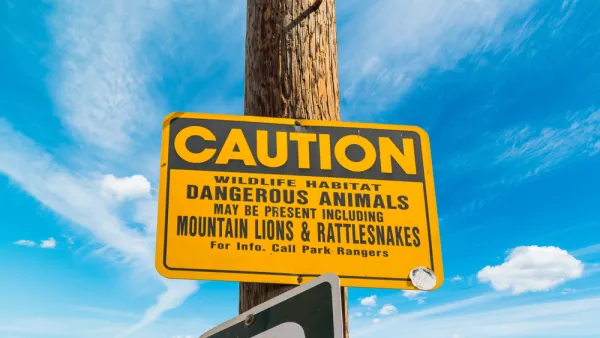
Silicon Valley Town Backs Off Mountain-Lions-as-Density-Deterrent
An update for Woodside's plans to avoid a state-mandated rezoning by claiming that the entire town serves as mountain lion habitat.
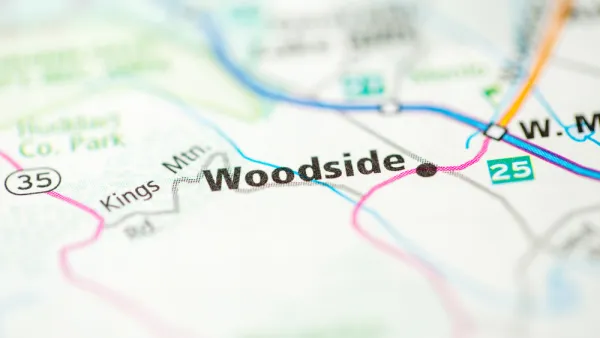
A Novel Defense Against State-Mandated Density: Mountain Lions
Woodside, a small town in the South Bay Area of California, has invented a new method for resisting state-mandated zoning reforms.
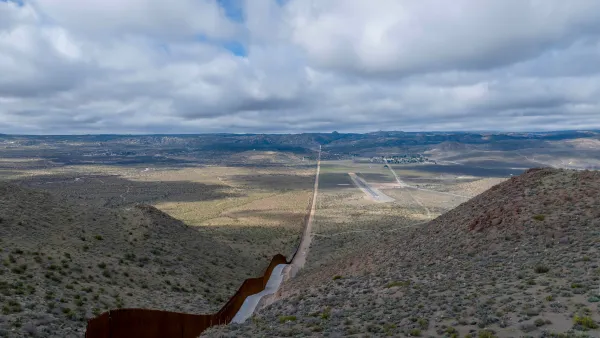
Trump’s new $1.2 billion border wall segment to cut through nature preserve
Opponents expressed concerns about the wall's impact on preserving wildlife and serene views.

Planetizen Federal Action Tracker
A weekly monitor of how Trump’s orders and actions are impacting planners and planning in America.

California plans to bury El Niño’s downpour
If the state plays its cards right, it may be able to store a billion acre-feet of El Niño’s water in aquifers.

Desperate measures: Advocates weigh draining Lake Powell to fill Colorado River
Draining the reservoir could reduce evaporation losses by a couple hundred thousand acre-feet.

‘Hoodwinked:’ New Mexico bill aimed at microgrids paves way for data center development
In an interview with High Country News, Padilla said the legislation “ignited” New Mexico's economy.

California’s ‘unrecognizable’ water plan may go down the drain
After four years of regulatory processes, water agencies say the plan to overhaul how cities and farms take water from the Sacramento-San Joaquin Delta has changed dramatically.

Chicago Avenue bridge construction delays enrages city leaders
The bridge has been closed since 2025. The city originally aimed to re-open it in December, and now expects to finish construction in 2027.

FREE Course: Walkable City 1: Why Walkability?
After describing his path towards focusing on walkability as the essence of good planning, Jeff Speck marches through his five principal reasons for making more walkable places.
Reinventing Malls: Planning Alchemy—Turning Gray Fields Into Gold
The course focuses on the opportunities and imperatives that shape reinvention of mall sites.

City of Rosemead
Rutgers University, Edward J. Bloustein School of Planning and Public Policy
One Hundred Miles
Hunter College, City University of New York (CUNY)
The Architects Foundation
University of Cincinnati Online
City of Cambridge
Montrose County
The Pocatello Development Authority