Wildfires ravaged the western United States again this year, reflecting the new normal of climate change.


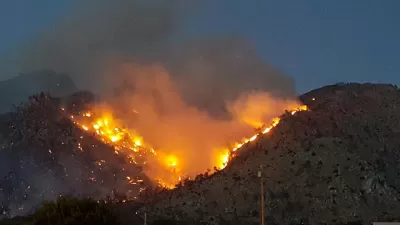
Paul Rogers reports: "Climate change from human activity nearly doubled the area that burned in forest fires in the American West over the last 30 years, a major new scientific study has found, and larger, more intense fires are all but guaranteed in the years ahead."
"On public and privately owned forest lands, 23.5 million acres burned in the 11 Western states from 1984 to 2015. Climate change was responsible for roughly 10.4 million of those acres — an area 30 times the size of the city of Los Angeles — because of hotter and drier conditions than otherwise would have occurred," writes Rogers to explain the study's findings.
The study was published on October 10, 2016 in the Proceedings of the National Academy of Sciences. A press release from the University of Idaho has more on the study.
FULL STORY: New study: Forest fires have doubled in West due to climate change

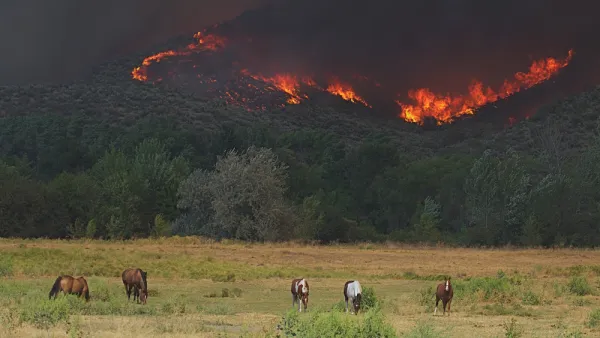
Wildfires Prompt Forestry Debate on Climate Change
While forests sequester atmospheric carbon dioxide, wildfires release enormous amounts of greenhouse gases as they increase in frequency and intensity from climate change.
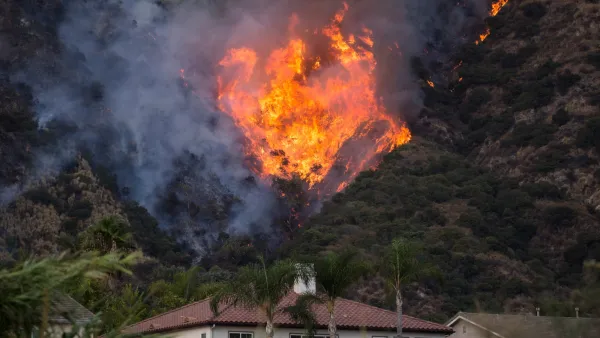
80% of California homes built between 2020-2022 are in high fire risk areas
In 2020, California wildfires destroyed nearly a fifth of homes they came in contact with.
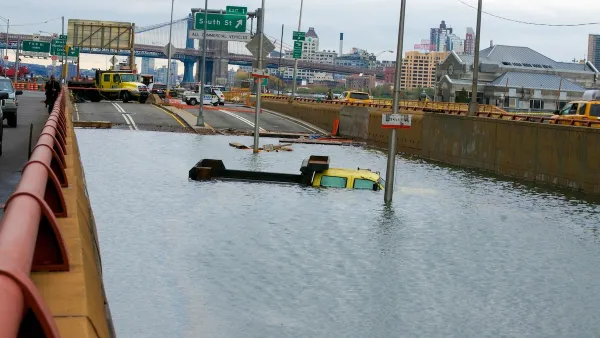
Over a Quarter of US Homes Face ‘Severe or Extreme’ Climate Risk
The number of U.S. homes at risk from hurricanes, fires, or flooding is valued at close to $13 trillion.

Planetizen Federal Action Tracker
A weekly monitor of how Trump’s orders and actions are impacting planners and planning in America.

The state-sanctioned urbicide of Austin
People don’t kill cities. Freeways do.

US to reduce Colorado River water deliveries to Mexico
A new Colorado Treaty amendment reduces Mexico’s Colorado River water allocation by 250,000 acre feet.

Mamdani overhauls NYC's Vision Zero plan with 100 new policy goals
The overhaul aims to reduce traffic deaths and make streets safer for pedestrians, cyclists and drivers through lower speed limits, new safety infrastructure and more.

Amtrak not solely to blame for New Jersey commuter rail's unreliability, report finds
A new study from the Garden State Initiative found that NJ Transit’s budget grew 20% across a 4 year period, but reliability declined significantly over the same period.

EPA erases limits on planet-warming pollution from power plants
Under Monday’s plan, power plants would still have some limits on how much mercury, arsenic and other contaminants they can emit.

FREE Course: Walkable City 1: Why Walkability?
After describing his path towards focusing on walkability as the essence of good planning, Jeff Speck marches through his five principal reasons for making more walkable places.
Reinventing Malls: Planning Alchemy—Turning Gray Fields Into Gold
The course focuses on the opportunities and imperatives that shape reinvention of mall sites.

Eagle County Government
Harvard University Graduate School of Design
Nashville Planning Department
The Architects Foundation
University of Cincinnati Online
The Pocatello Development Authority
The Urban Renewal Agency of the City of Pocatello
Journal of the American Planning Association