In an effort to normalize biking and teach kids how to bike safely in the city, Seattle's Cascade Bicycle Club has built a small bike park that simulates road conditions.


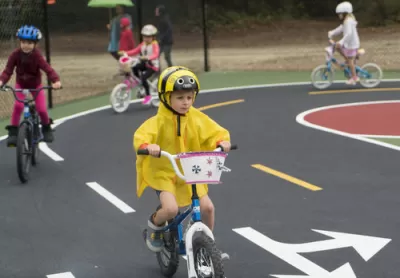
A few miles outside of Seattle, the Cascade Bicycle Club has built something completely new to the US. Their traffic garden is, "A place that mimics real-life street conditions and that’s out of harm’s way," says Jonathan Maus of Bike Portland.
The garden is a lot more than a few cones and some chalk, they've made a kind of mini-city. "The project replaced two unused tennis courts and turned them into a smartly designed streetscape complete with crosswalks, multi-lane roads, a roundabout, and more. The idea was to create a place where kids and adults can practice safe riding skills in a realistic environment away from the dangers posed by other road users." The garden's designer, Steve Durrant, says he, "tried to include many different traffic scenarios in the space: stop lines, crosswalks, lane merging, a roundabout, a one-way loop, and so on."
While such places are common in Europe, the piece reports that this is the first of these gardens in the US.
FULL STORY: Seattle’s new traffic garden is the perfect place to learn the rules of the road

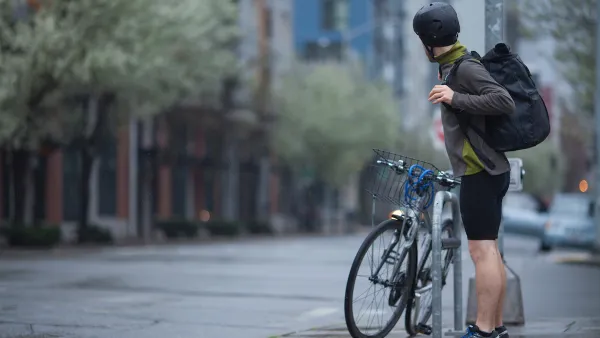
Seattle Recorded Zero Bike Deaths in 2024, per Early Data
The city halved the number of pedestrian deaths compared to 2021.
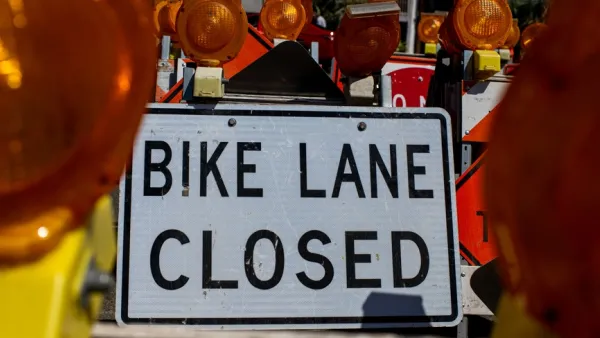
A Simple Fix for Blocked Bike Lanes
A bike lane detour in Seattle illustrates a cheap and easy way to safely direct bike traffic around obstructions such as utility work.
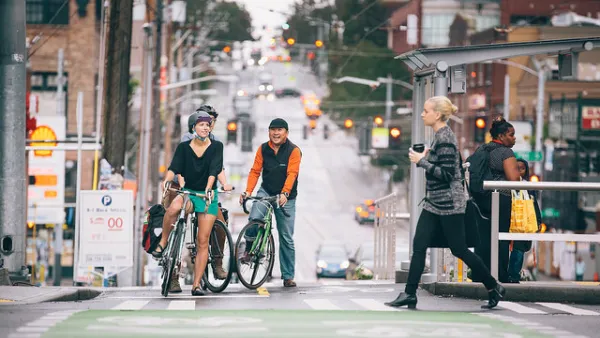
Bike Helmets No Longer Required in Seattle After Research Reveals Enforcement Disparities
The data on bike helmets have changed. Laws are starting to change too.

Planetizen Federal Action Tracker
A weekly monitor of how Trump’s orders and actions are impacting planners and planning in America.

The state-sanctioned urbicide of Austin
People don’t kill cities. Freeways do.

US to reduce Colorado River water deliveries to Mexico
A new Colorado Treaty amendment reduces Mexico’s Colorado River water allocation by 250,000 acre feet.

5 New England states march closer to 800 megawatt wind energy project
Securing federal approval for the project may be complicated under the Trump administration, which has historically been hostile towards domestic wind power.

Baltimore to break ground on $50 million Transit Priority Project
The project will bring faster bus trips, safer streets and better bike connections to Baltimore.

Airbnb launches $250 million 'last-dollar financing' housing accelerator, makes first investment in Austin
The company will put $6.4 million towards affordable housing development in Texas’ capital.

FREE Course: Walkable City 1: Why Walkability?
After describing his path towards focusing on walkability as the essence of good planning, Jeff Speck marches through his five principal reasons for making more walkable places.
Reinventing Malls: Planning Alchemy—Turning Gray Fields Into Gold
The course focuses on the opportunities and imperatives that shape reinvention of mall sites.

Eagle County Government
Harvard University Graduate School of Design
Nashville Planning Department
The Architects Foundation
University of Cincinnati Online
The Pocatello Development Authority
The Urban Renewal Agency of the City of Pocatello
Journal of the American Planning Association