The limitations of affordable housing funds are apparent in San Francisco, raising the question of where and how the process of building affordable housing can be improved.


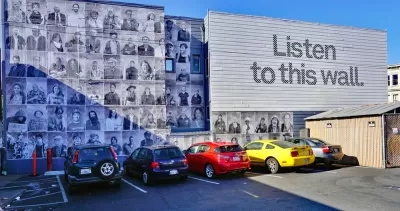
"Almost all of the money San Francisco dedicated to building new affordable housing in the Mission District has been allocated to a single project that will cost some $300,000 per unit in city funds," reports Joe Rivano Barros.
The money came from a $310 million housing bond approved by voters in November 2015. $50 million of that bond was allotted for the heavily contested Mission District. Of that total, $43 million "will go to a recently-approved fully affordable 143-unit project at 1990 Folsom St. on the corner of 16th Street."
"That leaves just $7 million for future spending in the neighborhood, since all of the other funds in the housing bond for new construction have already been allocated to other housing projects citywide," adds Barros. The $43 million from the city doesn’t even pay half the price tag for the new building, which will total $103 million for 143 units when all is said and done.
FULL STORY: Mission Affordable Housing Funds Almost All Spent

Op-Ed: Housing Could Have Fared Better in San Francisco Election
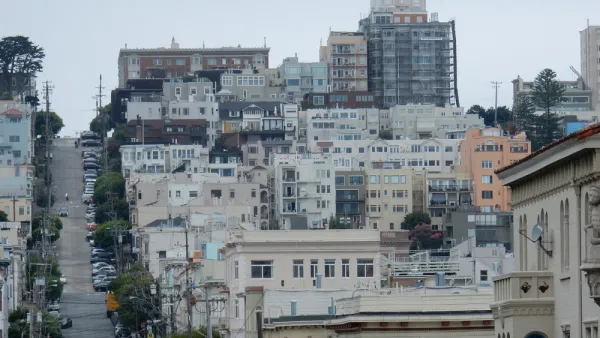
This month's election yielded mixed results on housing. The pros: a solid victory for pro-housing Mayor London Breed and two affordable housing measures. The con: likely more anti-housing sentiment on the Board of Supervisors.
San Francisco Voters Express Frustration with Tent Living
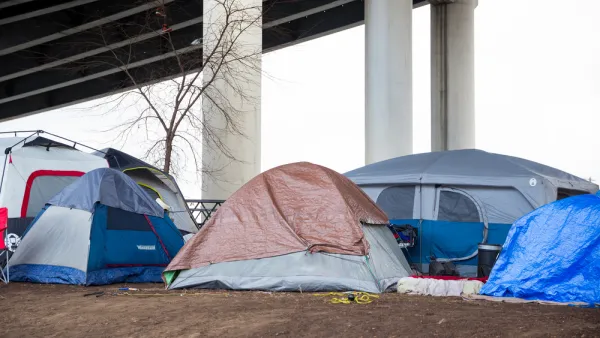
Voters appear to have passed the most contentious ballot measure in San Francisco, Proposition Q, that allows city workers to remove tent encampments if shelter is available. Voters in other Bay Area counties passed taxes for affordable housing.
San Francisco Election Results: Airbnb Regulations, Mission Moratorium, Housing Bond
San Francisco voters rejected a moratorium on market rate housing in The Mission (Prop. I) and tighter restrictions on Airbnb (Prop. F), while approving the city's largest-ever housing bond (Prop. H) and a large mixed-use development.

The state-sanctioned urbicide of Austin
People don’t kill cities. Freeways do.

US to reduce Colorado River water deliveries to Mexico
A new Colorado Treaty amendment reduces Mexico’s Colorado River water allocation by 250,000 acre feet.

New Jersey’s second-largest city bans standalone data centers
Jersey City will continue to allow co-location facilities, such as those meant for research institutions that store their own data.

Amtrak not solely to blame for New Jersey commuter rail's unreliability, report finds
A new study from the Garden State Initiative found that NJ Transit’s budget grew 20% across a 4 year period, but reliability declined significantly over the same period.

EPA erases limits on planet-warming pollution from power plants
Under Monday’s plan, power plants would still have some limits on how much mercury, arsenic and other contaminants they can emit.

Phoenix announces new on-demand transit service, more frequent RAPID buses
Both new services will launch in October, and are part of Phoenix's Project Effective Access Solutions for Easing Congestion.

FREE Course: Walkable City 1: Why Walkability?
After describing his path towards focusing on walkability as the essence of good planning, Jeff Speck marches through his five principal reasons for making more walkable places.
Reinventing Malls: Planning Alchemy—Turning Gray Fields Into Gold
The course focuses on the opportunities and imperatives that shape reinvention of mall sites.

Eagle County Government
Harvard University Graduate School of Design
Nashville Planning Department
The Architects Foundation
University of Cincinnati Online
The Pocatello Development Authority
The Urban Renewal Agency of the City of Pocatello
Journal of the American Planning Association