"Strategic retreat" as a response to rising sea levels isn't an easy sell, but a new report endeavors to make the idea more palatable.


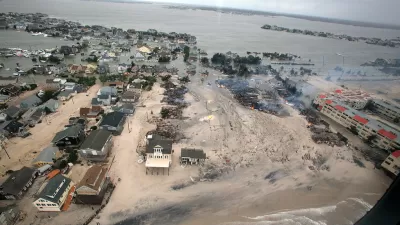
The Lincoln Institute of Land Policy and the Regional Plan Association make the case for managed retreat from flood zones with new research into the use of buyouts. The report, Buy-In for Buyouts: The Case for Managed Retreat from Flood Zones, focuses especially on building support for buyouts among local governments and community members.
The fiscal impact of buyout programs is one of the biggest factors weighed by local governments in embracing or resisting buyout programs, according to the report. Incorporating financial considerations into the reuse of acquired properties and the relocation of residents is critical. For example, well designed parks can make nearby property more desirable, and open space projects can deliver water supply and flood prevention benefits, thereby increasing land values.
Though the Federal Emergency Management Agency (FEMA) and the U.S. Department of Housing and Urban Development (HUD) fund buy-out programs, such programs are usually managed and overseen locally, meaning they play out differently depending on the community. The post includes five recommendations for flood-prone communities, as described in the report.
FULL STORY: The Case for Managed Retreat from Flood Zones

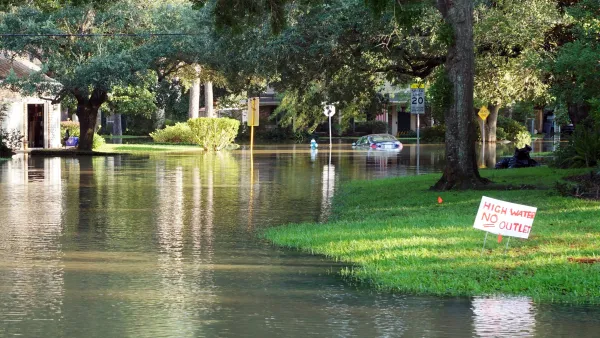
Severe Flooding Calls Attention to Houston’s Home Buyout Struggles
Recent extreme flooding along the San Jacinto River has prompted a review of the progress of Harris County’s flood-prone home buyout program.
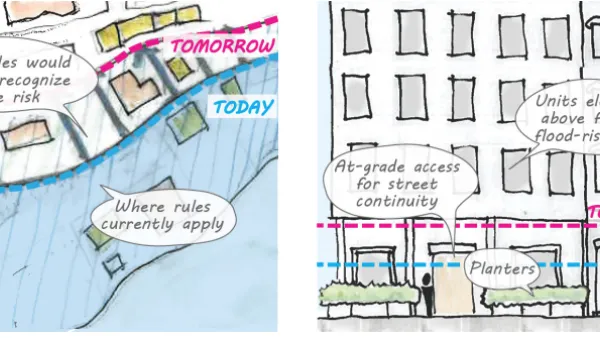
'Zoning for Coastal Flood Resiliency' Wins Planning Commission Approval in NYC
Emergency responses to Hurricane Sandy have turned into long-term lessons in New York City, as the nation's largest city crafts a response to sea-level rise and extreme weather by making changes to the zoning code of coastal areas.
Proposed Citywide Rezoning Would Layer Resilience in New York City
With 520 miles of coastline, New York City is ready to implement the lessons of Hurricane Sandy in the zoning code for the entire city.

The state-sanctioned urbicide of Austin
People don’t kill cities. Freeways do.

US to reduce Colorado River water deliveries to Mexico
A new Colorado Treaty amendment reduces Mexico’s Colorado River water allocation by 250,000 acre feet.

New Jersey’s second-largest city bans standalone data centers
Jersey City will continue to allow co-location facilities, such as those meant for research institutions that store their own data.

Amtrak not solely to blame for New Jersey commuter rail's unreliability, report finds
A new study from the Garden State Initiative found that NJ Transit’s budget grew 20% across a 4 year period, but reliability declined significantly over the same period.

EPA erases limits on planet-warming pollution from power plants
Under Monday’s plan, power plants would still have some limits on how much mercury, arsenic and other contaminants they can emit.

Phoenix announces new on-demand transit service, more frequent RAPID buses
Both new services will launch in October, and are part of Phoenix's Project Effective Access Solutions for Easing Congestion.

FREE Course: Walkable City 1: Why Walkability?
After describing his path towards focusing on walkability as the essence of good planning, Jeff Speck marches through his five principal reasons for making more walkable places.
Reinventing Malls: Planning Alchemy—Turning Gray Fields Into Gold
The course focuses on the opportunities and imperatives that shape reinvention of mall sites.


Eagle County Government
Harvard University Graduate School of Design
Nashville Planning Department
The Architects Foundation
University of Cincinnati Online
The Pocatello Development Authority
The Urban Renewal Agency of the City of Pocatello
Journal of the American Planning Association