As residents of Aspen, Colorado's limited supply of workforce housing begin to retire, they're staying put, creating a new affordable housing crunch for younger workers.


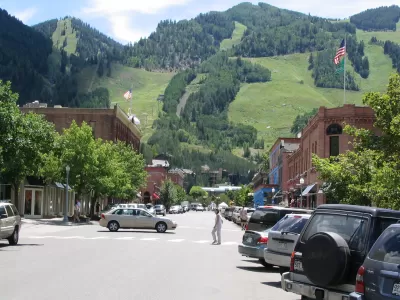
Aspen, Colorado's affordable housing program has provided much needed housing for the city's workers, allowing those without seven-figure incomes to live in the city in which they work. However, the already limited supply of housing for the town's workforce is shrinking even further as residents begin to retire. Ben Markus of Marketplace reports that the city is facing what one official describes as "a ticking time bomb," with half of the residents of the affordable units expected to retire in 10 to 20 years and city limitation on new development restricting supply.
...what started as workforce housing is now showing its age, increasingly becoming retirement housing, raising fundamental questions about the program.
Take [74 year old resident Sara Garton]’s case. Her Aspen condo could sell on the open market for $1 million, but since it’s part of the affordable housing program, she estimates she could only get about $170,000 for it. So why would she sell?
There isn’t a retirement home here, and she doesn’t want to leave the city she’s called home for decades.
Aspen is a town where fund managers drive Ferraris and bartenders get around on bicycles. The program was built so both could live here.
“The people who created the program back in the 70s, they never thought they were going to get old,” City Councilman Adam Frisch said. “And they never thought the buildings were going to get old.”
Markus reports that for now younger workers have to rely on a lottery system which parcels out available units to residents, otherwise they're forced to live miles away and commute in.
Read the full story: Aspen's affordable housing program is showing its age

Aspen Imposes New Limits on Short-Term Rentals as Housing Prices Soar
The Aspen City Council hopes the stricter regulations on short-term rentals and new home construction will stem the astronomical rise of housing costs in the mountain town.
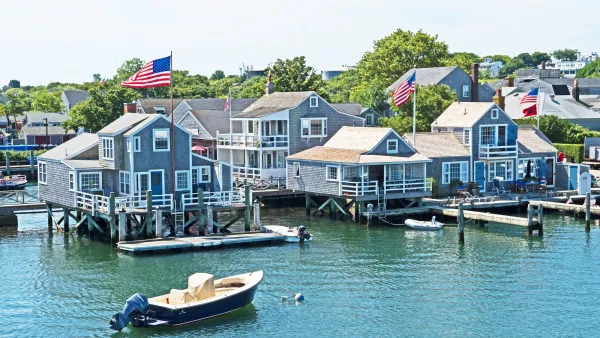
In Nantucket, where over half of homes are for seasonal use, workers struggle to find affordable housing
The island is short roughly 892 to 1,081 rental units.
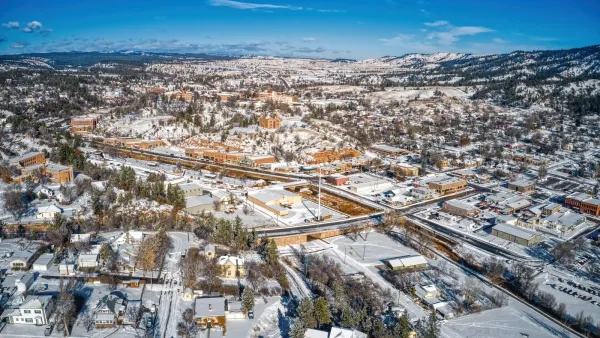
A South Dakota hospital is funding a new subdivision for its employees
Some employees see investing in housing as the only way to stem the loss of workers moving away due to high housing costs.

Planetizen Federal Action Tracker
A weekly monitor of how Trump’s orders and actions are impacting planners and planning in America.

Eastern Nebraska is running out of electricity
Data centers and electrification are straining eastern Nebraska’s grid, throttling economic development.

Washington state to charge fee to drivers with fuel-efficient cars
Revenue from the fee will go towards supporting the state’s highways.

Instead of building new housing, LA developers are turning mansions into mega-mansions
In the richest areas, the number of houses valued at $30 million with demolition permits has skyrocketed since 2018.

Illinois considers spending $1 billion in taxpayer money on data center
A quantum computing campus and data center are currently under construction in Chicago.

As development costs rise, Boston moves to lessen affordable housing requirements
The Boston Zoning Commission and the City Council still need to approve Boston Mayor Michelle Wu’s proposed changes

FREE Course: Walkable City 1: Why Walkability?
After describing his path towards focusing on walkability as the essence of good planning, Jeff Speck marches through his five principal reasons for making more walkable places.
Reinventing Malls: Planning Alchemy—Turning Gray Fields Into Gold
The course focuses on the opportunities and imperatives that shape reinvention of mall sites.

City of Charlotte
City of Rosemead
Rutgers University, Edward J. Bloustein School of Planning and Public Policy
University of Michigan School for Environment and Sustainability (SEAS)
Hunter College, City University of New York (CUNY)
The Architects Foundation
City of Cambridge
The Pocatello Development Authority
The Urban Renewal Agency of the City of Pocatello