The housing crisis is a tough nut to crack. Obstacles of politics, economics, and design all stand in the way of the amount of quality housing for all levels of income that U.S. cities need. Can architects come to the rescue?



John King writes in search of a solution to one of the defining dilemmas of the present day. "The need for housing is so profound—across all spectrums of society—but government hasn’t caught up and financial resources are scarce."
King, however, seems hopeful, because "potential remedies do exist." And many of those remedies will lend creative form to the old multi-family model.
"Nobody knows this better than architects—the ones with a social conscience, at any rate—who are exploring forms of living arrangements that might expand the options and pull down the costs," explains King. To exemplify the types of creative housing opportunities currently being explored by architects around the world, King lists micro-units, newly constructed 'group housing,' cohousing, modular or prefab housing, and tiny houses.
With several examples of projects underway or complete around the world, and examples of architects working hard on this problem, King puts out a call to action:
But good architects can produce good models, attractive and tactile structures showing us that the future needn’t be as frustrating as the recent past. With luck, those models will be noticed—and emulated— more and more in the years to come.
Read the full story: Welcome to My House: Multifamily Housing

Lack of Multi-Family Zones Contributes to Nashville’s High Housing Costs, Study Says
Nashville and surrounding communities allow for a relatively small amount of multi-family housing, according to a new zoning atlas of Middle Tennessee. A regionally focused nonprofit is using the atlas to push for zoning reforms.

Arizona Enters the Upzoning Fray
Arizona lawmakers have proposed a bill that would boost the state's affordable housing fund and increase density in some residential areas.
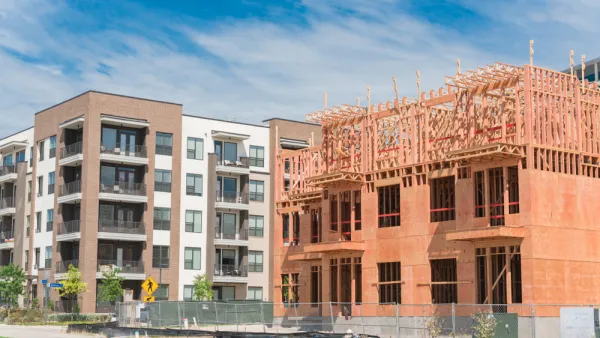
Apartment Construction Ramps Up to Meet New Demand
It's unclear if or when the supply of entry level rental housing options will catch up with the demand, but some cities are building quickly.

Planetizen Federal Action Tracker
A weekly monitor of how Trump’s orders and actions are impacting planners and planning in America.

Washington state to charge fee to drivers with fuel-efficient cars
Revenue from the fee will go towards supporting the state’s highways.

Illinois considers spending $1 billion in taxpayer money on data center
A quantum computing campus and data center are currently under construction in Chicago.

Did data centers change how voters cast their ballots?
Texas, Ohio, and Georgia all flipped party control. But in rural counties, the effect of local data centers was mixed.

Amtrak invests in eight new Airo trainsets
The new trainsets will begin serving passengers in 2031.

HUD to end aid for mixed-immigration-status households
The new rule is projected to impact 80,000 people, nearly half of whom are children.

FREE Course: Walkable City 1: Why Walkability?
After describing his path towards focusing on walkability as the essence of good planning, Jeff Speck marches through his five principal reasons for making more walkable places.
Reinventing Malls: Planning Alchemy—Turning Gray Fields Into Gold
The course focuses on the opportunities and imperatives that shape reinvention of mall sites.

City of Charlotte
City of Rosemead
Rutgers University, Edward J. Bloustein School of Planning and Public Policy
University of Michigan School for Environment and Sustainability (SEAS)
Hunter College, City University of New York (CUNY)
The Architects Foundation
University District Partnership