Thirty new digital kiosks will soon be found on the streets of downtown Washington, D.C. The information flowing through those kiosks will be a two-way street.


Zach Edelson reports on the new digital kiosks and sensor network on their way to Washington, D.C.
"At seven feet tall and featuring 55-inch screens, the 30 kiosks coming to downtown D.C. will be much more than glorified digital ad machines…the kiosks will feature timely information relating to nearby restaurants, retail, events, and public transportation," according to Edelson.
The initiative is the work of the DowntownDC Business Improvement District (BID), with help from kiosk designers Smart City Media and other local stakeholders like the U.S. General Services Administration.
In addition to offering a way for residents to access data, the kiosks will become a key component of a data collection effort. "The kiosks will monitor noise levels, temperature, air quality, humidity, and barometric pressure. This data will be supplemented by an array of sensors placed on the BID’s buildings that will also monitor the surroundings," explains Edelson. The article includes more detail about the other "Internet of Things" and data collecting efforts that will supplement the work done by the kiosks—all of which will result in what Edelson calls a "formidable data set" for the BID.
Read the full story: Washington, D.C.’s new digital kiosks and sensor network will harvest a wealth of urban data
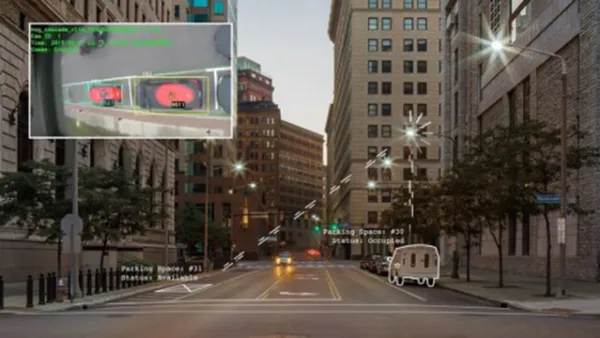
San Diego Adding 4,200 IoT Sensors to City Streets
Details emerged this week of a massive "Internet of Things" (IoT) project in San Diego, California.
Planning After Big Data and the Internet of Things
The exact moment when new digital and Internet technologies fundamentally changed the practice of planning is debatable, but that the profession has been irrevocably altered is not debatable.
How the 'Internet of Things' Is Changing City Operations
The potential of "Smart Cities" is still very much under negotiation. Data-Smart City Solutions at Harvard University surveyed what cities are doing so far to take advantage of the Internet of things.

Planetizen Federal Action Tracker
A weekly monitor of how Trump’s orders and actions are impacting planners and planning in America.

California plans to bury El Niño’s downpour
If the state plays its cards right, it may be able to store a billion acre-feet of El Niño’s water in aquifers.

Desperate measures: Advocates weigh draining Lake Powell to fill Colorado River
Draining the reservoir could reduce evaporation losses by a couple hundred thousand acre-feet.

Los Angeles just elected an urban planner as its mayor
Transportation analysts are optimistic that Raman will be more aggressive in addressing transit issues than Bass.

Mamdani’s pied-à-terre tax survives legal challenge
A panel of judges found that the plaintiffs failed to demonstrate injury as a result of New York City's implementation of the tax.

Eastern Nebraska is running out of electricity
Data centers and electrification are straining eastern Nebraska’s grid, throttling economic development.

FREE Course: Walkable City 1: Why Walkability?
After describing his path towards focusing on walkability as the essence of good planning, Jeff Speck marches through his five principal reasons for making more walkable places.
Reinventing Malls: Planning Alchemy—Turning Gray Fields Into Gold
The course focuses on the opportunities and imperatives that shape reinvention of mall sites.

City of Rosemead
Rutgers University, Edward J. Bloustein School of Planning and Public Policy
One Hundred Miles
University of Michigan School for Environment and Sustainability (SEAS)
Hunter College, City University of New York (CUNY)
The Architects Foundation
City of Cambridge
Montrose County
The Pocatello Development Authority