Hazel Borys sharing ideas from thought leaders on inclusion and indigeneity.


"The placemakers way is to enable the triple bottom line of resilience: environment, economy, and society, trying to balance the needs of people, planet and profit. And yet it’s always easier to measure the impacts of our collective choices on profit — or even on the planet — than it is on people. We’ve blogged extensively about happiness, with equity as an essential component. Social equity has been defined as equal opportunity in a safe and healthy environment. Social equity requires fair, just and equitable public policy. Social equity is a generator of social capital."
Borys goes on to share highlights from two forums at art museums on inclusion and indigeneity. She encourages city planners to put these cultural institutions higher up on key stakeholders list for planning initiatives.
"How do we make communities more generative and sustainable? Tap into creativity. Follow artists, who find the seams where the conflict is happening."
"Relentless incrementalism is needed for systematic change. Diverse communities begin to engage when they see 'my voice counts.' Aspirations are not enough for systemic change. Inclusion can’t happen without diversity and equity."
Read the full story: Inclusive Cities: Inclusion equals diversity plus equity

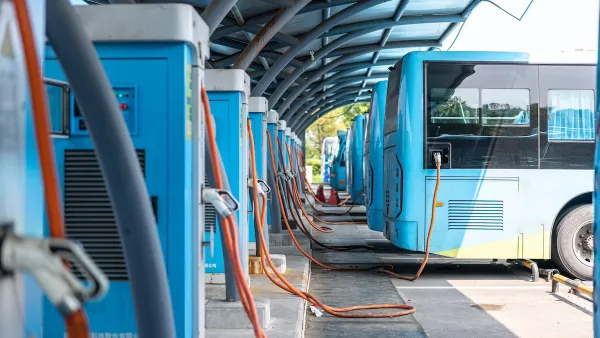
USDOT Launches Climate Adaptation Plan
The plan outlines the department’s key priorities in building resilient infrastructure and ensuring environmental justice in historically disinvested communities.
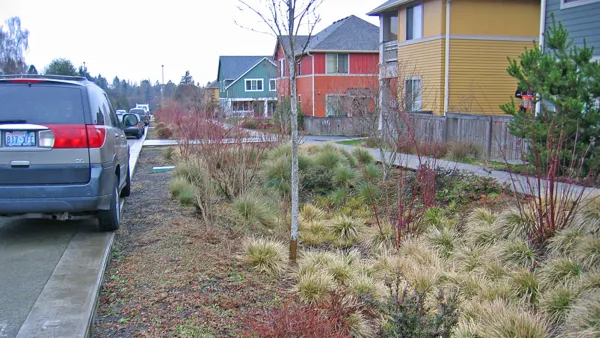
Green Infrastructure Toolkit Launches on World Water Day
The Green Infrastructure Toolkit lists 25 actions local governments can take to transform crusty, impermeable urban landscapes into vibrant, spongy ecosystems that preserve water as a resource and protect against its potential destruction in floods.
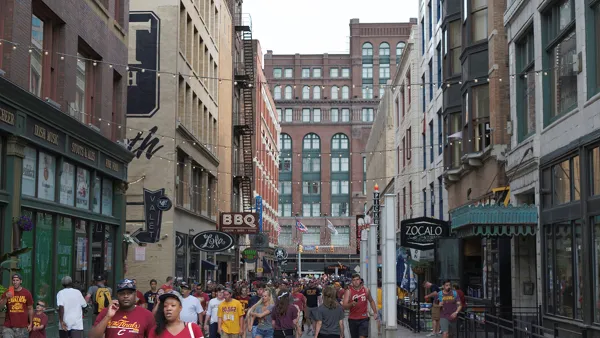
Cleveland: The Nation’s Most Equitably Walkable City
A new study assesses which cities have the broadest access to walkable neighborhoods.

Planetizen Federal Action Tracker
A weekly monitor of how Trump’s orders and actions are impacting planners and planning in America.

Amtrak, CN end decades-long dispute with eight-year agreement
The new operating agreement establishes an updated framework for the companies to work together, including processes to resolve disputes.

Judges permit Denver to divert 77,000 acre feet from the Colorado River for reservoir expansion
Overuse and climate change have caused the Colorado River’s water levels to plummet.

Boston has spent millions making the Green Line more accessible — and there’s no end in sight
While the city has invested millions into expanding and adding platforms to the Green Line to make it more accessible, new train cars set to arrive next year will be too tall for disabled passengers to board without raising the current platforms.

Idaho may see an 18% drop in federal surface transit funding — the largest estimated cut in the US
Transit systems in rural communities are much more reliant on federal funding to provide their services.

How ‘post-disaster gentrification’ alters neighborhoods after natural calamities
After hurricanes, fires or other calamities, the original residents of a community are often replaced by younger, wealthier residents.

FREE Course: Walkable City 1: Why Walkability?
After describing his path towards focusing on walkability as the essence of good planning, Jeff Speck marches through his five principal reasons for making more walkable places.
Reinventing Malls: Planning Alchemy—Turning Gray Fields Into Gold
The course focuses on the opportunities and imperatives that shape reinvention of mall sites.

City of Wisconsin Rapids
Harvard University Graduate School of Design
KFH Group Inc.
The Architects Foundation
University of Cincinnati Online
The Pocatello Development Authority
The Urban Renewal Agency of the City of Pocatello