Governors Island in NYC recently reopened after a massive remake into a park that can only be reached by ferry. The park is reviewed by former Empire State Development Corp. VP Carol Berens.


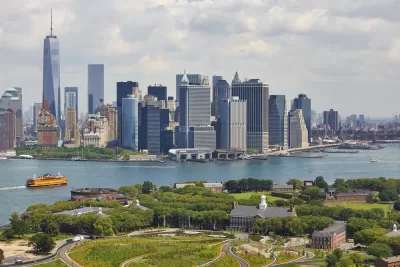
Governors Island recently re-opened to the public after a massive remake into a destination park. Among other things, it contains an historic district with stately old homes and trees, a bicycle trail circling the island, children's play areas, and four man-made hills offering spectacular views of NYC's skylines and bridges. It can only be reached by ferry or private boat but it's less than a ten minute ride. Writes Carol Berens, a former Empire State Development Corp. VP turned author and real estate sales professional:
The plan consists of 87 acres—the Historic District (33 acres) and new park and public spaces (40 acres). The remaining acreage [the island is 172 acres] is slated for commercial development, as yet unannounced.
The $250 million master plan (funded by New York City’s capital plan) was divided into two phases: Phase One, started in 2012 and opened to the public in 2014, added amenities and public spaces such as a food concession plaza, a hedge maze, a 10-acre lawn and play areas including the Hammock Grove, ball fields and relaxation areas as well as new bike paths that snake through the island. The Historic District received signage, lighting and visitor services. Phase Two, called The Hills, not only includes the manipulated landscape, but playground sliding ponds and some site-specific art.
For more about Carol's observations and photos, see source article.
Read the full story: Day Tripping on Governors Island

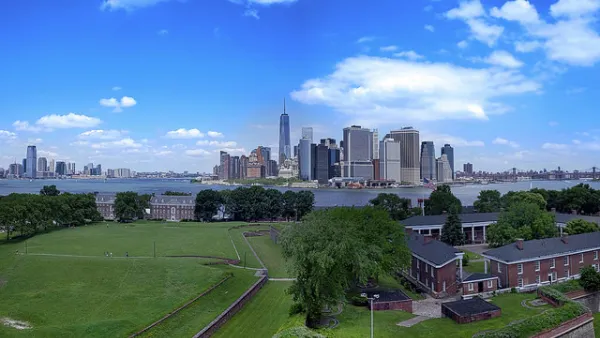
The Leadership Behind the Rebirth of Governors Island in New York
Leslie Koch, the president and chief executive of the Trust for Governors Island, in the Hills on Thursday. After leading the trust for a decade, she is announcing her retirement.
Finalists Selected for Governors Island Climate Research Center
Four teams will submit detailed proposals for a new climate research and education center on New York's Governors Island.
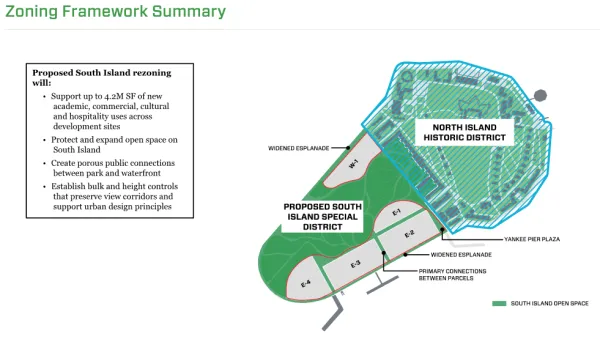
Rezoning for Governors Island Approved
A mix of new development focused on future needs and new tools for preservation are included in the rezoning package for the south end of Governors Island approved by the New York City Council in May.

Planetizen Federal Action Tracker
A weekly monitor of how Trump’s orders and actions are impacting planners and planning in America.

‘Going backwards:’ Baltimore mayor, students rally against state's transit funding plan
Maryland's proposed six-year plan provides no funding for Baltimore’s BMORE bus program and reduces its road maintenance funding.

Detroit to transform waterfront with $2.2 billion investment
Developers will convert about 18 acres of unused parking lot space into civic spaces.

HUD, USDA agree on framework to simplify housing environmental review standards
Their agreement is a requirement of the 21st Century ROAD to Housing Act.

Cost of water rising at a faster pace than inflation, median household income
California and Maryland residents have seen their water bills grow especially high.

NYC building owners overwhelmingly comply with new emissions limits
The New York City Department of Buildings is fining owners who did not file emissions reports.

FREE Course: Walkable City 1: Why Walkability?
After describing his path towards focusing on walkability as the essence of good planning, Jeff Speck marches through his five principal reasons for making more walkable places.
Reinventing Malls: Planning Alchemy—Turning Gray Fields Into Gold
The course focuses on the opportunities and imperatives that shape reinvention of mall sites.

planning NEXT
City of Thousand Oaks
City of Wisconsin Rapids
The Architects Foundation
University of Cincinnati Online
Northern Illinois Transit Authority (NITA)
The Pocatello Development Authority
The Urban Renewal Agency of the City of Pocatello