Do cities that make homeowners repair sidewalks subsidize car culture? Or do cities that fund sidewalks subsidize sprawl?


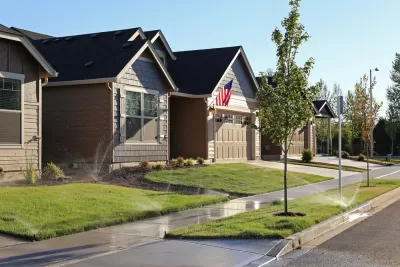
After paying to fix the sidewalk outside his home in Jenkintown, Pennsylvania, walkability advocate Randy Garbin argues in CityLab that municipalities should fund sidewalk repair as part of regular public infrastructure maintenance.
Pedestrian infrastructure, he says, is too often neglected in favor of facilities that serve cars.
"The [Jenkintown] policy struck me as yet-another example of how towns and cities subsidize automobile usage and neglect walkability," he writes. "Freed from responsibility for its sidewalks, the town spends the money elsewhere, often on pedestrian-unfriendly projects."
Aaron Renn of urbanophile challenges that perspective, arguing that in some cases, privatizing sidewalk repair can further progressive urban values like walkability, density, and sustainability.
Particularly in suburban areas, he says, homeowners should bear responsibility for an improvement that "benefits [the homeowner] personally more than anyone else," rather than outsource the costs of unsustainable neighborhoods to municipalities.
"The best way to curb sprawl is to make these developments start internalizing their infrastructure cost," Renn writes. "Once these costs start becoming visible, change is possible."
Read the full story: Where the Sidewalk Funding Ends

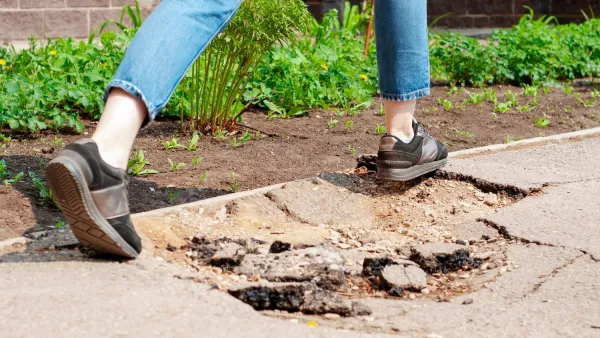
Portland Council Tentatively Approves Sidewalk Repair Plan
The proposal would address sidewalk needs in Portland’s District 1 and District 4.
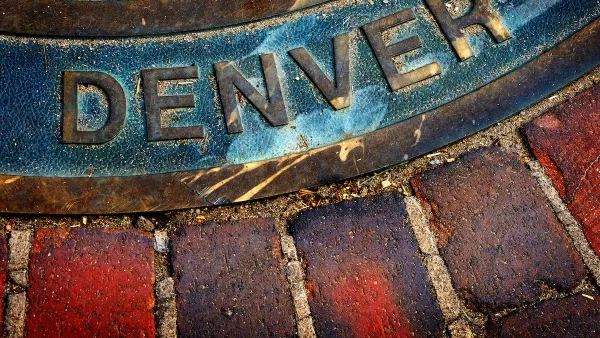
Denver Takes on Sidewalk Repair
The Colorado capital is the largest U.S. city to commit to maintaining its entire sidewalk network, funding repairs through a fee on property owners.
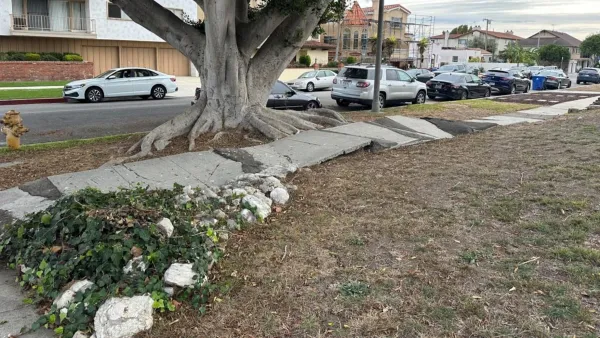
The City of Broken Sidewalks
Can Los Angeles fix 4,000 miles of broken sidewalks before the city hosts the 2028 Olympic Games?

Planetizen Federal Action Tracker
A weekly monitor of how Trump’s orders and actions are impacting planners and planning in America.

Amtrak, CN end decades-long dispute with eight-year agreement
The new operating agreement establishes an updated framework for the companies to work together, including processes to resolve disputes.

Northwest rail fans eager for Sept. 30 debut of Amtrak’s Airo fleet
Get ready for that new train smell and more seats. But they won’t go faster or run more frequently on the Cascades route in Washington and Oregon.

LAX SkyLink opening delayed again, contractor won’t commit to new deadline
The project was supposed to open its doors to the public in 2023.

Caltrain may slash over one-third of its stations
If Bay Area voters reject two transit tax measures, Caltrain, BART and AC Transit will see steep service cuts.

A 'dangerous' precedent: North Carolina successfully pressures communities into voting for toll roads
Two mayors resigned from the Charlotte Regional Transportation Planning Organization after it voted in favor of the toll roads.

FREE Course: Walkable City 1: Why Walkability?
After describing his path towards focusing on walkability as the essence of good planning, Jeff Speck marches through his five principal reasons for making more walkable places.
Reinventing Malls: Planning Alchemy—Turning Gray Fields Into Gold
The course focuses on the opportunities and imperatives that shape reinvention of mall sites.

City of Thousand Oaks
City of Wisconsin Rapids
Harvard University Graduate School of Design
The Architects Foundation
University of Cincinnati Online
The Pocatello Development Authority
The Urban Renewal Agency of the City of Pocatello