So far the reviews have not been kind to the proposed changes to the U.S. Department of Transportation performance measurement rule. The public comment for the proposed rule closes August 20.


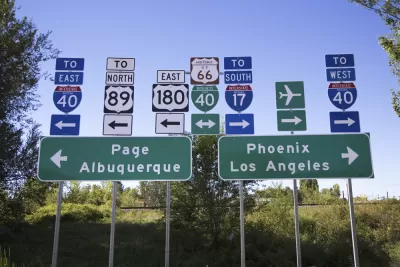
Alex Dodds writes that "the U.S. Department of Transportation is considering new requirements for how states and metro areas will have to measure traffic congestion" for the first time in its history. Although Dodds acknowledges that the idea is a good one, "the Department of Transportation’s proposed rule as it’s currently written has some serious problems."
Namely, the "proposed rule defines success as keeping traffic moving at high speeds at all times of day on all types of roads and streets." Moreover, the "formula being considered ignores pedestrians, cyclist, telecommuters, transit riders and those who carpool."
Dodds has additional criticisms, joining a chorus that includes criticisms by Joe Cortright, writing for City Observatory back in April. The article by Dodds also serves as a call to action. Dodds writes: "The good news is that public comments are currently being accepted on this rule, which means there’s still a chance to change it. Comments close on August 20."
Read the full story: U.S. Department of Transportation traffic formula stuck in the 1950s


Early Review of the U.S. DOT's New Performance Measurement Rule
An initial review by City Observatory's Joe Cortright doesn't find much to indicate that the new U.S. DOT 's performance measurement rule for transportation systems will set a new transportation policy agenda.

Amtrak announces new ‘System Expansion Committee’
The five initial members will oversee the expansion of rail service and the development of sustainable funding strategies.

New USDOT safety strategy highlights enforcement, embraces autonomous cars
The new National Roadway Safety Strategy emphasizes safety technology and enforcement and promises to further crack down on immigrant truck drivers with illicitly obtained licenses.

Planetizen Federal Action Tracker
A weekly monitor of how Trump’s orders and actions are impacting planners and planning in America.

California plans to bury El Niño’s downpour
If the state plays its cards right, it may be able to store a billion acre-feet of El Niño’s water in aquifers.

Chicago breaks ground on $3 billion megadevelopment
The new neighborhood, titled Foundry Park, will one day host 3,700 residences.

California High-Speed Rail Authority CEO resigns after $600,000 scandal
Under Ian Choudri, the authority used taxpayer dollars to fund first class flights and trips to nightclubs.

Want to study the Missouri River? Soon, you may need unanimous approval from 10 states
Legislation would require 10 governors’ permission to study or build projects moving water outside the basin.

Desperate measures: Advocates weigh draining Lake Powell to fill Colorado River
Draining the reservoir could reduce evaporation losses by a couple hundred thousand acre-feet.

FREE Course: Walkable City 1: Why Walkability?
After describing his path towards focusing on walkability as the essence of good planning, Jeff Speck marches through his five principal reasons for making more walkable places.
Reinventing Malls: Planning Alchemy—Turning Gray Fields Into Gold
The course focuses on the opportunities and imperatives that shape reinvention of mall sites.

City of Rosemead
Rutgers University, Edward J. Bloustein School of Planning and Public Policy
One Hundred Miles
Hunter College, City University of New York (CUNY)
The Architects Foundation
University of Cincinnati Online
City of Cambridge
Montrose County
The Pocatello Development Authority