A subway extension that would cut across the Los Angeles basin has cleared another legal hurdle, despite the efforts of a coalition of opponents in the city of Beverly Hills.


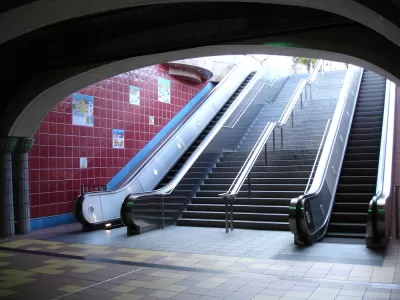
"Some very good news for [Los Angeles County] Metro and the Purple Line Extension subway project arrived on Friday: in a federal lawsuit brought against the Federal Transit Administration, U.S. District Court Judge George Wu upheld the FTA’s prior approval of the project," reports Steve Hymon for Metro's The Source.
What that means in plain terms: "Metro can move forward with finalizing a $1.2-billion federal grant and $307-million federally-backed loan to help pay for the project’s second phase between Wilshire/La Cienega in Beverly Hills and Century City."
The project in question has been referred to in the past as the "Subway to the Sea," though it stops well short of the Pacific coastline. The fate of this Purple Line stands in contrast to the Purple Line extension planned for the suburbs of Maryland, which was recently dealt a legal blow.
Read the full story: U.S. Judge upholds federal approval of Purple Line Extension project

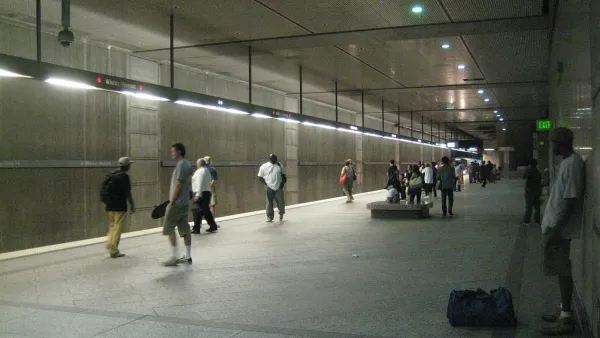
Purple Line Extension Gets $1.6 Billion Boost in Los Angeles
The Purple Line subway extension is picking up momentum in Los Angeles. With construction already underway on the first phase, the second phase should commence in 2018.
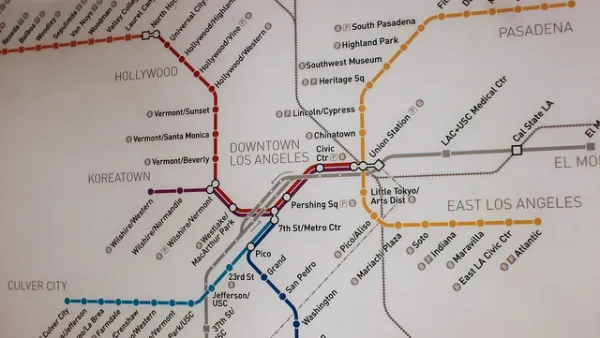
Los Angeles Breaks Ground on Purple Line Subway Extension
The long awaited groundbreaking for work on Los Angeles’s Purple Line Extension commenced. The project is expected to open in 2023.
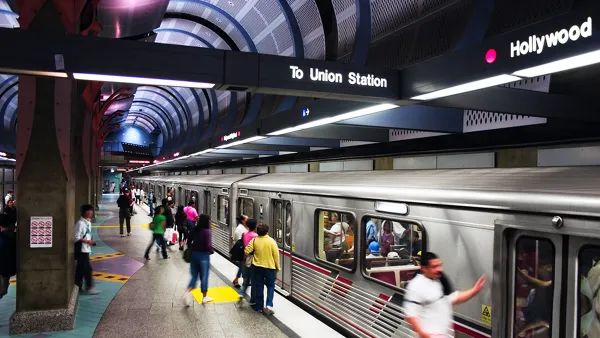
$2.1 Billion in Federal Transit Funding for the 'Subway to the Sea' in Los Angeles
Los Angeles will receive its largest-ever federal grant, $1.25 billion, to help fund the Purple Line subway, aka the "Subway to the Sea." Also on its way is an $856 million loan from the TIFIA program.

Planetizen Federal Action Tracker
A weekly monitor of how Trump’s orders and actions are impacting planners and planning in America.

California plans to bury El Niño’s downpour
If the state plays its cards right, it may be able to store a billion acre-feet of El Niño’s water in aquifers.

Desperate measures: Advocates weigh draining Lake Powell to fill Colorado River
Draining the reservoir could reduce evaporation losses by a couple hundred thousand acre-feet.

How a Chicago-sized wind farm beat the odds and powered on
The project spanned five presidential administrations and a standoff with a U.S. military base.

MTA gives itself 30 days to transform pit into basketball court
The site has been under construction since 2022; the city originally estimated it would finish the court in 2024.

Non-stop party: Chicago voters weigh permanent festival grounds
A stable place for bleachers, stages and drainage may streamline the setup and teardown of large events.

FREE Course: Walkable City 1: Why Walkability?
After describing his path towards focusing on walkability as the essence of good planning, Jeff Speck marches through his five principal reasons for making more walkable places.
Reinventing Malls: Planning Alchemy—Turning Gray Fields Into Gold
The course focuses on the opportunities and imperatives that shape reinvention of mall sites.

City of Rosemead
Rutgers University, Edward J. Bloustein School of Planning and Public Policy
One Hundred Miles
Hunter College, City University of New York (CUNY)
The Architects Foundation
University of Cincinnati Online
City of Cambridge
Montrose County
The Pocatello Development Authority