A study funded by the city of Pensacola, Florida found that the city's downtown faces a potential parking deficit in the near future, but recommends that weaning people off their cars could reduce parking demand.


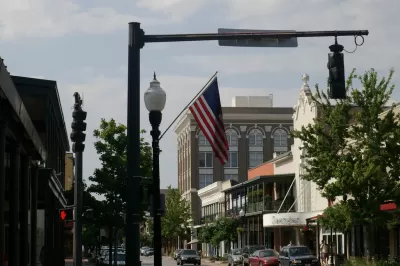
Faced with a potential shortage of parking spaces with the continuing growth of its downtown, the city of Pensacola is looking at potential solutions before a parking crunch begins impacting downtown businesses and visitors. Will Isern of the Pensacola News-Journal reports that the study, titled "Parking Strategies as a Catalyst to Economic Development," found that the majority of downtown's 20,853 parking spaces are private spaces—tied up for use by private businesses and in only one area of the city's downtown does the demand currently outstrip the supply. It also identified that the city did a poor job of identifying available parking locations.
Isern reports that the study recommended the construction of a new downtown parking garage to meet the anticipated growth in Pensacola's downtown. However, the up-front costs for the structure would be significant. Alternative solutions include offering alternative modes of transit, including a bike share system or trolley service. As the study notes:
"Decreasing the demand for parking in a downtown area does not mean decreasing the demand to visit downtown areas... The high parking demand is a result of being automobile dependent. Promoting and increasing the use of transportation options, such as transit, bicycling, and walking, will decrease the demand on parking spaces."
Read the full story: Study: Downtown Needs More Parking

Parking: The Dark Matter of the Urban Universe
Parking regulations affect our lives and communities in many, often mysterious ways. These impacts are often overlooked, resulting in bad policies. It's time to apply urban planning magic: fewer driveways and better managed public parking.
Leading Micromobility Trends for 2024: From Urban Streets to Regional Implementation
The proliferation of micromobility as a viable transportation mode offers the opportunity for cities to reimagine how they allocate public space.
ITDP's New On-Street Parking Pricing Guidebook
This report explores strategies for efficient and equitable parking management with an emphasis on pricing. These strategies enable cities to reallocate space for bus lanes, bicycle lanes, wider sidewalks, and pickup zones, and generate revenue.

Planetizen Federal Action Tracker
A weekly monitor of how Trump’s orders and actions are impacting planners and planning in America.

Amtrak, CN end decades-long dispute with eight-year agreement
The new operating agreement establishes an updated framework for the companies to work together, including processes to resolve disputes.

Northwest rail fans eager for Sept. 30 debut of Amtrak’s Airo fleet
Get ready for that new train smell and more seats. But they won’t go faster or run more frequently on the Cascades route in Washington and Oregon.

St. Louis Metro to test if single-car trains can reduce operating costs, maintain rider satisfaction
The pilot program will run from October to spring 2027, and begin with one single-car train operating on Metrolink’s Red and Blue lines.

Pennsylvania is building data centers in abandoned mines
Housing data centers in mines provides an alternative to destroying local forests and may spare residents from data centers’ noise and air pollution.

If Corpus Christi can’t revive desalination plant project, it may owe Texas $235 million
Earlier this month, city officials declined to pursue developing the plant for the second time in a year.

FREE Course: Walkable City 1: Why Walkability?
After describing his path towards focusing on walkability as the essence of good planning, Jeff Speck marches through his five principal reasons for making more walkable places.
Reinventing Malls: Planning Alchemy—Turning Gray Fields Into Gold
The course focuses on the opportunities and imperatives that shape reinvention of mall sites.

City of Thousand Oaks
City of Wisconsin Rapids
Harvard University Graduate School of Design
The Architects Foundation
University of Cincinnati Online
The Pocatello Development Authority
The Urban Renewal Agency of the City of Pocatello