This report explores strategies for efficient and equitable parking management with an emphasis on pricing. These strategies enable cities to reallocate space for bus lanes, bicycle lanes, wider sidewalks, and pickup zones, and generate revenue.


Rapid motorization has been a global trend in recent decades and has presented troubling consequences, such as air and noise pollution, traffic-related injuries and deaths, and inequity. As vehicle use increases, so does demand for storing vehicles, both for short-term stays on the street near drivers’ destinations and longer-term stays in off-street lots and garages. Managing and pricing parking is therefore critical to ensure equitable use of public space among high-volume, low-polluting transport modes like public transport, cycling, and walking.
This report explores strategies for efficient and equitable parking management with an emphasis on pricing. Employing these strategies will enable cities to reallocate space for bus lanes, bicycle lanes, wider sidewalks, and flexible pickup zones, and the revenue from pricing parking can help fund these improvements. High-quality public transport, cycling, and walking infrastructure benefits users of these modes as well as drivers by reducing congestion as demand shifts away from driving.
Cities that take action to address long-standing parking management issues may now be able to shift some of the increased demand for vehicles expected in the aftermath of the pandemic to other modes.
High-quality public transport, cycling, and walking infrastructure benefits users of these modes as well as drivers by reducing congestion as demand shifts away from driving.
More efficient parking management and pricing enables cities to prioritize valuable urban space for people and local businesses instead of cars, resulting in more efficient, equitable, healthy communities.
FULL STORY: On-Street Parking Pricing: A Guide To Management, Enforcement, And Evaluation

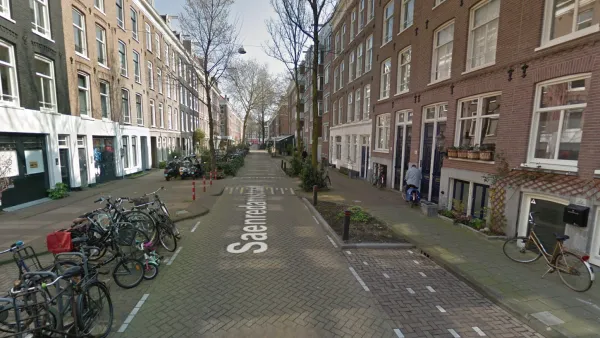
Watch: How to Remove Thousands of Parking Spaces
What the city of Amsterdam will gain by removing cars from on-street parking space.
A New Era of On-Street Parking Policies
The influence of Donald Shoup's classic book, "The High Cost of Free Parking," is becoming more and more apparent in more and more cities around the country.

Denver mayor pushes for cheap downtown parking, says promoting transit is 'not our strategy'
The 'Mayor's Park $5' program encourages local businesses to reduce their parking prices to bring more people downtown.

The state-sanctioned urbicide of Austin
People don’t kill cities. Freeways do.

US to reduce Colorado River water deliveries to Mexico
A new Colorado Treaty amendment reduces Mexico’s Colorado River water allocation by 250,000 acre feet.

New Jersey’s second-largest city bans standalone data centers
Jersey City will continue to allow co-location facilities, such as those meant for research institutions that store their own data.

Amtrak not solely to blame for New Jersey commuter rail's unreliability, report finds
A new study from the Garden State Initiative found that NJ Transit’s budget grew 20% across a 4 year period, but reliability declined significantly over the same period.

EPA erases limits on planet-warming pollution from power plants
Under Monday’s plan, power plants would still have some limits on how much mercury, arsenic and other contaminants they can emit.

Phoenix announces new on-demand transit service, more frequent RAPID buses
Both new services will launch in October, and are part of Phoenix's Project Effective Access Solutions for Easing Congestion.

FREE Course: Walkable City 1: Why Walkability?
After describing his path towards focusing on walkability as the essence of good planning, Jeff Speck marches through his five principal reasons for making more walkable places.
Reinventing Malls: Planning Alchemy—Turning Gray Fields Into Gold
The course focuses on the opportunities and imperatives that shape reinvention of mall sites.

Eagle County Government
Harvard University Graduate School of Design
Nashville Planning Department
The Architects Foundation
University of Cincinnati Online
The Pocatello Development Authority
The Urban Renewal Agency of the City of Pocatello
Journal of the American Planning Association