A bill to provide $750 million in road and bridge financing was signed by Mass. Gov. Charlie Baker on Wednesday after stripping a provision to apply for a federal grant to conduct a pilot program similar to the California Road Charge Pilot.


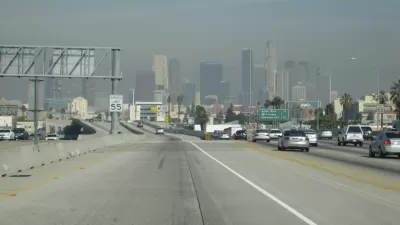
"The Massachusetts Legislature sent Baker a road and bridge funding bill with a provision directing the administration to apply for federal funding to test a new tax on drivers based on miles traveled," reported Shira Schoenberg for The Republic/Mass.Live. "Baker signed the bill on Wednesday, but, as expected, vetoed the pilot program."
"There's disappointment, because all it is is a request for a grant so that we can pilot as was done in Oregon, to see how it would work in Massachusetts and whether we thought it would be a good policy here," said Senate President Stan Rosenberg, D-Amherst, in a July 31 article by Schoenberg which indicated the governor's likely veto. "So we're leaving federal money on the table."
"Baker said the gas tax structure is fair because it rewards people who drive more fuel-efficient cars," adds Schoenberg. "He noted that people generally drive more when gas is cheaper."
Both observations are true, and should encourage leaders to increase the gas tax to ensure proper funding for road infrastructure. However, to illustrate how difficult that can be, Massachusetts voters supported a statewide petition in 2014 that eliminated "the automatic, annual indexing of the 26.5-cent gasoline excise tax to inflation."
A vehicle miles traveled (VMT) fee ensures that fuel-efficient and electric vehicles pay their fair share for roads regardless of the price of gas.
"Baker said he thinks Massachusetts can learn from the experiences of those states without running its own pilot program," adds Schoenberg. "He said transportation officials in Massachusetts have other priorities."
"Let's see what we can learn from the folks who are doing this in other states," Baker said.
Those would include Massachusetts' two neighbors, Connecticut and New Hampshire, which joined the I-95 Corridor Coalition to apply for the grant from the same federal program that the bill targeted. It also includes Pennsylvania, which has the nation's highest gas tax, almost double that of Massachusetts.
The article goes into additional reasons for Baker's opposition to a VMT fee, which the bill would not have imposed. Even the 5,000 participants in the California program do not receive "real" bills; they are simulated. But since the governor is so strongly opposed to the concept of a mileage fee, why study it, even if it wouldn't cost the state any funds?
An earlier editorial in The Republican urged Baker to veto the pilot program provision.
No doubt this is a setback to those in the Mileage-Based User Fee Alliance. However, it should also prove encouraging for those who believe raising the gas tax is the best way to increase transportation funding.
Read the full story: Citing Western Massachusetts drivers, Gov. Charlie Baker vetoes vehicle miles traveled tax pilot program

Oklahoma Launches 'Pay-per-Mile' Pilot
Mileage fee programs go by different names. In the West, it's the road usage charge or RUC. Oklahoma adopted a simpler term. What most have in common, though, is the for-profit company helping to manage them.
Massachusetts Governor Says No to Vehicle Mileage Traveled Fee Pilot
A year ago Massachussetts looked like it could be one of the next states to adopt a vehicle mileage fee program. Not likely under this governor. Baker opposes an amendment that allows the state to apply for federal grant funding to study VMT fees.
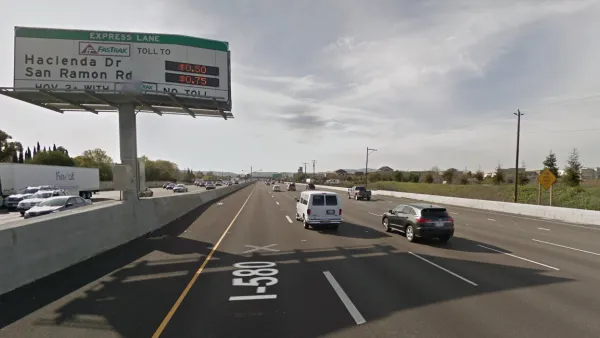
Innovative Road Funding Pilot Program Advances in California
State Sen. Scott Wiener authored legislation dubbed the Gas Tax Alternative Pilot to extend the California Road Charge Program that completed its pilot in 2017. The program takes on more significance with the 2035 sales ban of gas-powered vehicles.

Amtrak, CN end decades-long dispute with eight-year agreement
The new operating agreement establishes an updated framework for the companies to work together, including processes to resolve disputes.

Northwest rail fans eager for Sept. 30 debut of Amtrak’s Airo fleet
Get ready for that new train smell and more seats. But they won’t go faster or run more frequently on the Cascades route in Washington and Oregon.

Judges permit Denver to divert 77,000 acre feet from the Colorado River for reservoir expansion
Overuse and climate change have caused the Colorado River’s water levels to plummet.

NYC to turn city-owned property into thousands of homes
The city has scheduled a public hearing regarding the development for October.

Buses travel at 5mph along this route in NYC. The Bronx's first-ever busway looks to change that
Prior to the busway, buses on the Bx36 route traveled as slowly as 5 miles per hour.

Pittsburg launches 'EZ permits,' aims for one-day turnaround for low-risk permits
The pilot ‘fast lane’ for permits is part of a bundle of modernization efforts for Pittsburg’s permitting process.

FREE Course: Walkable City 1: Why Walkability?
After describing his path towards focusing on walkability as the essence of good planning, Jeff Speck marches through his five principal reasons for making more walkable places.
Reinventing Malls: Planning Alchemy—Turning Gray Fields Into Gold
The course focuses on the opportunities and imperatives that shape reinvention of mall sites.

City of Thousand Oaks
City of Wisconsin Rapids
Harvard University Graduate School of Design
The Architects Foundation
University of Cincinnati Online
The Pocatello Development Authority
The Urban Renewal Agency of the City of Pocatello