If Los Angeles residents approve the $120 billion sales tax measure in November, focusing on walkable communities and offering fast, frequent transit service will be critical to its success.


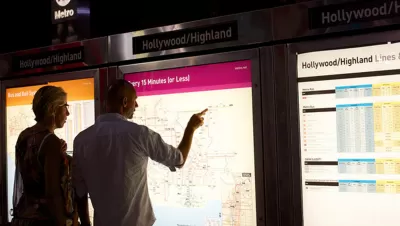
"There is no place in the country better positioned to use transit to its advantage than Los Angeles County," opines Steven Higashide, a senior program analyst for TransitCenter, a New York foundation dedicated to improving urban mobility.
And should voters pass a county sales tax measure on November 8 by over two-thirds, $120 billion will be available to build-up public transit. But it's not just a matter of laying more track, constructing new stations, planning new bus lines and operating trains and running buses.
[I]f the goal of Los Angeles’ transit investments is to have buses and trains shape the region in the 21st century the way the automobile did in the 20th — building transit is not enough. For proof, look no further than Metro’s overall ridership, which so far is 5.5% lower in 2016 than in 2015 despite two new rail extensions.
Higashide repeats a theme made by Kevin Cashman, a Truthout researcher, in his recent critique of new transportation technologies, particularly in their ability to serve lower income populations.
For all the talk about using Uber, Lyft and bike share to bridge the 'first mile, last mile' gap to transit, it’s far more important to put bus and rail stops in places where people don’t have to walk a mile or more to reach them.
Transit needs to be in the middle of the action, not sent to the edge of town. New housing, offices, and retail should be concentrated near it.
Higashide points to a new TransitCenter report, "'Who’s On Board' [PDF], that gathered data from three focus groups and a survey of 3,000 people in 17 metro areas in the United States, [that] sheds light on how it can be done."
"It builds on the findings from TransitCenter’s first Who’s On Board report released in 2014 [and posted here] — the largest-ever attitudinal survey of transit riders—which showed that Americans from coast to coast think about and use public transit in remarkably similar and often unexpected ways," states the press release.
Higashide emphasizes the need to "reform land-use regulations to nurture inviting walking environments."
As another Times opinion piece noted, Los Angeles is a major global city whose zoning codes, parking requirements and development politics treat it like an enormous suburb. For transit to succeed, those laws and attitudes must change.
And the top priority for new transit expansion should be busy destinations that are already walkable. By making transit frequent and fast and building walkable neighborhoods around transit, Los Angeles can make it a practical choice for many more people.
Read the full story: Opinion: Without more walkable cities, building new transit won't reverse Metro's ridership decline
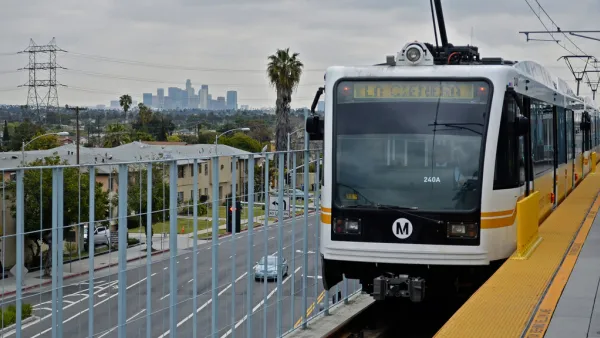
Light Rail Successes Draw Attention to L.A. Metro's Rail Problems
Two new light rail extensions opened in Los Angeles within two and a half months. Ridership is soaring on the Gold Line extension and preliminary reports look good for the Expo Line, but new riders experience problems familiar to long-time riders.
Los Angeles opens public housing waitlist for first time in over two years
The 16 properties with newly available waitlist spots accept families and senior residents.
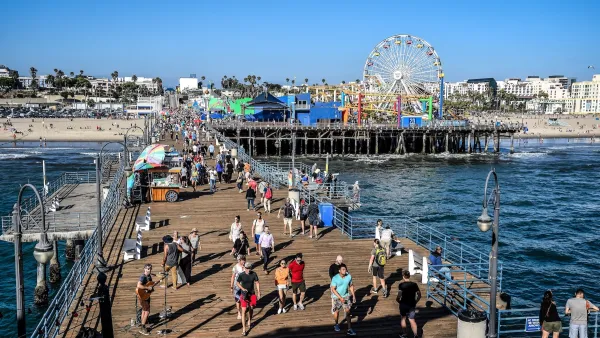
LA County's 'Beach Bus' offers $6 round-trip rides from inland LA to the beach
The annual summer service shuttles residents from eastside communities to Santa Monica.

Planetizen Federal Action Tracker
A weekly monitor of how Trump’s orders and actions are impacting planners and planning in America.

Eastern Nebraska is running out of electricity
Data centers and electrification are straining eastern Nebraska’s grid, throttling economic development.

Move over, LA: St. Louis gears up for Olympics, invests millions in downtown redevelopment
The Missouri city will host the 2028 Olympic soccer group stage and knockout matches.

Dallas releases zoning code overhaul to officials
The drafted overhaul is over 400 pages long.

NYC renovations for dangerous, ‘mercilessly crammed’ street delayed until 2027
Construction was supposed to begin this fall.

San Diego’s Midway Rising project gets greenlight from city council
The project looks to become the largest affordable housing development in California's history.

FREE Course: Walkable City 1: Why Walkability?
After describing his path towards focusing on walkability as the essence of good planning, Jeff Speck marches through his five principal reasons for making more walkable places.
Reinventing Malls: Planning Alchemy—Turning Gray Fields Into Gold
The course focuses on the opportunities and imperatives that shape reinvention of mall sites.

City of Rosemead
Rutgers University, Edward J. Bloustein School of Planning and Public Policy
One Hundred Miles
University of Michigan School for Environment and Sustainability (SEAS)
Hunter College, City University of New York (CUNY)
The Architects Foundation
City of Cambridge
The Pocatello Development Authority
The Urban Renewal Agency of the City of Pocatello