The $54 billion ST3 plan would add 62 miles of light rail over 25 years.


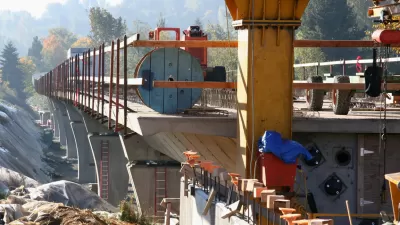
Martin H. Duke writes the fourth in a series of articles detailing the Sound Transit 3 (ST3) ballot initiative, scheduled for a vote in November. Previous posts (1,2, and 3) detailed the phases of development proposed by the ballot initiative, while the most recent post details the costs to the individual tax payer.
ST3 proposes a mix of sales, vehicle, and property taxes. The Seattle Times has created an ST3 tax increase calculator to help people figure out how much the individual tax burden will be (i.e., about $169 a year, or 46 cents a day, for the average resident).
Duke's article demystifies some of the rationale behind the variety of figures that have been cited to describe the cost of the projects proposed by ST3. After considering all these costs, Duke also pronounces: "ST3 is the most plausible path to deliver wide-ranging alternatives to congestion and to direct growth into more sustainable corridors."
An article by Daniel Beekman from June 2016 offers traditional daily newspaper coverage of the ST3 plan. For information of the official variety, the ST3 plan has its own interactive map.
Read the full story: Sound Transit 3: What Does It Cost?

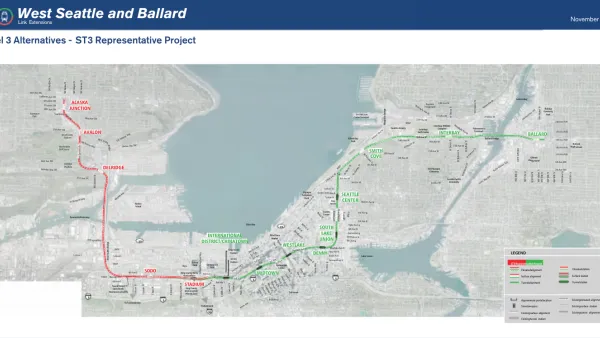
Checking in on the Progress of the Sound Transit 3 Plan
The Seattle area's $53.8 billion transit expansion plan is moving along in fits and starts.
The Northgate Link Extension Is Great, But Voters Want More
A recent survey of Seattle voters finds widespread support for the continued expansion of the Link light rail system in Seattle.
Alternatives Explored for West Seattle and Ballard Light Rail Extensions
Plans to extend the Sound Transit light rail system are moving forward. Elected officials have a big choice to make that will determine the cost and scope of the projects.

Planetizen Federal Action Tracker
A weekly monitor of how Trump’s orders and actions are impacting planners and planning in America.

California plans to bury El Niño’s downpour
If the state plays its cards right, it may be able to store a billion acre-feet of El Niño’s water in aquifers.

Chicago breaks ground on $3 billion megadevelopment
The new neighborhood, titled Foundry Park, will one day host 3,700 residences.

California High-Speed Rail Authority CEO resigns after $600,000 scandal
Under Ian Choudri, the authority used taxpayer dollars to fund first class flights and trips to nightclubs.

Want to study the Missouri River? Soon, you may need unanimous approval from 10 states
Legislation would require 10 governors’ permission to study or build projects moving water outside the basin.

Desperate measures: Advocates weigh draining Lake Powell to fill Colorado River
Draining the reservoir could reduce evaporation losses by a couple hundred thousand acre-feet.

FREE Course: Walkable City 1: Why Walkability?
After describing his path towards focusing on walkability as the essence of good planning, Jeff Speck marches through his five principal reasons for making more walkable places.
Reinventing Malls: Planning Alchemy—Turning Gray Fields Into Gold
The course focuses on the opportunities and imperatives that shape reinvention of mall sites.

City of Rosemead
Rutgers University, Edward J. Bloustein School of Planning and Public Policy
One Hundred Miles
Hunter College, City University of New York (CUNY)
The Architects Foundation
University of Cincinnati Online
City of Cambridge
Montrose County
The Pocatello Development Authority