Political leaders are still seeking support for the Lake Ontario-St. Lawrence River Plan 2014, which has been circulating since November 2014.


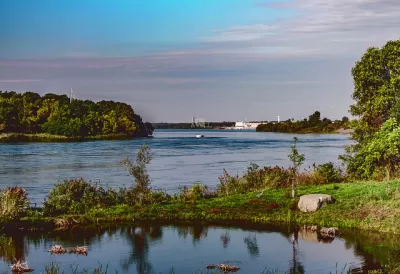
Congresswoman Elise Stefanik (R-NY) writes an op-ed supporting Lake Ontario-St. Lawrence River Plan 2014 (Plan 2014), arguing that the plan will better regulate the waters of the North Country.
"Plan 2014 will better regulate water levels through the Moses-Saunders Power Dam as well as outline the conditions needed to change water levels and maintain the proper ecological balance," according to Congresswoman Stefanik.
"The current outdated water level plan" is "wiping out habitat" and "[clearing] a path for invasive species," according to Congresswoman Stefanik. "Plan 2014 would return Lake Ontario and the St. Lawrence to more natural levels and a normal hydrologic cycle," writes Congresswoman Stefanik, "protecting our ecology and helping to preserve the long term health of the lake."
TheInternational Joint Commission referred Plan 2014 to U.S. Secretary of State John Kerry and Canadian Foreign Affairs Minister Stéphane Dion in November 2014. A recent round of public outreach, including an online petition and Congresswoman Stefanik's op-ed, is attempting to drum up the final necessary support for the plan's approval.
FULL STORY: NOW IS THE TIME FOR PLAN 2014. PROTECTING OUR NATURAL TREASURES CANNOT WAIT

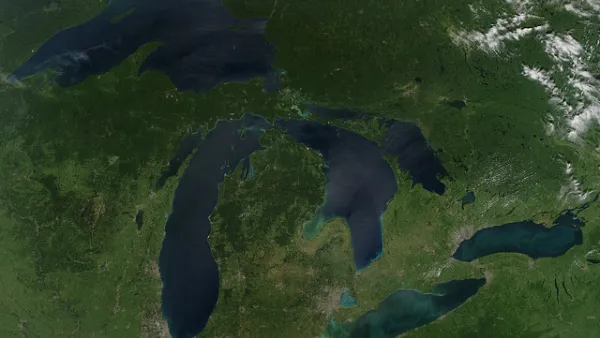
Opinion: Climate Change Has Brought the 'Era of Extreme' to the Great Lakes
Severe flooding in these coastal areas will become the norm, but how to best address the environmental challenges is not entirely clear.
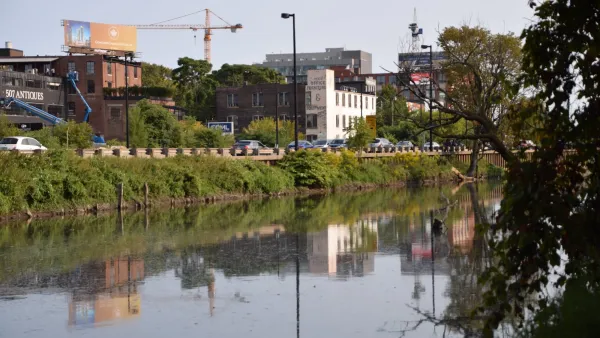
Toronto River Project Will Provide Greenspace and Flood Control
The massive Port Lands infrastructure project will transform an industrial area by carving out a new island.
Great Lakes Leaders Call for Drinking Water Protections
In light of August's drinking water catastrophe in Toledo, Ohio, Great Lakes mayors gathered this week to call for policy action to protect water resources round the Great Lakes.

Planetizen Federal Action Tracker
A weekly monitor of how Trump’s orders and actions are impacting planners and planning in America.

The state-sanctioned urbicide of Austin
People don’t kill cities. Freeways do.

US to reduce Colorado River water deliveries to Mexico
A new Colorado Treaty amendment reduces Mexico’s Colorado River water allocation by 250,000 acre feet.

5 New England states march closer to 800 megawatt wind energy project
Securing federal approval for the project may be complicated under the Trump administration, which has historically been hostile towards domestic wind power.

Baltimore to break ground on $50 million Transit Priority Project
The project will bring faster bus trips, safer streets and better bike connections to Baltimore.

Airbnb launches $250 million 'last-dollar financing' housing accelerator, makes first investment in Austin
The company will put $6.4 million towards affordable housing development in Texas’ capital.

FREE Course: Walkable City 1: Why Walkability?
After describing his path towards focusing on walkability as the essence of good planning, Jeff Speck marches through his five principal reasons for making more walkable places.
Reinventing Malls: Planning Alchemy—Turning Gray Fields Into Gold
The course focuses on the opportunities and imperatives that shape reinvention of mall sites.

Eagle County Government
Harvard University Graduate School of Design
Nashville Planning Department
The Architects Foundation
University of Cincinnati Online
The Pocatello Development Authority
The Urban Renewal Agency of the City of Pocatello
Journal of the American Planning Association