The debate about the benefits of transportation network companies, like Uber, continues.


"The introduction of ride-sharing services such as Uber and Lyft hasn't had any impact on the number of fatalities related to drunken driving, a newly published study finds," reports Rebecca Hersher.
"Researchers at the University of Southern California and Oxford University looked at the 100 most populated metropolitan areas, analyzing data from before and after the introduction of Uber and its competitors, and found that access to ride-sharing apps had no effect on traffic fatalities related to drinking alcohol," explains Hersher.
The study contradicts an earlier study by researchers at Temple University (funded by Mothers Against Drunk Driving), and another specific to the city of Philadelphia.
Read the full story: Uber Hasn't Had An Effect On Drunken-Driving Deaths, Study Finds


Study: Uber Might Have Curbed Drunk Driving, But Not Drunks
A news study raises questions about the public health effects of the widespread availability of a ride enabled by companies like Uber and Lyft—while it's easier to avoid drunk driving, it's also easier to drink.
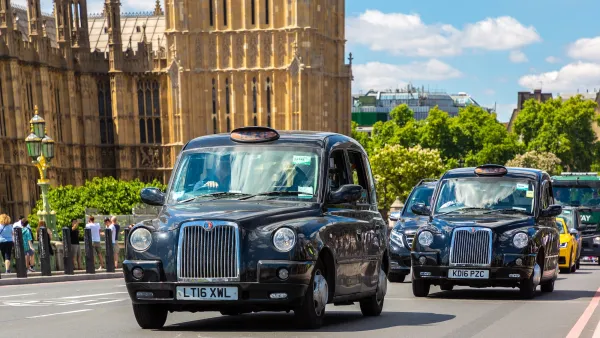
Can Robotaxis Handle London's Famously Tangled Streets?
Black Cab drivers say autonomous cars won’t be able to handle London’s unique conditions.
Report: Racial Gap in Traffic Deaths Persists
Communities of color have significantly higher rates of traffic fatalities, according to federal research.

Planetizen Federal Action Tracker
A weekly monitor of how Trump’s orders and actions are impacting planners and planning in America.

Amtrak, CN end decades-long dispute with eight-year agreement
The new operating agreement establishes an updated framework for the companies to work together, including processes to resolve disputes.

Judges permit Denver to divert 77,000 acre feet from the Colorado River for reservoir expansion
Overuse and climate change have caused the Colorado River’s water levels to plummet.

Boston has spent millions making the Green Line more accessible — and there’s no end in sight
While the city has invested millions into expanding and adding platforms to the Green Line to make it more accessible, new train cars set to arrive next year will be too tall for disabled passengers to board without raising the current platforms.

Idaho may see an 18% drop in federal surface transit funding — the largest estimated cut in the US
Transit systems in rural communities are much more reliant on federal funding to provide their services.

How ‘post-disaster gentrification’ alters neighborhoods after natural calamities
After hurricanes, fires or other calamities, the original residents of a community are often replaced by younger, wealthier residents.

FREE Course: Walkable City 1: Why Walkability?
After describing his path towards focusing on walkability as the essence of good planning, Jeff Speck marches through his five principal reasons for making more walkable places.
Reinventing Malls: Planning Alchemy—Turning Gray Fields Into Gold
The course focuses on the opportunities and imperatives that shape reinvention of mall sites.

Harvard University Graduate School of Design
KFH Group Inc.
Greater Baltimore Committee
The Architects Foundation
University of Cincinnati Online
The Pocatello Development Authority
The Urban Renewal Agency of the City of Pocatello