As car sharing services like Car2Go have infiltrated cities including Vancouver, B.C., benefits of reduced car ownership and greenhouse gas emissions are being realized, a new study finds.


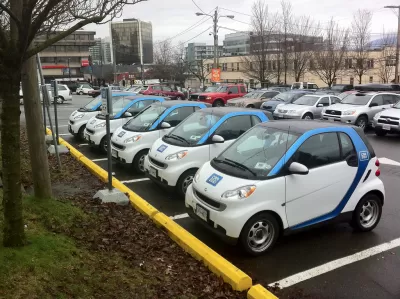
A recent study from researchers at the University of California at Berkeley has good news for cities that have embraced car sharing. Bethany Lindsay reports in the Vancouver Sun that the researchers looked at the effects of the Car2Go car sharing service in five cities in North America, including San Diego, Vancouver, Washington, D.C., Seattle, and Calgary. Users of the service who were surveyed by researchers reported fewer miles travelled by car which in turn has reduced the amount of pollution released into the atmosphere. The study also found that some users of the Car2Go service had either sold their personal vehicles or had decided not to buy a car in the first place.
Vancouver saw the largest overall impact on the number of private cars on the road, with an estimated reduction of 8,243 vehicles in 2015. For every Car2Go vehicle on Vancouver’s streets, about two members said they had sold their vehicles and another seven said they had postponed buying a car. Overall, the researchers estimate that Vancouver members reduced vehicle travel by as much as 60 million kilometres in a year, which may have prevented the release of 10,000 tonnes of greenhouse gases.
The research also found that a large number of Car2Go users had reduced their use of taxis and buses, however they hadn't reduced their use of SkyTrain or how often they walked or bicycled. The researchers said that previous studies on the use of ZipCar and Modo had found similar outcomes.
Read the full story: 5 things: Car-sharing study reveals reduction in pollution, travel, vehicle purchases

Good News on Car Sharing
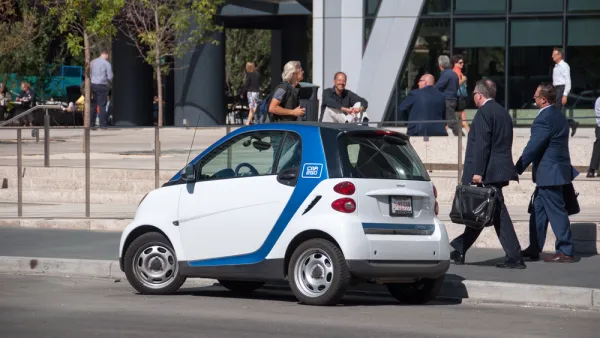
Car sharing networks that allow the vehicle to be returned to any location were found to have the impact of removing seven cars for each rented car in San Diego in a three-year study released July 19.
Vancouver's State-of-Art Climate Action Plan Incorporates Multiple Goals
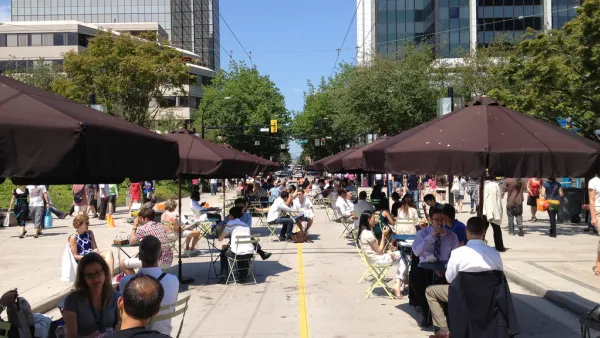
The city of Vancouver's new Climate Emergency Action Plan incorporates a comprehensive scope of goals, including affordability, public health, and social equity, which can help build broad public support.

Vancouver's Ride-Hail-Free Mobility Landscape
While ride-hailing is on the horizon for the Canadian city, the experience so far without the mode provides useful insight into its effects on regional mobility.

Planetizen Federal Action Tracker
A weekly monitor of how Trump’s orders and actions are impacting planners and planning in America.

Amtrak, CN end decades-long dispute with eight-year agreement
The new operating agreement establishes an updated framework for the companies to work together, including processes to resolve disputes.
Nation's most wind-powered state turns to coal as data centers increase energy demand
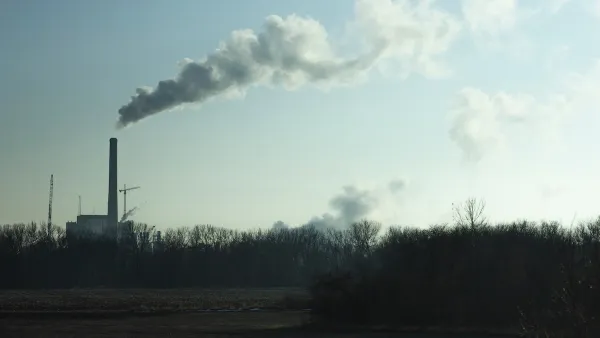
For the first time in decades, Iowa has increased its generation of coal power.

Alabama scores up to $2.5 billion federal loan for largest infrastructure project in state’s history
The Mobile River Bridge and Bayway Project aims to ease congestion at Alabama’s worst bottleneck.

Trump is considering data centers on 6 states' public land — some state officials say they had no idea
If the administration approves the proposed projects, data center and data center-related developments will cover 17,600 acres of public land.

Despite court ruling, Trump is keeping nearly all wind projects in the US on hold
At least 110 wind energy projects have not heard from the government since a federal judge ruled that the Trump administration's freeze on wind turbine clearances was likely illegal.

FREE Course: Walkable City 1: Why Walkability?
After describing his path towards focusing on walkability as the essence of good planning, Jeff Speck marches through his five principal reasons for making more walkable places.
Reinventing Malls: Planning Alchemy—Turning Gray Fields Into Gold
The course focuses on the opportunities and imperatives that shape reinvention of mall sites.

KFH Group Inc.
Greater Baltimore Committee
Eagle County Government
The Architects Foundation
University of Cincinnati Online
The Pocatello Development Authority
The Urban Renewal Agency of the City of Pocatello