A confluence of economic and demographic factors means fewer Americans own homes than at any time since 1965.


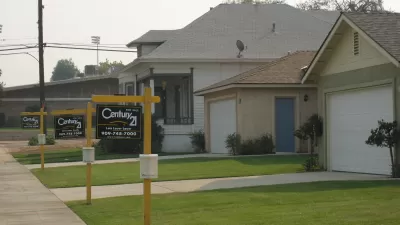
"The U.S. homeownership rate fell to the lowest in more than 50 years as rising prices put buying out of reach for many renters," reports Prashant Gopal.
According to a new report from the U.S. Census Bureau, the share of Americans who own their homes has fallen to 62.9 percent, which, Gopal notes, is the lowest since 1965.
"The drop extends a years-long decline from the last housing boom, in part because of tight credit and a shift toward renting in the aftermath of the crash," adds Gopal for an explanation of the historic trends. The homeownership rate peaked as recently in June 2004, at 69.2 percent.
Read the full story: Homeownership Rate in the U.S. Drops to Lowest Since 1965

Report: Just 17% of Gen Z Americans Own Homes
The number of Gen Z renters grew from 700,000 to 4.4 million in the last five years.
Just 15 Percent of U.S. Renters Could Afford Homeownership
In some markets, as few as 2.6 percent of renter households could afford the cost of an average home.
A Big Picture of the US Housing Market
A new report highlights the factors driving up housing costs around the country.

Planetizen Federal Action Tracker
A weekly monitor of how Trump’s orders and actions are impacting planners and planning in America.

Washington state to charge fee to drivers with fuel-efficient cars
Revenue from the fee will go towards supporting the state’s highways.

Illinois considers spending $1 billion in taxpayer money on data center
A quantum computing campus and data center are currently under construction in Chicago.

Did data centers change how voters cast their ballots?
Texas, Ohio, and Georgia all flipped party control. But in rural counties, the effect of local data centers was mixed.

Amtrak invests in eight new Airo trainsets
The new trainsets will begin serving passengers in 2031.

HUD to end aid for mixed-immigration-status households
The new rule is projected to impact 80,000 people, nearly half of whom are children.

FREE Course: Walkable City 1: Why Walkability?
After describing his path towards focusing on walkability as the essence of good planning, Jeff Speck marches through his five principal reasons for making more walkable places.
Reinventing Malls: Planning Alchemy—Turning Gray Fields Into Gold
The course focuses on the opportunities and imperatives that shape reinvention of mall sites.

City of Charlotte
City of Rosemead
Rutgers University, Edward J. Bloustein School of Planning and Public Policy
University of Michigan School for Environment and Sustainability (SEAS)
Hunter College, City University of New York (CUNY)
The Architects Foundation
University District Partnership