Parts of California’s rural, working-class Central Valley see virtually no transportation investment, leaving many residents stranded in the heat.


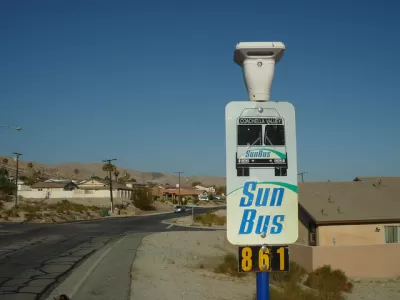
KCET and local youth media group Coachella Unincorporated explore conditions in a rural desert community in Southern California, where some areas have only one, infrequent bus route.
Although local transportation agencies cite low ridership as a driver of scant service, community groups note that ridership has risen on occasions when service has increased.
Community and faith-based groups advocating for transportation equity in the area describe to reporters the conditions residents struggle through to get around—walking and waiting for hours in the desert heat.
There is some state interest in investing in rural disadvantaged communities. But with constrained transportation funding, when climate goals encourage transit projects in dense urban areas, that interest can face an uphill battle.
Eduardo Garcia (D-Coachella), who is pushing to expand transit service and create first-mile connections in the Coachella Valley, is quoted as saying:
"Some people had concerns about the bill because [they believed] we are doing too much for disadvantaged communities… For some people, that was a concern because it was taking away from the traditional funding course.”
FULL STORY: Miles Away from the Next Stop: The Bumpy Road to Transportation Equity

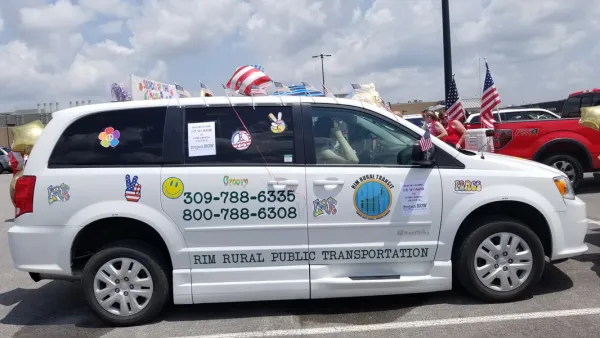
Rural Illinois Transit Brings $4 in Economic Benefits for Every Dollar Spent
Chronically underfunded rural public transit systems are key lifelines are economic engines for rural communities.
The Importance of Rural Transit
On Transit Equity Day, reminding policymakers that rural communities need access to transit too.
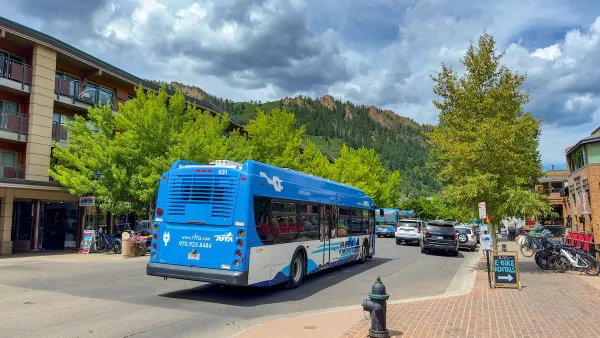
Rural Buses a ‘Lifeline’ in Colorado
Bus ridership on local and intercity buses in rural areas rose sharply even as urban transit ridership took a hit between 2019 and 2024.

The state-sanctioned urbicide of Austin
People don’t kill cities. Freeways do.

US to reduce Colorado River water deliveries to Mexico
A new Colorado Treaty amendment reduces Mexico’s Colorado River water allocation by 250,000 acre feet.

New Jersey’s second-largest city bans standalone data centers
Jersey City will continue to allow co-location facilities, such as those meant for research institutions that store their own data.

Amtrak not solely to blame for New Jersey commuter rail's unreliability, report finds
A new study from the Garden State Initiative found that NJ Transit’s budget grew 20% across a 4 year period, but reliability declined significantly over the same period.

EPA erases limits on planet-warming pollution from power plants
Under Monday’s plan, power plants would still have some limits on how much mercury, arsenic and other contaminants they can emit.

Phoenix announces new on-demand transit service, more frequent RAPID buses
Both new services will launch in October, and are part of Phoenix's Project Effective Access Solutions for Easing Congestion.

FREE Course: Walkable City 1: Why Walkability?
After describing his path towards focusing on walkability as the essence of good planning, Jeff Speck marches through his five principal reasons for making more walkable places.
Reinventing Malls: Planning Alchemy—Turning Gray Fields Into Gold
The course focuses on the opportunities and imperatives that shape reinvention of mall sites.

Eagle County Government
Harvard University Graduate School of Design
Nashville Planning Department
The Architects Foundation
University of Cincinnati Online
The Pocatello Development Authority
The Urban Renewal Agency of the City of Pocatello
Journal of the American Planning Association