Three proposed legislative measures would undo one of the more obvious signs of the recession, and return the responsibility for street trees to the city.


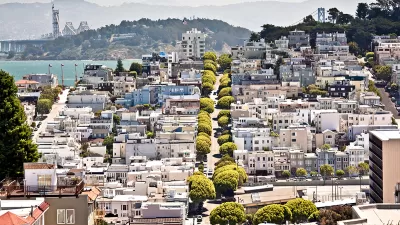
Lizzie Johnson reports on the recent legislative efforts that will return the responsibility for the maintenance of San Francisco's street trees to the city. The measures would also return the responsibility for sidewalks damaged by street trees to the city.
Three pieces of legislation would return responsibility for trees to the city:
There’s a parcel tax, which would have to go to the ballot, that would dedicate more than $18 million annually to trees and sidewalk repairs beginning next July. It would also return tree maintenance to the city — it’s now the responsibility of homeowners and businesses. Then there’s a bundled charter amendment and carbon tax designed to bring in $18 million to take care of trees. The third is a proposed ordinance that would transfer the maintenance much sooner — but without any earmarked funding.
The legislative measures would reverse the city's actions transferring responsibility to homeowners in 2011 during the recession.
Read the full story: SF supes’ plans return street tree maintenance to city


Planetizen Federal Action Tracker
A weekly monitor of how Trump’s orders and actions are impacting planners and planning in America.

The state-sanctioned urbicide of Austin
People don’t kill cities. Freeways do.

US to reduce Colorado River water deliveries to Mexico
A new Colorado Treaty amendment reduces Mexico’s Colorado River water allocation by 250,000 acre feet.

Nation's most wind-powered state turns to coal as data centers increase energy demand
For the first time in decades, Iowa has increased its generation of coal power.

NYC cools commuters with city's first rain garden above a bus stop
New York City officials say the plants in the rain garden can absorb 16 gallons of rainwater during heavy storms.

Brightline West’s future may rely on $6 billion federal loan
The company has until Nov. 2 to make a $400 million equity investment into its proposed high-speed rail line.

FREE Course: Walkable City 1: Why Walkability?
After describing his path towards focusing on walkability as the essence of good planning, Jeff Speck marches through his five principal reasons for making more walkable places.
Reinventing Malls: Planning Alchemy—Turning Gray Fields Into Gold
The course focuses on the opportunities and imperatives that shape reinvention of mall sites.

Greater Baltimore Committee
Eagle County Government
Harvard University Graduate School of Design
The Architects Foundation
University of Cincinnati Online
The Pocatello Development Authority
The Urban Renewal Agency of the City of Pocatello
Journal of the American Planning Association