The findings of a report on changes occurring in Philadelphia Center City finds more residents and workers walking, biking, and taking transit. (Thankfully, they aren't all looking for parking every day.)


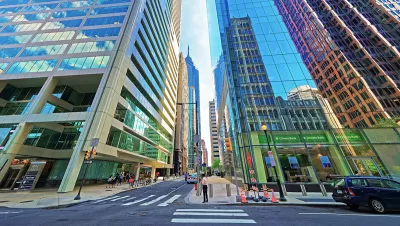
An article by Jim Saksa begins with a question: "If everyone drove to work in Center City, how much parking would we need?"
The answer is included in a new report from Center City District: "2.6 square miles of surface parking. The size of William Penn’s 1682 plan for the city? 2.2 miles." Another way of quantifying that scale of parking need: it also equals 28 Comcast-Center-Side parking garages.
That's the big ticket item is a collection of findings reported in the most recent edition of Center City Reports. Saksa calls on the expertise of Center City District Executive Director Paul Levy to explain the findings of the report. Center City, like many other downtowns around the country, is growing—both in terms of jobs and residents.
Apropos of that initial anecdote about parking: parking spaces have decreased while available parking has increased. Clearly more of the new residents and workers in Center City are choosing other modes of transportation besides the car.
Read the full story: Center City District report highlights transit as competitive necessity for region’s economy

Parking Spaces Reduced in Center City Philadelphia—Along With Parking Occupancy
Philadelphia is providing a living case study of the tenants of the Donald Shoup-approach to parking.
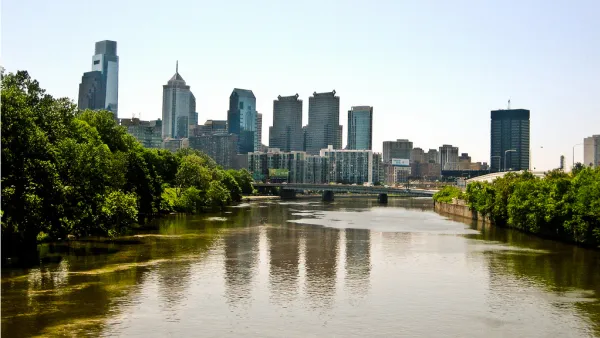
A Coming of Age Story for Philadelphia's Revitalized Center City
A housing report by analyzing Philadelphia's Center City enunciates an obstacle facing many cities in the throes of downtown revitalization: What happens when Millennials don't come home to roost?
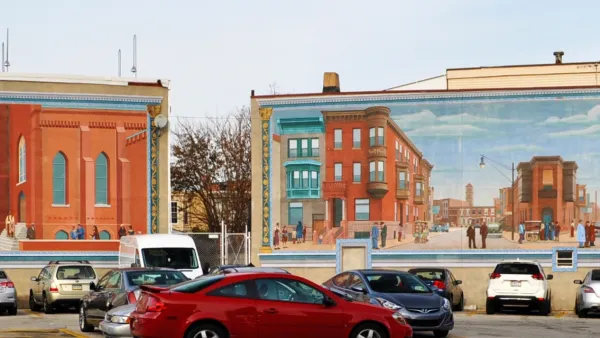
Philadelphia's downtown parking lots are a 'valuable, untapped resource'
Over two dozen city-owned parking lots could be developed into housing or other uses.

Planetizen Federal Action Tracker
A weekly monitor of how Trump’s orders and actions are impacting planners and planning in America.

California plans to bury El Niño’s downpour
If the state plays its cards right, it may be able to store a billion acre-feet of El Niño’s water in aquifers.

Chicago breaks ground on $3 billion megadevelopment
The new neighborhood, titled Foundry Park, will one day host 3,700 residences.

Satanic Place Names
From streams and lakes to valleys and canyons, I mapped more than 1,000 places named after the Devil.

California High-Speed Rail Authority CEO resigns after $600,000 scandal
Under Ian Choudri, the authority used taxpayer dollars to fund first class flights and trips to nightclubs.

Want to study the Missouri River? Soon, you may need unanimous approval from 10 states
Legislation would require 10 governors’ permission to study or build projects moving water outside the basin.

FREE Course: Walkable City 1: Why Walkability?
After describing his path towards focusing on walkability as the essence of good planning, Jeff Speck marches through his five principal reasons for making more walkable places.
Reinventing Malls: Planning Alchemy—Turning Gray Fields Into Gold
The course focuses on the opportunities and imperatives that shape reinvention of mall sites.

City of Rosemead
Rutgers University, Edward J. Bloustein School of Planning and Public Policy
One Hundred Miles
Hunter College, City University of New York (CUNY)
The Architects Foundation
University of Cincinnati Online
City of Cambridge
Montrose County
The Pocatello Development Authority