As Downtown L.A. sees an impressive renaissance, learn how the Fashion District in L.A. spurred growth through piloting the first-ever "Business Improvement District" program.



Over the last 20 years, the Fashion District in Downtown Los Angeles has contributed materially to a impressive renaissance. Much of this urban renaissance was spurred, or at least facilitated, by Kent Smith's leadership. Kent Smith, Executive Director of the Fashion District Business Improvement District (BID) for the last 17 years, talks with The Planning Report about how both L.A.'s first BID has contributed to downtown’s growing economic and social vitality. Smith, who is retiring, has left a legacy of leadership in Downtown L.A. and has helped other urban areas around the globe bring public and private leaders to create BID's to foster growth.
The Los Angeles Fashion District is the design, warehouse, and distribution hub of the clothing and fabric industry in Downtown Los Angeles. Spanning over 90 blocks, thousands of fast-fashion wholesale vendors line the streets of the Los Angeles Fashion District. Clothing companies that manufacture in the Fashion District include American Apparel and Andrew Christian. Almost 20 years ago, Smith saw a need to create culture, cohesion, and relationships between these businesses and the people who worked in the area.
Smith explains that "when we started, the Fashion District BID was an 18-block pilot project. There hadn’t been a BID in Los Angeles, and we had to show people what we could accomplish. That pilot has since blossomed into a 100-block BID comprising more than 1,000 property owners. Today, we are still fundamentally purposed on what I call “clean and safe” programs, which I believe are the foundation for the revitalization of any neighborhood. We also have marketing and economic development programs, which collectively help put the neighborhood’s best foot forward."
As Los Angeles deals with interrelated homelessness and affordable housing crises, Smith opines on the role and responsibility of businesses and private entities. Smith asserts that "the business community has a role to play, certainly on the leadership side, to try to make politicians and bureaucrats see the people living on the street as being a priority."
Read more of Kent Smith's exclusive interview in The Planning Report.
FULL STORY: Recognizing Kent Smith’s Successful Leadership of LA’s Fashion District BID

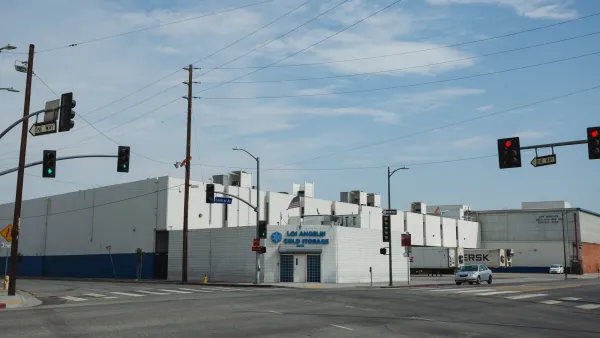
LA approves $2B 'urban village' plan for former cold storage facilities
The project promises an interconnected neighborhood with a focus on public space.

Downtown Los Angeles Gears Up for Growth
A new report highlights Downtown L.A.’s ongoing revival through major housing projects, adaptive reuse, hospitality growth, and preparations for global events in the years ahead.
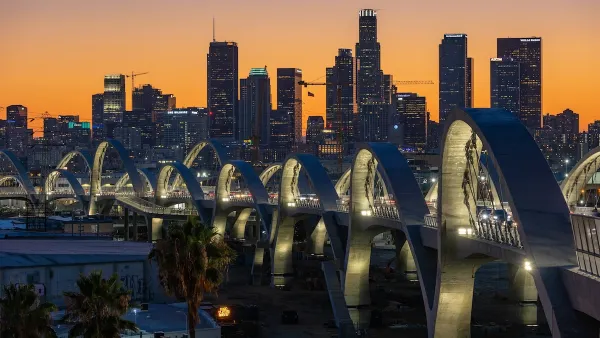
Downtown Los Angeles on the Rise: A Promising 2025
Fueled by new developments, cultural investments, and a growing dining scene, downtown Los Angeles is poised for significant growth in 2025, despite challenges from recent wildfires and economic uncertainties.

Planetizen Federal Action Tracker
A weekly monitor of how Trump’s orders and actions are impacting planners and planning in America.

The state-sanctioned urbicide of Austin
People don’t kill cities. Freeways do.

US to reduce Colorado River water deliveries to Mexico
A new Colorado Treaty amendment reduces Mexico’s Colorado River water allocation by 250,000 acre feet.

Mamdani overhauls NYC's Vision Zero plan with 100 new policy goals
The overhaul aims to reduce traffic deaths and make streets safer for pedestrians, cyclists and drivers through lower speed limits, new safety infrastructure and more.

Amtrak not solely to blame for New Jersey commuter rail's unreliability, report finds
A new study from the Garden State Initiative found that NJ Transit’s budget grew 20% across a 4 year period, but reliability declined significantly over the same period.

EPA erases limits on planet-warming pollution from power plants
Under Monday’s plan, power plants would still have some limits on how much mercury, arsenic and other contaminants they can emit.

FREE Course: Walkable City 1: Why Walkability?
After describing his path towards focusing on walkability as the essence of good planning, Jeff Speck marches through his five principal reasons for making more walkable places.
Reinventing Malls: Planning Alchemy—Turning Gray Fields Into Gold
The course focuses on the opportunities and imperatives that shape reinvention of mall sites.

Eagle County Government
Harvard University Graduate School of Design
Nashville Planning Department
The Architects Foundation
University of Cincinnati Online
The Pocatello Development Authority
The Urban Renewal Agency of the City of Pocatello
Journal of the American Planning Association