An editorial in Pacific Standard says the earth and our own bodies can be improved if humans form a new relationship with the planet.


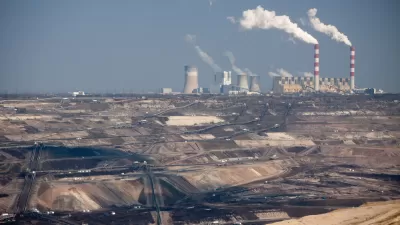
"America was founded on the principle that man should exert dominion over the Earth, the animals, and his fellow men. We’re still struggling to rid ourselves of this pernicious theology, and the planet is telling us to hurry up," according to the premise set by an article written by J.T. Roane.
Using examples like the spraying of agricultural crops with pesticides, Roane argues for "[re-making] human social connections and human relationships with the Earth in the aftermath of what is becoming ever more clearly the toxic 20th century."
Though some people are unwittingly participating in a "destructive and exploitative relationship with the Earth," the roots of such practices can be traced to "the Western-Christian ideology of dominion — the notion that the Earth is to be conquered, that its resources are the province of man and should be exploited." Roane explains that concept, as originally defined by anthropologist Wende Marshall.
Roane also cites the work of Audrey Lorde, author of The Cancer Journals, who also created models of "new collective and political identities" necessary to "survive life after dominion."
FULL STORY: Improve Your Body — and the Earth — by Rejecting the Theology of Dominion

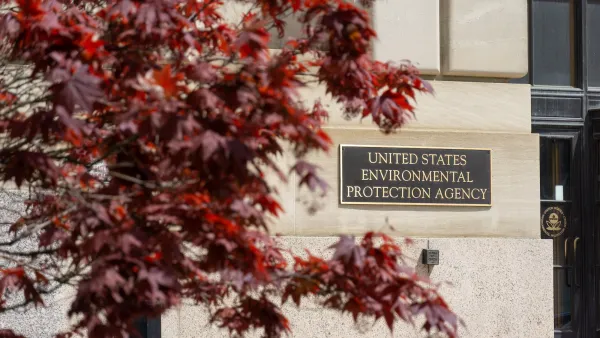
Trump's proposed budget slashes EPA funding by 52%
The budget also reduces funding for FEMA, climate resilience projects, and water infrastructure programs.

Trump Administration Wants to Remove Conservation From Approved 'Uses' of Public Land
The Department of the Interior moved to officially rescind the Public Lands Rule passed in 2024, which elevates the conservation of public lands to the same level of protection as other uses.
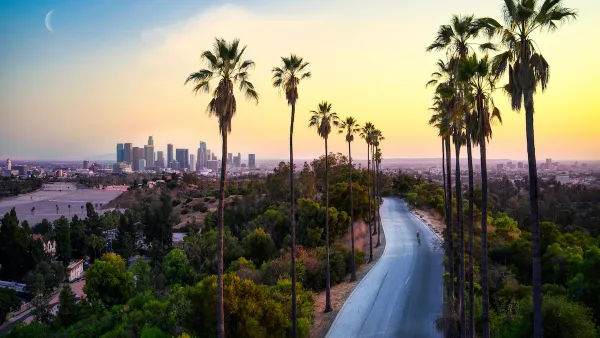
Planting for Change: How Trees Are Powering Climate Action
"Combating Climate Change with Trees" highlights how Southern California communities are strategically planting and nurturing urban forests to cool neighborhoods, improve air quality, and advance environmental justice.

Planetizen Federal Action Tracker
A weekly monitor of how Trump’s orders and actions are impacting planners and planning in America.

The state-sanctioned urbicide of Austin
People don’t kill cities. Freeways do.

US to reduce Colorado River water deliveries to Mexico
A new Colorado Treaty amendment reduces Mexico’s Colorado River water allocation by 250,000 acre feet.

5 New England states march closer to 800 megawatt wind energy project
Securing federal approval for the project may be complicated under the Trump administration, which has historically been hostile towards domestic wind power.

Baltimore to break ground on $50 million Transit Priority Project
The project will bring faster bus trips, safer streets and better bike connections to Baltimore.

Airbnb launches $250 million 'last-dollar financing' housing accelerator, makes first investment in Austin
The company will put $6.4 million towards affordable housing development in Texas’ capital.

FREE Course: Walkable City 1: Why Walkability?
After describing his path towards focusing on walkability as the essence of good planning, Jeff Speck marches through his five principal reasons for making more walkable places.
Reinventing Malls: Planning Alchemy—Turning Gray Fields Into Gold
The course focuses on the opportunities and imperatives that shape reinvention of mall sites.

Eagle County Government
Harvard University Graduate School of Design
Nashville Planning Department
The Architects Foundation
University of Cincinnati Online
The Pocatello Development Authority
The Urban Renewal Agency of the City of Pocatello
Journal of the American Planning Association