Breakdowns in the subway network’s HVAC system caused dangerously high temperatures on platforms, while heat-induced track expansion forced trains to slow down.


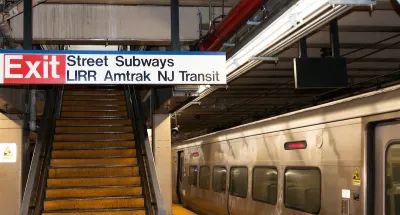
Extreme heat caused delays on New Jersey Transit rail lines this week, reports Chris Keating for News 12 New Jersey. “New Jersey Transit CEO Kris Kolluri says air conditioning inside rail cars had been breaking down,” Keating adds.
“Kolluri says temperatures underneath Newark Penn Station, where trains are waiting for riders, can rise to 128 degrees.” During high heat, rails also expand, causing trains to slow down for safety and to prevent damage to the tracks.
The system plans to upgrade its equipment to eliminate similar issues by 2031.
Read the full story: Extreme heat takes toll on NJ Transit rail service
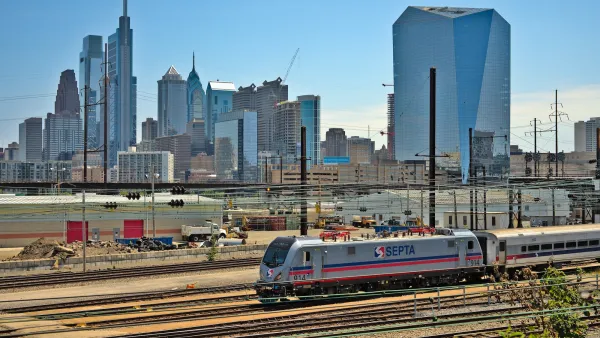
Extreme heat forces Amtrak, SEPTA to slow trains
High temperatures affect train tracks, electrical equipment and other key infrastructure.
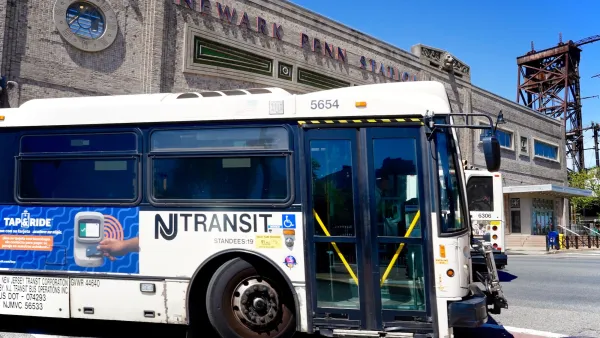
Facing Federal Funding Freeze, NJ Transit Revises Zero-emission Plan
The agency is retooling a plan to modernize its aging bus depots after the Trump administration decided to freeze nearly $324 million in grants.
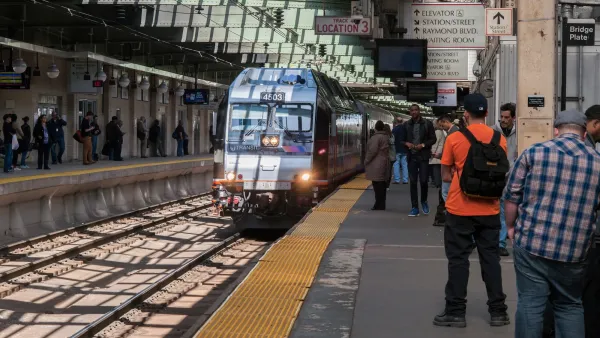
NJ Transit to Cut Service by Half for 4 Weeks for Gateway Project Work
Service between New Jersey and New York will be cut by 50 percent as the agency switches rail operations to another track.

Planetizen Federal Action Tracker
A weekly monitor of how Trump’s orders and actions are impacting planners and planning in America.

California plans to bury El Niño’s downpour
If the state plays its cards right, it may be able to store a billion acre-feet of El Niño’s water in aquifers.

Desperate measures: Advocates weigh draining Lake Powell to fill Colorado River
Draining the reservoir could reduce evaporation losses by a couple hundred thousand acre-feet.

Los Angeles just elected an urban planner as its mayor
Transportation analysts are optimistic that Raman will be more aggressive in addressing transit issues than Bass.

Mamdani’s pied-à-terre tax survives legal challenge
A panel of judges found that the plaintiffs failed to demonstrate injury as a result of New York City's implementation of the tax.

Eastern Nebraska is running out of electricity
Data centers and electrification are straining eastern Nebraska’s grid, throttling economic development.

FREE Course: Walkable City 1: Why Walkability?
After describing his path towards focusing on walkability as the essence of good planning, Jeff Speck marches through his five principal reasons for making more walkable places.
Reinventing Malls: Planning Alchemy—Turning Gray Fields Into Gold
The course focuses on the opportunities and imperatives that shape reinvention of mall sites.

City of Rosemead
Rutgers University, Edward J. Bloustein School of Planning and Public Policy
One Hundred Miles
University of Michigan School for Environment and Sustainability (SEAS)
Hunter College, City University of New York (CUNY)
The Architects Foundation
City of Cambridge
Montrose County
The Pocatello Development Authority