This month a new generation of urban planners will transition from planning school to the workplace—it is a season for new ideas.



I attended a graduation ceremony last week, and I'll be honest: I got a little choked up (it was my son's very adorable pre-school graduation). Graduations formally mark an important passage in life (notice how many graduation pics pop up on Facebook in June?), and each year at this time I am reminded of transition. My son will be entering a new grade in school, and at the other end of the scholastic spectrum, a new generation of urban planning students are winding down their school experience and preparing to enter the workplace.
In my own office, summer interns are offering new ideas and a boost of energy. Urban planning can be an overwhelmingly broad field to dive into, and those who can embrace uncertainty will find the learning curve more manageable. Most new planners know they want to help make better places, but the question of what urban planners actually do and how they do it might not have been made clear, even in graduate school.
I reflected on my own experience as a new planner in a blog post for the American Planning Association - North Carolina Chapter during this time last year. I remembered my own experience transitioning from graduate school to the workplace, and the unexpected 'entrance exam' I needed to pass to secure my first planning job. In the article I also included a video that recalls some early experiences as a happy new planner long on idealism and short on experience.
The planning department permit counter is a headfirst dive into front line customer service, and a sense of humor helps maintain a positive perspective in a sometimes thankless role.
If you are a new planner, take advantage of any workplace training and orientation events you can access. Ask questions. Don't struggle alone. We were all new at one time. Even the newest employees have something immediate they can offer. Figure out what that is and share it with your team. Be the person that solves problems, no matter how small.

And if you have a new planner in your office, welcome him or her. Be a mentor. Ask about their goals. Ask them to help move that side project forward that you've been thinking about but never have the time to focus on.
We are only a few weeks into internship season and I am already amazed by the productivity and new ideas coming from the group. This is a time to pause, think, and laugh about where we started and where we are headed, and appreciate the great people on our team.
Read the full story: Once Upon a Permit Counter: Explaining what Urban Planners Do

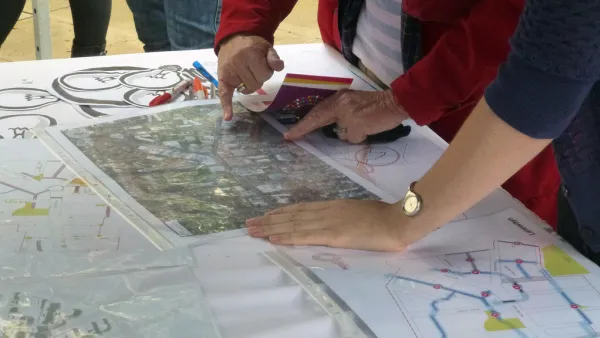
Why Aren’t There More Planners?
Planning can be a great career for socially conscious individuals, but university programs are struggling to attract new students to the field. A trio of academics are raising awareness about the field through community activation.
The Top Schools For Urban Planners
The 7th Edition of the Planetizen Guide to Graduate Urban Planning Programs, now available, includes an updated ranking of the Top 25 master’s programs in urban planning, city planning, regional planning, and community planning.

The Top Planning Courses of 2022
A list of the top planning education resources, according to the users of Planetizen Courses.

Planetizen Federal Action Tracker
A weekly monitor of how Trump’s orders and actions are impacting planners and planning in America.

Amtrak, CN end decades-long dispute with eight-year agreement
The new operating agreement establishes an updated framework for the companies to work together, including processes to resolve disputes.

Judges permit Denver to divert 77,000 acre feet from the Colorado River for reservoir expansion
Overuse and climate change have caused the Colorado River’s water levels to plummet.

NYC DOT wants faster, more permanent street upgrades
The city is examining ways to build more concrete infrastructure without getting entangled in 'decades-long' projects.

'Something we’ve never seen before:' rising utility rates could strain city finances nationwide
Data centers, climate change and other factors have caused utility rates in the United States to increase by 38% since 2020.

Trump to overrule local leaders, lease millions of acres of America’s Pacific Island territories’ seafloors to mining companies
International law says that the Indigenous people of America’s territories have a right to prior and informed consent regarding projects that impact their countries.

FREE Course: Walkable City 1: Why Walkability?
After describing his path towards focusing on walkability as the essence of good planning, Jeff Speck marches through his five principal reasons for making more walkable places.
Reinventing Malls: Planning Alchemy—Turning Gray Fields Into Gold
The course focuses on the opportunities and imperatives that shape reinvention of mall sites.

Harvard University Graduate School of Design
KFH Group Inc.
Greater Baltimore Committee
The Architects Foundation
University of Cincinnati Online
The Pocatello Development Authority
The Urban Renewal Agency of the City of Pocatello