The Platte to Park Hill project would install new stormwater detention facilities at a golf course near Downtown Denver. Opponents to the project say it’s a burden on the neighborhood and a benefit to development interests farther down the watershed.



"Critics of Denver's plan to improve the flow of stormwater toward the South Platte River voiced their concerns about the city's push to create a stormwater detention area at City Park Golf Course Saturday morning," reports Katy Canada.
The opposition claims the plan "exclusively benefits development-rich communities in the Platte Valley" while leaving the burden on "long-standing historic neighborhoods." In this case, the burden is the closure of the golf course for two years, the removal of 150 trees, and the demolition of the clubhouse on the site.
The Platte to Park Hill project, as its called, includes three additional components, reports Canada: "a larger outfall on the river at Globeville Landing Park; a new mile-long open drainage channel along 39th Avenue from Franklin to Steele streets, lined with 12 acres of new open space that directs storm runoff toward pipes leading to the outfall; and the creation of a second detention area on the northeast corner of Park Hill Golf Club, to slow the flow of stormwater northward."
Critics of the project compare its methods to that of a widely-criticized project to widen I-70.
Read the full story: Critics protest plan to put stormwater detention area in Denver's City Park


Denver Voters Will Weigh Open Space Development
Two competing initiatives seek to change city regulations for residential and commercial development on the city's parklands and open spaces.

Development vs. Open Space at a Denver Golf Course
A developer just bought a Denver-area golf course in the hopes of some day rezoning the site for residential and commercial development. Open space advocates have other ideas, as does the city (for now).
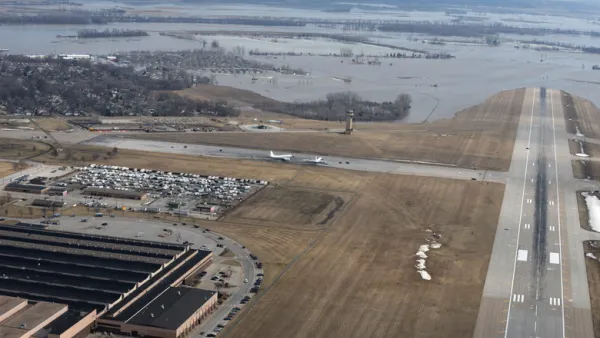
Deadly Flooding Follows Bomb Cyclone in the Midwest
Extreme weather ravaged the Midwest late last week and over the weekend, overwhelming infrastructure from Colorado to Nebraska.

Planetizen Federal Action Tracker
A weekly monitor of how Trump’s orders and actions are impacting planners and planning in America.

Amtrak, CN end decades-long dispute with eight-year agreement
The new operating agreement establishes an updated framework for the companies to work together, including processes to resolve disputes.

Judges permit Denver to divert 77,000 acre feet from the Colorado River for reservoir expansion
Overuse and climate change have caused the Colorado River’s water levels to plummet.

NYC DOT wants faster, more permanent street upgrades
The city is examining ways to build more concrete infrastructure without getting entangled in 'decades-long' projects.

'Something we’ve never seen before:' rising utility rates could strain city finances nationwide
Data centers, climate change and other factors have caused utility rates in the United States to increase by 38% since 2020.

Trump to overrule local leaders, lease millions of acres of America’s Pacific Island territories’ seafloors to mining companies
International law says that the Indigenous people of America’s territories have a right to prior and informed consent regarding projects that impact their countries.

FREE Course: Walkable City 1: Why Walkability?
After describing his path towards focusing on walkability as the essence of good planning, Jeff Speck marches through his five principal reasons for making more walkable places.
Reinventing Malls: Planning Alchemy—Turning Gray Fields Into Gold
The course focuses on the opportunities and imperatives that shape reinvention of mall sites.

Harvard University Graduate School of Design
KFH Group Inc.
Greater Baltimore Committee
The Architects Foundation
University of Cincinnati Online
The Pocatello Development Authority
The Urban Renewal Agency of the City of Pocatello