To fund a wider I-70 on its route through Denver, the regional planning commission set aside $50 million in federal funds before considering other projects.


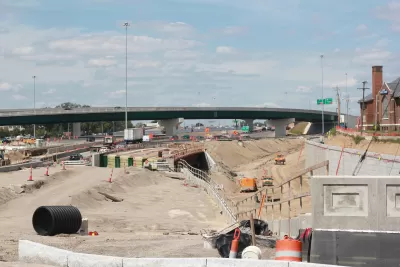
Plans to widen the I-70 in Denver to ten lanes have met opposition for being, according to this piece, a money-hog of questionable urban merit.
"Streetsblog looked into the funding mechanisms for one of the most expensive road projects in Colorado history, and it turns out that the I-70 widening is already diverting money from other priorities." That is, to the tune of $50 million. The project's overall starting cost amounts to $1.8 billion.
"DRCOG's [Denver Regional Council of Governments] decision prioritized widening the highway to 10 lanes instead of spending on projects that can improve safety, reducing greenhouse gas emissions, or connect people to jobs via effective transit." To mitigate some of the expansion's more unsightly consequences, plans include a cap park that the mega-highway will tunnel under.
FULL STORY: I-70 Widening Has Already Diverted $50M From Smarter Transpo Projects

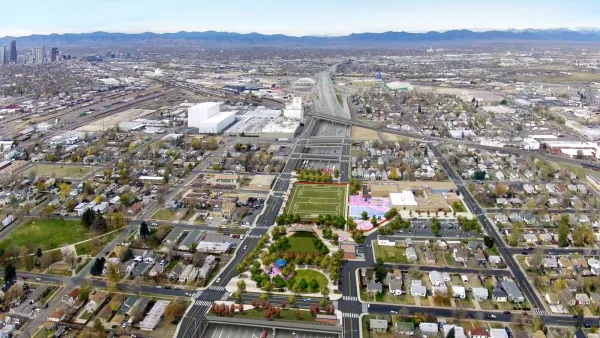
I-70 Highway Update May Exacerbate Segregation
A piece in The Nation argues a Denver highway plan will further shrink the black community in that city through the use of eminent domain.
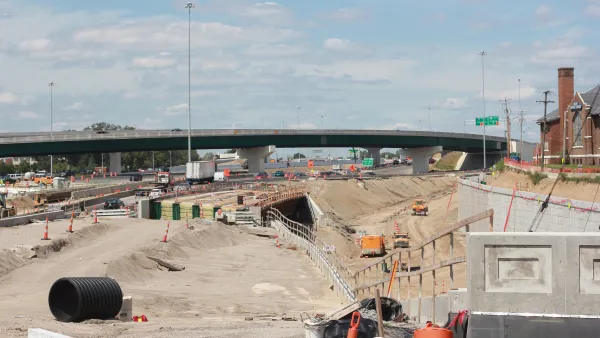
'Highway Propaganda' Promotes Widening Projects
Apparently to galvanize public support, the Colorado Department of Transportation and an Ohio chamber of commerce have produced videos touting the benefits of widening projects for low-income communities.
Stormwater Improvements Linked to Freeway Project in Northeast Denver
The funding needed to complete the Two Basin Drainage Project in Denver would come as a package deal with a $1.2 billion plan to overhaul I-70. Residents are concerned that they might be getting more than they bargained for.

Planetizen Federal Action Tracker
A weekly monitor of how Trump’s orders and actions are impacting planners and planning in America.

The state-sanctioned urbicide of Austin
People don’t kill cities. Freeways do.

US to reduce Colorado River water deliveries to Mexico
A new Colorado Treaty amendment reduces Mexico’s Colorado River water allocation by 250,000 acre feet.

Mamdani overhauls NYC's Vision Zero plan with 100 new policy goals
The overhaul aims to reduce traffic deaths and make streets safer for pedestrians, cyclists and drivers through lower speed limits, new safety infrastructure and more.

Amtrak not solely to blame for New Jersey commuter rail's unreliability, report finds
A new study from the Garden State Initiative found that NJ Transit’s budget grew 20% across a 4 year period, but reliability declined significantly over the same period.

EPA erases limits on planet-warming pollution from power plants
Under Monday’s plan, power plants would still have some limits on how much mercury, arsenic and other contaminants they can emit.

FREE Course: Walkable City 1: Why Walkability?
After describing his path towards focusing on walkability as the essence of good planning, Jeff Speck marches through his five principal reasons for making more walkable places.
Reinventing Malls: Planning Alchemy—Turning Gray Fields Into Gold
The course focuses on the opportunities and imperatives that shape reinvention of mall sites.

Eagle County Government
Harvard University Graduate School of Design
Nashville Planning Department
The Architects Foundation
University of Cincinnati Online
The Pocatello Development Authority
The Urban Renewal Agency of the City of Pocatello
Journal of the American Planning Association