An investigation by the Tampa Bay Times finds Walmart stores treating local police forces like their own personal security forces.


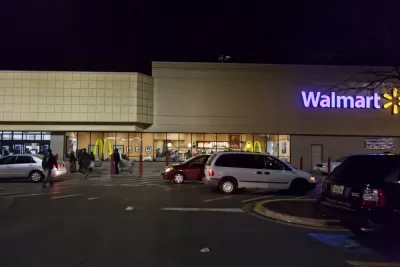
Zachary T. Sampson, Laura C. Morel, and Eli Murray summarize the results of an investigation by the Tampa Bay Times: "Law enforcement logged nearly 16,800 calls in one year to Walmarts in Pinellas, Hillsborough, Pasco and Hernando counties…" Do that math and that equals "two calls an hour, every hour, every day."
The problem with all those calls placed to the cops: it's costing taxpayer's money, at the expense of public safety in other parts of those communities, at a much higher rate than other retail centers.
When it comes to calling the cops, Walmart is such an outlier compared with its competitors that experts criticized the corporate giant for shifting too much of its security burden onto taxpayers. Several local law enforcement officers also emphasized that all the hours spent at Walmart cut into how often they can patrol other neighborhoods and prevent other crimes.
The article offers a feature-length examination of the Times analysis of thousands of records and dozens of interviews, investigating the impact on local policing of 53 Walmarts in the Tampa region. Tons of statistics and expert commentary on the findings are included.
FULL STORY: Walmart: Thousands of police calls. You paid the bill.

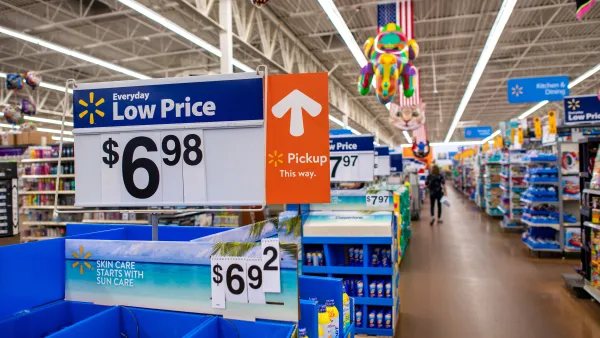
The Walkable Urbanism of Big Box Stores
For residents of many U.S. small towns and exurbs, the local Walmart offers a surprising benefit missing elsewhere in their communities: walkability.
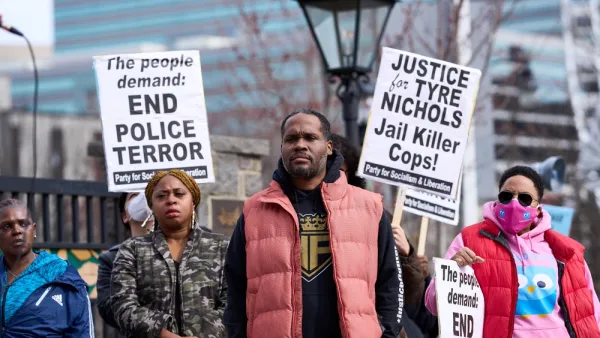
Memphis: Crime-fighting Camera Sheds Light on Police Abuse
The irony is unmistakable. Public surveillance cameras, long controversial in the criminal justice community, provided pivotal video footage of the beating of motorist Tyre Nichols by five Memphis police officers at a traffic stop on January 7.
Is the Waze Police-Tracking Feature a Threat to Public Safety?
The popular navigation app Waze includes a feature that rewards users for revealing the location of police officers. A debate over the public safety impacts of that feature is gaining traction, and some police officers want the feature removed.

Planetizen Federal Action Tracker
A weekly monitor of how Trump’s orders and actions are impacting planners and planning in America.

The state-sanctioned urbicide of Austin
People don’t kill cities. Freeways do.

US to reduce Colorado River water deliveries to Mexico
A new Colorado Treaty amendment reduces Mexico’s Colorado River water allocation by 250,000 acre feet.

5 New England states march closer to 800 megawatt wind energy project
Securing federal approval for the project may be complicated under the Trump administration, which has historically been hostile towards domestic wind power.

Baltimore to break ground on $50 million Transit Priority Project
The project will bring faster bus trips, safer streets and better bike connections to Baltimore.

Airbnb launches $250 million 'last-dollar financing' housing accelerator, makes first investment in Austin
The company will put $6.4 million towards affordable housing development in Texas’ capital.

FREE Course: Walkable City 1: Why Walkability?
After describing his path towards focusing on walkability as the essence of good planning, Jeff Speck marches through his five principal reasons for making more walkable places.
Reinventing Malls: Planning Alchemy—Turning Gray Fields Into Gold
The course focuses on the opportunities and imperatives that shape reinvention of mall sites.

Eagle County Government
Harvard University Graduate School of Design
Nashville Planning Department
The Architects Foundation
University of Cincinnati Online
The Pocatello Development Authority
The Urban Renewal Agency of the City of Pocatello
Journal of the American Planning Association