Instead of voting on new taxes to reduce transportation revenue shortfalls, Illinois voters will decide on a constitutional amendment to ensure that transportation fees and taxes are only spent on roads and transit, the so-called "lockbox" measure.


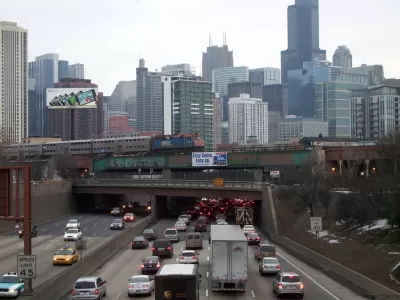
Unable or unwilling to raise the 31 cent gas tax [per API], not raised since 1991, Illinois legislators passed "common sense" legislation, in the words of Sen. Bill Haine, D-Alton, one of the many sponsors of HJRCA 36. While it does nothing to increase transportation revenues, it creates a virtual trust fund or budget "lock-box," like those found in many other states and the federal government, to ensure that transportation user fee and tax revenues are spent only on transportation-related purposes.
"The effort comes as Illinois' infrastructure wish list continues to grow, but money earmarked for transportation projects is routinely diverted to fill other budget holes," writes Monique Garcia, state government and political reporter for the Chicago Tribune. "While some advocacy groups have called for a gas tax increase, raising taxes is politically unpopular during an election year."
Chicago-based Metropolitan Planning Council (MPC), an independent, nonprofit, nonpartisan organization, called for a 30-cent gas tax and vehicle registration fee increases in a new report posted here last month. MPC Senior Fellow James R. Reilly urges a "yes" vote on the lockbox measure.
History suggests voters would be wise to approve this amendment. Time and again, particularly in years when state revenues have been tight, the General Assembly has dipped into what’s known as “the road fund.”
Unlike more road-oriented transportation constitutional amendments, such as California's Article XIX, far more transportation purposes are allowed under Constitutional Amendment 36 according to Garcia.
[Lockbox] money could then only be spent on road construction and repair, enforcing traffic laws, paying off debt on transit projects and even costs associated with workers injured on the job. The change would not apply to state and local sales taxes that often are added on top of the gas tax motorists pay at the pump.
Garcia notes that the lockbox could remove one obstacle to the passage of a potential future gas tax hike — that transportation revenue would be used as intended rather than diverted to more pressing budgetary needs. However, as noted countless times by Planetizen, the norm is for General Fund money to be diverted to transportation projects, not vice-versa.
As posted here last month, the Prairie State is also considering implementing a vehicle mile traveled fee program to deal with the transportation shortfall.
Amendment 36 would be "the only legislatively-approved amendment voters will get a chance to weigh in on this fall," adds Garcia.
The measure appears in Ballotpedia. "If you know of any opposition to this measure, please contact [email protected]," notes the listing.
Hat tip to The AASHTO Daily Transportation Update.
Read the full story: Gas tax 'lockbox' constitutional amendment to appear on Nov. 8 ballot

Unable or Unwilling to Hike Gas Taxes, Illinois and New Jersey Go to Voters
However, neither state will ask voters to increase the gas tax. Instead, they ask voters to assure that gas tax and other transportation-derived revenues are spent on transportation. Neither state has raised the tax in over 25 years.
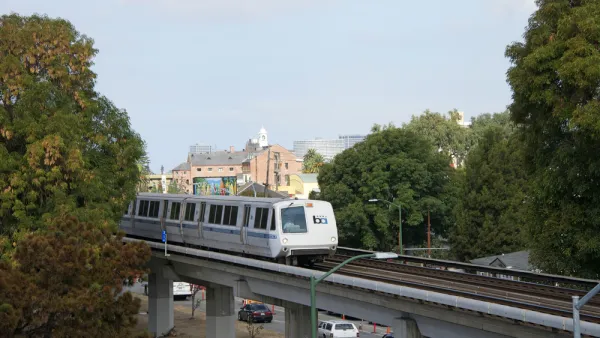
$3.5 Billion Bond Measure to Keep BART in Good Repair Approved for November
After extensive outreach, the BART Board of Director settled on the $3.5 billion sum to be on the November ballot. 'Unmet capital needs' are the target of the property tax measure.
Let Smokers Pay for Roads
Missouri has come up with a unique way to pay for roads, and it's even a user fee, though it bears no direct relation to road users other than for those driving to the store to buy their cigarettes. So much for using the tax to address public health.

Planetizen Federal Action Tracker
A weekly monitor of how Trump’s orders and actions are impacting planners and planning in America.

‘Going backwards:’ Baltimore mayor, students rally against state's transit funding plan
Maryland's proposed six-year plan provides no funding for Baltimore’s BMORE bus program and reduces its road maintenance funding.

Detroit to transform waterfront with $2.2 billion investment
Developers will convert about 18 acres of unused parking lot space into civic spaces.

HUD, USDA agree on framework to simplify housing environmental review standards
Their agreement is a requirement of the 21st Century ROAD to Housing Act.

Cost of water rising at a faster pace than inflation, median household income
California and Maryland residents have seen their water bills grow especially high.

NYC building owners overwhelmingly comply with new emissions limits
The New York City Department of Buildings is fining owners who did not file emissions reports.

FREE Course: Walkable City 1: Why Walkability?
After describing his path towards focusing on walkability as the essence of good planning, Jeff Speck marches through his five principal reasons for making more walkable places.
Reinventing Malls: Planning Alchemy—Turning Gray Fields Into Gold
The course focuses on the opportunities and imperatives that shape reinvention of mall sites.

planning NEXT
City of Thousand Oaks
City of Wisconsin Rapids
The Architects Foundation
University of Cincinnati Online
Northern Illinois Transit Authority (NITA)
The Pocatello Development Authority
The Urban Renewal Agency of the City of Pocatello