In an opinion piece, former mayor Michael Bloomberg of New York joins Anne Hidalgo of Paris and Eduardo Paes of Rio de Janeiro. They argue that national governments should give cities every possible tool to cut emissions.



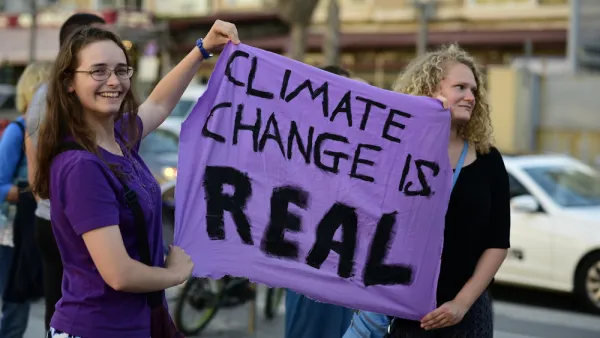
Arguing that strong cities serve everyone, three mayors make the case that the climate's future will be decided in cities. "Cities account for most of the world's carbon emissions, and their share will continue to increase as cities increase in size. Today more than half of the world lives in cities, and by 2050, two-thirds will."
Worldwide economic benefits may be sizable, as well as the positive health effects of lower local pollution. "To us, the case is clear. Actions to reduce carbon emissions in urban areas are expected to be a $17tn global economic opportunity by 2050 based on energy savings alone."
Municipal government, however, may be hamstrung by national unwillingness to delegate the required authority. "But in order for cities to take these steps, national governments must empower them. For instance, outdated national laws prevent many cities from utilizing local tax revenues or borrowing money on their own."
If national governments remove national fossil fuel subsidies and give mayors full power to regulate emissions, cities could do a lot more to address the climate crisis.
FULL STORY: We've been mayors of New York, Paris and Rio. We know climate action starts with cities


Countries Underreport Greenhouse Gas Emissions
A Washington Post investigation found major discrepancies between actual emissions and the levels reported to the United Nations.
Report: How The U.S. Could Meet Its 2030 Climate Goals
If policymakers don't take clear, immediate action, emissions reductions will fall short of the 50-52 percent goal set in Paris.

Sustainable Real Estate Investments Are No Longer Optional
Greenwashing won't cut it anymore, and investors are increasingly demanding that all real estate developments and existing assets be assessed in the most holistic way possible.

Planetizen Federal Action Tracker
A weekly monitor of how Trump’s orders and actions are impacting planners and planning in America.

The state-sanctioned urbicide of Austin
People don’t kill cities. Freeways do.

US to reduce Colorado River water deliveries to Mexico
A new Colorado Treaty amendment reduces Mexico’s Colorado River water allocation by 250,000 acre feet.

5 New England states march closer to 800 megawatt wind energy project
Securing federal approval for the project may be complicated under the Trump administration, which has historically been hostile towards domestic wind power.

Baltimore to break ground on $50 million Transit Priority Project
The project will bring faster bus trips, safer streets and better bike connections to Baltimore.

Airbnb launches $250 million 'last-dollar financing' housing accelerator, makes first investment in Austin
The company will put $6.4 million towards affordable housing development in Texas’ capital.

FREE Course: Walkable City 1: Why Walkability?
After describing his path towards focusing on walkability as the essence of good planning, Jeff Speck marches through his five principal reasons for making more walkable places.
Reinventing Malls: Planning Alchemy—Turning Gray Fields Into Gold
The course focuses on the opportunities and imperatives that shape reinvention of mall sites.

Eagle County Government
Harvard University Graduate School of Design
Nashville Planning Department
The Architects Foundation
University of Cincinnati Online
The Pocatello Development Authority
The Urban Renewal Agency of the City of Pocatello
Journal of the American Planning Association