By combining the resources of the public and private sectors, Prince George County was able to greatly reduce the costs required to retrofit an aging stormwater system.


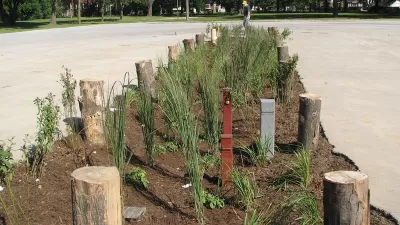
Jeff Day reports on the details of a unique public-private partnership in Prince George County, Maryland, "which aims to slash the steep cost of reducing stormwater pollution…"
Prince George’s County and its partner, Corvias Solutions, hope to retrofit 15,000 acres’ worth of pavement and buildings in the largely suburban DC community, installing rain gardens, vegetated roofs and other water-absorbing landscape features to capture runoff and help meet the county’s obligations to help clean up the Chesapeake Bay.
Corvias is no stranger to working with public entities on infrastructure projects—building military housing with the Department of Defense. The Prince George County partnership, however, is the company's first focusing on stormwater.
Day notes that Prince George's County was developed inside the Beltway before stormwater runoff was recognized as a public health threat. Thus, the costs of retrofitting old stormwater infrastructure can be daunting at best and prohibitive at worst. Under the partnership, which Day describes in more detail, the cost of meeting a 2025 deadline to complete pollution reduction measures will be reduced by half—from $2 billion to $1 billion.
FULL STORY: Public-private partnerships expected to lower stormwater retrofit costs

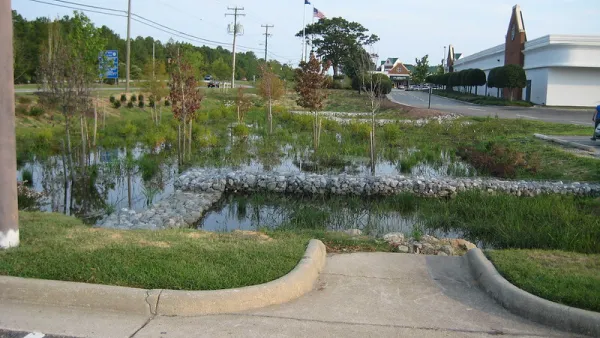
FYI about GSI: The Recipe for Green Stormwater Infrastructure Success
New research highlights some of the ways planners can increase the social benefits and public acceptance of green stormwater infrastructure.
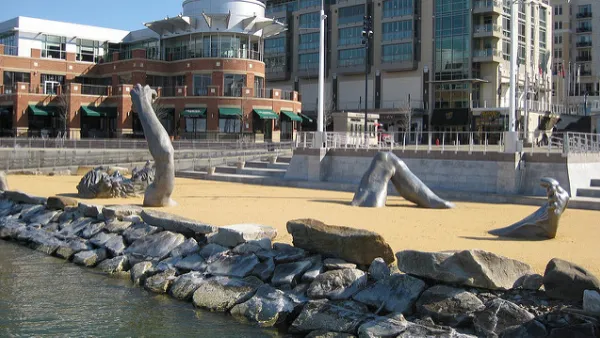
Maryland County National Leader in Green Infrastructure and Jobs
Community-based public-private partnerships are bringing green infrastructure jobs to Prince George’s County and cleaning up the Chesapeake Bay.
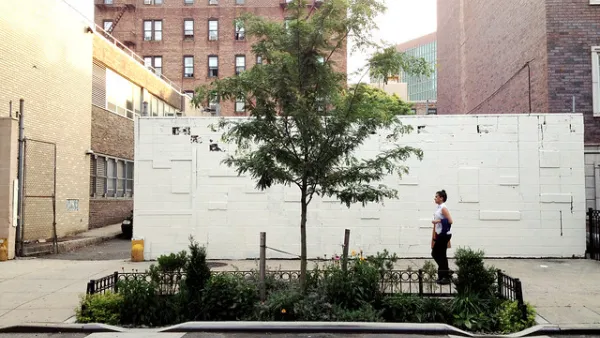
New York Sets a Goal for 5,000 New Curbside Rain Gardens
Seventy percent of the surface of New York City is impervious. A program with a goal to build a total of 9,000 curbside rain gardens will put a dent in the hardscape.

Planetizen Federal Action Tracker
A weekly monitor of how Trump’s orders and actions are impacting planners and planning in America.

The state-sanctioned urbicide of Austin
People don’t kill cities. Freeways do.

US to reduce Colorado River water deliveries to Mexico
A new Colorado Treaty amendment reduces Mexico’s Colorado River water allocation by 250,000 acre feet.

5 New England states march closer to 800 megawatt wind energy project
Securing federal approval for the project may be complicated under the Trump administration, which has historically been hostile towards domestic wind power.

Baltimore to break ground on $50 million Transit Priority Project
The project will bring faster bus trips, safer streets and better bike connections to Baltimore.

Airbnb launches $250 million 'last-dollar financing' housing accelerator, makes first investment in Austin
The company will put $6.4 million towards affordable housing development in Texas’ capital.

FREE Course: Walkable City 1: Why Walkability?
After describing his path towards focusing on walkability as the essence of good planning, Jeff Speck marches through his five principal reasons for making more walkable places.
Reinventing Malls: Planning Alchemy—Turning Gray Fields Into Gold
The course focuses on the opportunities and imperatives that shape reinvention of mall sites.

Eagle County Government
Harvard University Graduate School of Design
Nashville Planning Department
The Architects Foundation
University of Cincinnati Online
The Pocatello Development Authority
The Urban Renewal Agency of the City of Pocatello
Journal of the American Planning Association