Although many local activists and officials oppose the trend, Arkansas state planners are considering major highway expansions in the Little Rock area. The state's highway department has demonstrated a pro-car, pro-suburb agenda.



Alana Semuels reports on one region of the country that is "doubling down" on highway expansions, mostly serving a suburban population. One project cuts close to downtown Little Rock. "This is happening at a time when a revitalization of the River Market district, located on the Arkansas River just beside the highway, is starting to take hold."
Throughout the Sun Belt, state highway departments have been more than willing to finance major expansion projects. "Colorado wants to spend $1.2 billion to widen I-70 in Denver. Louisville is planning to widen I-71 to six lanes, from four. Iowa is widening U.S. 20 to four lanes. And in Birmingham, the state of Alabama wants to widen I-20/59, which passes right through the city center."
However, research on the issue warns against expanding highways to ease traffic. "When Texas expanded the Katy Freeway in Houston to 26 lanes to reduce congestion, for example, travel times increased by 30 percent in the morning and 55 percent in the evening."
Ingrained governmental structures can also contribute to a highways-first attitude on the state level. "Highway departments in many states operate as independent fiefdoms with little oversight or accountability [...] The [Arkansas] Highway Department is governed by an appointed commission created in the 1950s as a response to corruption. Members serve 10-year terms."
Read the full story: The Cities Doubling Down on Highways
‘Divided by Design’ Underscores Inequities in Transportation Policy
The report calls for a wholesale overhaul of U.S. transportation policy to redress the damages caused by decades of auto-centric development.
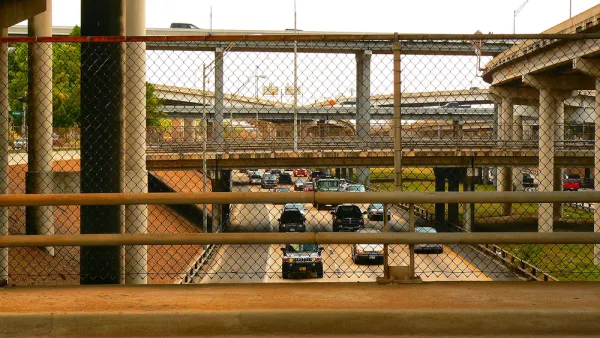
Freeway Expansions Continue to Threaten Black and Brown Communities
Despite calls to center equity in infrastructure projects, highway construction and expansion still disproportionately impacts communities of color, according to a Los Angeles Times investigation.
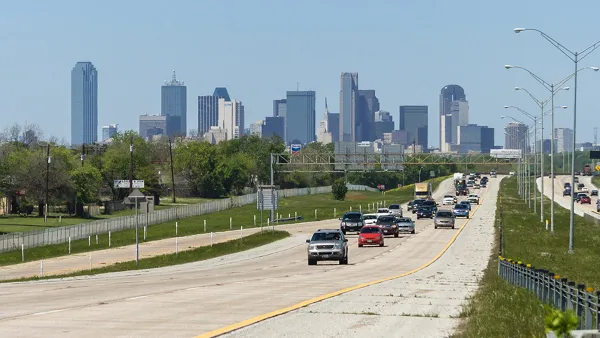
Induced Demand: Why Highways Still Reign in Dallas
Regional planners and Dallas officials aren't confident that the area's highway-centric worldview (and budget) will change anytime soon. The city's competitiveness in the national job market may be on the line.

Planetizen Federal Action Tracker
A weekly monitor of how Trump’s orders and actions are impacting planners and planning in America.

California plans to bury El Niño’s downpour
If the state plays its cards right, it may be able to store a billion acre-feet of El Niño’s water in aquifers.

Desperate measures: Advocates weigh draining Lake Powell to fill Colorado River
Draining the reservoir could reduce evaporation losses by a couple hundred thousand acre-feet.

Chicago voters approve permanent festival grounds, penalty for vacant property owners
Currently, major summer and fall festivals take over public parks for weeks at a time, drawing criticism from nearby residents

NYC votes to cut outdoor dining red tape, speed up permitting
New York City also voted to allow the Department of Transportation to begin work on urgent projects before notifying elected officials.

California appears to reject Prop. 45
The proposition would have expanded the projects that qualify for a streamlined environmental review, effectively paring down the California Environmental Quality Act.

FREE Course: Walkable City 1: Why Walkability?
After describing his path towards focusing on walkability as the essence of good planning, Jeff Speck marches through his five principal reasons for making more walkable places.
Reinventing Malls: Planning Alchemy—Turning Gray Fields Into Gold
The course focuses on the opportunities and imperatives that shape reinvention of mall sites.

City of Rosemead
Rutgers University, Edward J. Bloustein School of Planning and Public Policy
One Hundred Miles
Hunter College, City University of New York (CUNY)
The Architects Foundation
University of Cincinnati Online
City of Cambridge
Montrose County
The Pocatello Development Authority