A grassroots housing plan in Baltimore would keep control over neighborhood revitalization, and its benefits, in communities.


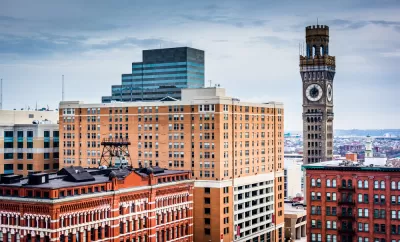
The "20/20 Vision for Fair Development" plan calls for the city to commit to an annual investment of $40 million. Half would go toward demolishing vacant and blighted properties; the other half would be a long-term investment in plans to rebuild permanently affordable housing through community land trusts.
Community land trusts, or CLTs, are nonprofits that establish communally owned property under a democratic governance structure. Baltimore Housing Roundtable, the coalition behind the proposal, says joint land ownership offers the possibility of neighborhood revitalization, and housing, without the risk of displacement:
"When these community controls are leveraged against market forces, neighborhoods can ensure a communally managed recycling of ownership, and avoid the frenzied churn of renters and developers commonly associated with boom-bust speculation and gentrification."
A city board recently took a different tack, approving a $600-million urban revitalization program from the governor that will incentivize new development on demolished properties.
"Project C.O.R.E." is the type of plan to which CLTs are proposed as an alternative. Advocates say the strategy of attracting private developers with little community accountability can be difficult to distinguish from an attempt to attract a new community to fill private developments. A January report from the Housing Roundtable reads:
"When significant numbers of people are constantly threatened with homelessness and the city can offer only trickle down development that, if successful, will further increase housing costs, the only reasonable conclusion is that involuntary displacement of a certain class of residents is a foreseeable part of the city’s plan and policy."
The Nation delves deeper into competing visions for Baltimore, and the possibilities for revitalization without gentrification.
FULL STORY: Can Neighborhoods Be Revitalized Without Gentrifying Them?


Shared-Equity Homeownership: A Primer
Alternative models of homeownership involving shared equity may be able to offset the urban housing crunch. They include the subjects of this discussion: community land trusts and housing co-ops.

Denver Land Trust Fights Displacement Whether It Owns the Land or Not
Tierra Colectiva, a community land trust in the Denver neighborhoods of Globeville and Elyria-Swansea, combines community organizing, traditional CLT development, and more unusual roles in a large affordable housing development.

20 Years After Katrina, New Orleans is More Unaffordable Than Ever
The city’s post-hurricane redevelopment has failed to include its most vulnerable residents.

Planetizen Federal Action Tracker
A weekly monitor of how Trump’s orders and actions are impacting planners and planning in America.

The state-sanctioned urbicide of Austin
People don’t kill cities. Freeways do.

US to reduce Colorado River water deliveries to Mexico
A new Colorado Treaty amendment reduces Mexico’s Colorado River water allocation by 250,000 acre feet.

Mamdani overhauls NYC's Vision Zero plan with 100 new policy goals
The overhaul aims to reduce traffic deaths and make streets safer for pedestrians, cyclists and drivers through lower speed limits, new safety infrastructure and more.

Amtrak not solely to blame for New Jersey commuter rail's unreliability, report finds
A new study from the Garden State Initiative found that NJ Transit’s budget grew 20% across a 4 year period, but reliability declined significantly over the same period.

EPA erases limits on planet-warming pollution from power plants
Under Monday’s plan, power plants would still have some limits on how much mercury, arsenic and other contaminants they can emit.

FREE Course: Walkable City 1: Why Walkability?
After describing his path towards focusing on walkability as the essence of good planning, Jeff Speck marches through his five principal reasons for making more walkable places.
Reinventing Malls: Planning Alchemy—Turning Gray Fields Into Gold
The course focuses on the opportunities and imperatives that shape reinvention of mall sites.

Eagle County Government
Harvard University Graduate School of Design
Nashville Planning Department
The Architects Foundation
University of Cincinnati Online
The Pocatello Development Authority
The Urban Renewal Agency of the City of Pocatello
Journal of the American Planning Association