Louisville has the ignominious distinction of having the largest heat island effect of any of the largest cities in the United States. A new study from the Urban Climate Lab at Georgia Tech suggests ideas for lowering the heat in the city.



"Mayor Greg Fischer launched a "Cool502" effort on Monday to fight the city's documented problem with urban heat," reports James Bruggers. The mayor's announcement responded to a new study from Georgia Tech about the many negative effects of Louisville's heat problem.
In releasing the city's first heat management report [pdf], which provides neighborhood-by-neighborhood guidance, the mayor called on residents and business owners to take steps to improve the livability of Louisville by reducing heat.
Bruggers also wrote a second article published today, focusing more specifically on the new study that inspired the mayor's announcement. The report also details the benefits the city could achieve by taking steps to alleviate the problem. The same researchers released a report in 2013 finding that Louisville had the most intense heat island effect of any large city in the United States.
FULL STORY: Fischer launches 'Cool502' to fight urban heat

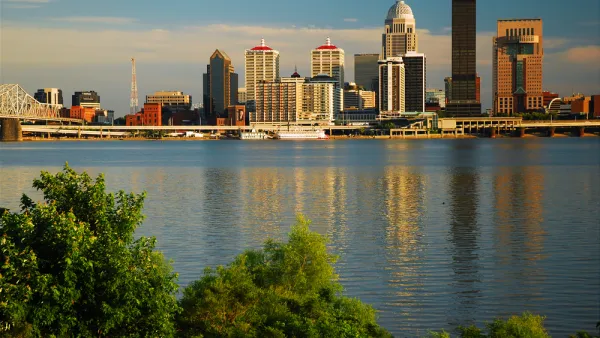
Louisville's Tree-Protection Plan in Final Revisions
Faced with a costly urban heat island effect, Louisville is working on a new tree-protection ordinance that could be headed for a vote this week.
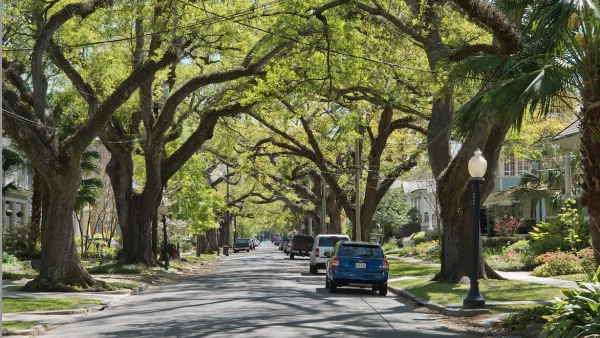
Green Infrastructure Thinking for Southern Cities in 2022 and Beyond
Resilience planning requires communities to think of a well planned and maintained tree canopy as a public utility system with multiple benefits.

Denver Voters Will Weigh Open Space Development
Two competing initiatives seek to change city regulations for residential and commercial development on the city's parklands and open spaces.

Planetizen Federal Action Tracker
A weekly monitor of how Trump’s orders and actions are impacting planners and planning in America.

The state-sanctioned urbicide of Austin
People don’t kill cities. Freeways do.

US to reduce Colorado River water deliveries to Mexico
A new Colorado Treaty amendment reduces Mexico’s Colorado River water allocation by 250,000 acre feet.

Baltimore to break ground on $50 million Transit Priority Project
The project will bring faster bus trips, safer streets and better bike connections to Baltimore.

Airbnb launches $250 million 'last-dollar financing' housing accelerator, makes first investment in Austin
The company will put $6.4 million towards affordable housing development in Texas’ capital.

Guerilla urbanists are building DIY bus stop benches in Chicago
A before-and-after of one of the bus stops with a new bench. The new benches are not officially sanctioned or permitted, but the residents who placed them hope they will be the start of a network of DIY benches across the city.

FREE Course: Walkable City 1: Why Walkability?
After describing his path towards focusing on walkability as the essence of good planning, Jeff Speck marches through his five principal reasons for making more walkable places.
Reinventing Malls: Planning Alchemy—Turning Gray Fields Into Gold
The course focuses on the opportunities and imperatives that shape reinvention of mall sites.

Eagle County Government
Harvard University Graduate School of Design
Nashville Planning Department
The Architects Foundation
University of Cincinnati Online
The Pocatello Development Authority
The Urban Renewal Agency of the City of Pocatello
Journal of the American Planning Association