A booming-once-again tech sector and a rapidly increasing population in the Bay Area are aggravating a historically tight housing market. Preservation architect Jerri Holan looks at how Bay Area cities are dealing with the housing crunch.


Last year, the Bay Area’s population increased by over 90,000 residents. The 2015 median price for an existing single-family detached house in the region was $1.25 million. It's not just San Francisco or San Jose, writes Bay Area preservation architect Holan. Other Bay Area cities are confronting the shortage of affordable housing in different ways, and confronting backlashes against increased density and new market housing:
Oakland – historically the affordable housing bastion in the Bay Area — has finally caught up with other cities and is experiencing a severe housing crunch. With an influx of residents priced out of San Francisco’s market, housing prices in Oakland are some of the highest in California. Many long-time residents are being displaced by newcomers. According to Arlene Baxter, a Bay Area residential Realtor, Oakland rents are rising even faster than home prices. Last week, the Oakland City Council passed an emergency 90-day moratorium on rent increases in order to study their crisis. Last month, the Council adopted new housing regulations to ease requirements for adding secondary dwelling units.
Other East Bay cities, too, are deregulating to increase density. Berkeley’s seven new multi-unit, high-rise projects have residents in an uproar about increased traffic and loss of bay views. Albany is adopting a new General Plan which significantly increases density around transportation modes. In Contra Costa County, Concord, planners, developers, residents, and city officials are arguing over the largest real estate project in Northern California: the development of the former Concord Naval Weapons Station, a mothballed Navy storage depot. A 2,200-acre community is planned with 12,000 new housing units that will reshape the entire region.
Holan continues,
In response, the Association of Bay Area Governments (ABAG) will issue its Plan Bay Area 2040 in June, 2017, encouraging a balance between jobs, housing and quality of life in the Bay Area. The need for direction as well as regional cooperation is critical if adequate transportation, open space, and historic resources are to be preserved. As expected, some cities want growth, others don’t. But desired or not, higher housing density is the future reality.
Another arrow in the arsenal of accommodating increasing growth is the increasing popularity and regulatory flexibility toward accessory dwelling units. Holan concludes that the housing crunch, and accompanying conflict to accommodate it won't go away soon. However, it will increasingly dominate the policies of local government as well as the skylines of Bay Area cities.
Read the full story: Bay Area Housing – The Shape of Things to Come

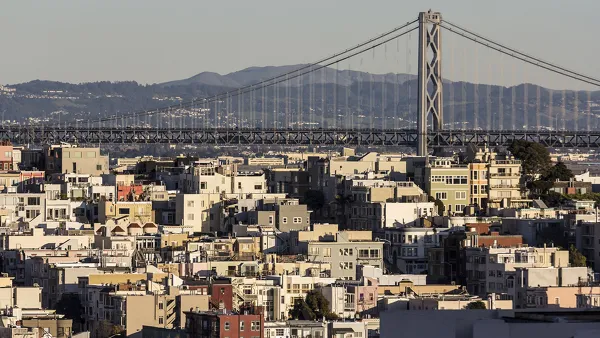
Bay Area Planners Acknowledge the Need for Regional Housing Solutions
While most Bay Area communities are pursuing housing solutions "individually," local planners acknowledge the need for strategies that address the regional as a unified whole.
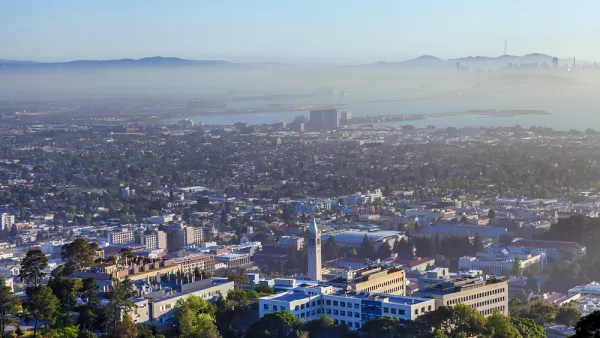
Navigating California's Housing Insanity
One person’s return to the San Francisco Bay Area meant facing the dystopian realities of the rental market.

California Getting Way More New Jobs Than New Housing
Even with tons of building permits already issued this year, the outlook for the state’s affordability crisis is pretty grim.

Planetizen Federal Action Tracker
A weekly monitor of how Trump’s orders and actions are impacting planners and planning in America.

Amtrak, CN end decades-long dispute with eight-year agreement
The new operating agreement establishes an updated framework for the companies to work together, including processes to resolve disputes.

Northwest rail fans eager for Sept. 30 debut of Amtrak’s Airo fleet
Get ready for that new train smell and more seats. But they won’t go faster or run more frequently on the Cascades route in Washington and Oregon.

LAX SkyLink opening delayed again, contractor won’t commit to new deadline
The project was supposed to open its doors to the public in 2023.

Caltrain may slash over one-third of its stations
If Bay Area voters reject two transit tax measures, Caltrain, BART and AC Transit will see steep service cuts.

A 'dangerous' precedent: North Carolina successfully pressures communities into voting for toll roads
Two mayors resigned from the Charlotte Regional Transportation Planning Organization after it voted in favor of the toll roads.

FREE Course: Walkable City 1: Why Walkability?
After describing his path towards focusing on walkability as the essence of good planning, Jeff Speck marches through his five principal reasons for making more walkable places.
Reinventing Malls: Planning Alchemy—Turning Gray Fields Into Gold
The course focuses on the opportunities and imperatives that shape reinvention of mall sites.

City of Thousand Oaks
City of Wisconsin Rapids
Harvard University Graduate School of Design
The Architects Foundation
University of Cincinnati Online
The Pocatello Development Authority
The Urban Renewal Agency of the City of Pocatello