The first museum to have a "sustained department of architecture and design" is closing down its architecture and design galleries.


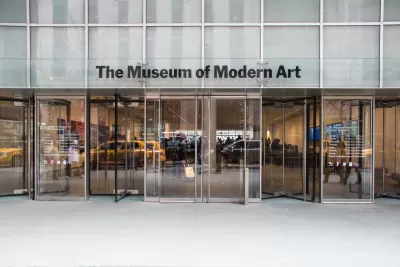
"New York’s Museum of Modern Art (MoMA) is closing its galleries dedicated to architecture and design," reports William Menking. The architecture and design tradition at MoMA stretches back to the 1960s, with "dedicated spaces reserved for its vast—and ever expanding—collection of nearly 30,000 architectural models, works on paper, design objects, and interiors," explains Menking.
Mekning reports on the details of how the demise of the spaces dedicated to architecture and design will play out. One hopeful note from the otherwise dismal news for fans of architecture and design: "The museum is clear to point out that this does not mean the end of large themed traveling or loaned exhibitions devoted to architecture and design." The museum also says it will continue to collect, conserve, and exhibit new architecture and design pieces.
Menking also includes some discussion about the potential positives that could emerge from the decision, as well as the potential inspiration the MoMA has taken from the Tate Modern in deciding to merge architecture and design pieces into a broader art context.
FULL STORY: MoMA to close galleries dedicated to architecture and design

Museum Park Reflects Changing Preferences
Raleigh's North Carolina Museum of Art is redesigning its extensive grounds with an eye toward how public interaction with museums is shifting. Inclusion, sustainability, and brand development are paramount.
Is Los Angeles the Museum Capital of the United States?
Los Angeles County Planner Clement Lau continues his case for proclaiming the City of Angels as the museum capital of the United States.
Who Can Fill L.A.'s Design Leadership Vacuum?
While New York has benefited over the past decade from the design leadership of Michael Bloomberg, Amanda Burden, and Janette Sadik-Khan, Los Angeles sorely lacks such powerful champions. Sam Lubell asks who will step up for L.A.

Planetizen Federal Action Tracker
A weekly monitor of how Trump’s orders and actions are impacting planners and planning in America.

The state-sanctioned urbicide of Austin
People don’t kill cities. Freeways do.

US to reduce Colorado River water deliveries to Mexico
A new Colorado Treaty amendment reduces Mexico’s Colorado River water allocation by 250,000 acre feet.

Baltimore to break ground on $50 million Transit Priority Project
The project will bring faster bus trips, safer streets and better bike connections to Baltimore.

Airbnb launches $250 million 'last-dollar financing' housing accelerator, makes first investment in Austin
The company will put $6.4 million towards affordable housing development in Texas’ capital.

Guerilla urbanists are building DIY bus stop benches in Chicago
A before-and-after of one of the bus stops with a new bench. The new benches are not officially sanctioned or permitted, but the residents who placed them hope they will be the start of a network of DIY benches across the city.

FREE Course: Walkable City 1: Why Walkability?
After describing his path towards focusing on walkability as the essence of good planning, Jeff Speck marches through his five principal reasons for making more walkable places.
Reinventing Malls: Planning Alchemy—Turning Gray Fields Into Gold
The course focuses on the opportunities and imperatives that shape reinvention of mall sites.

Eagle County Government
Harvard University Graduate School of Design
Nashville Planning Department
The Architects Foundation
University of Cincinnati Online
The Pocatello Development Authority
The Urban Renewal Agency of the City of Pocatello
Journal of the American Planning Association