Bernie Sanders may have retained his Brooklyn accent, but his knowledge of the subway seems to have stopped 13 years ago. And Chappaqua resident Hillary Clinton obviously hasn't ridden the subway in ages (if at all) based on her 'swiping' technique.


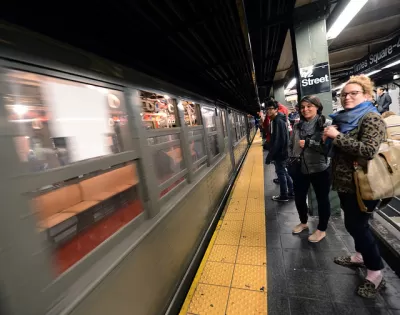
"Bernie Sanders forgot (or revealed that he never knew) that the subway token has long been replaced by a magnetic-swipe MetroCard, and Hillary Clinton had to swipe her card five times* before the turnstile let her in," writes John Raskin, executive director of the Riders Alliance, a grass-roots organization of subway and bus riders in New York City, in a New York Daily News op-ed.
Raskin writes that the subway faces serious challenges, such as "trains that never come, dangerously crowded platforms, mysterious 'train traffic ahead' announcements that keep us sitting in the tunnel for interminable minutes."
Our transit system is like a rock star with a drug problem — overwhelmingly popular but secretly on the verge of collapse. Close to 9 million people ride New York’s subway, bus and commuter rail on an average weekday, and our century-old system is starting to buckle under the strain.
Subway delays due to crowding have skyrocketed and trains have started to break down more often, heralding a slide back toward the bad old days of the 1970s and ’80s. C train cars date to the mid-1960s; many lines use signal technology introduced before World War II.
Planetizen has been following the electrical problems of two of the more modern U.S. subways: the Bay Area Rapid Transit system in northern California, which opened 1972, and Metro in the District of Columbia, which opened four years later. By comparison, the New York Subway, second oldest in the U.S. after Boston's, opened in 1904.
Seeing a nationwide trend, it’s appropriate to look to the federal government for help. And we have a rare opportunity: Leading presidential candidates from both parties are hopscotching across town this week, trying to sell themselves to New Yorkers. Amid all the talk about “New York values” and a looming New York debate, how about a little attention to New York’s pressing problems.
A recent Planetizen post did look at transportation policies of four presidential candidates. While the two Democrats were supportive of increased infrastructure spending, two of the leading Republicans were clearly not of the same mind.
Starting with Senator Ted Cruz, [Next City's Daniel] McGraw notes that the Tea Party favorite has promised to kill funding for the New Starts Transit Program and has already voted against the FAST Act—the first multi-year transportation funding bill passed by Congress since 2005. By contract, Donald Trump has "expressed more than once what seems like jealousy of other countries’ 'super-speed trains'" and has stated, albeit vaguely, that the United States should spend more on mass transit.
Raskin also references the MTA's growing capital deficit despite an approved capital plan. Meanwhile, Gov. Andrew Cuomo's 'wish list' for new, big-ticket projects continues to grow.
*Hillary is certainly not alone in encountering "Swipe Again At This Turnstile,” after a bad swipe, which is one of the reasons why the subway payment system will eventually transition from a "swipe to a tap", writes Emma G. Fitzsimmons for The New York Times. As for tokens, they went out of service in 2003.

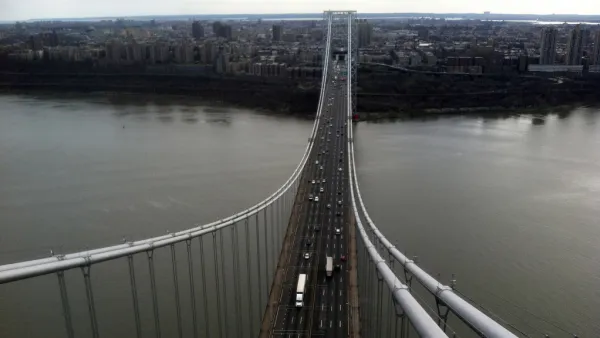
New Jersey Wants an Exemption from Manhattan Congestion Charge
With cordon pricing coming to Manhattan in 2021, New Jersey motorists who pay up to $15 in bridge or tunnel tolls don't want to have to pay another $10 to $14 to drive into the Central District Business tolling zone, but exemptions come with a price.
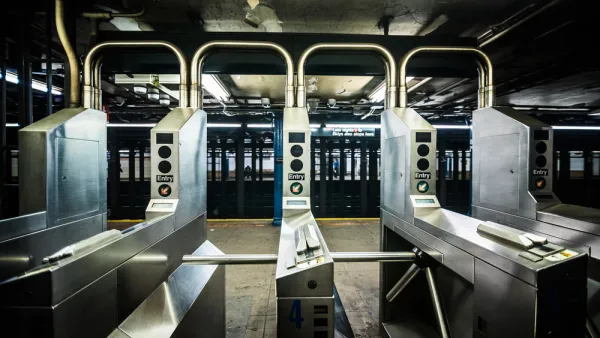
Means-Based, Transit-Fare Discounts Take a Leap Forward in the Big Apple
The 2019 New York City budget includes $106 million to subsidize half the transit fare for qualified residents for six months. The city joins the ranks of Seattle, Toronto, and the Bay Area that offer income-based discounts for transit fares.
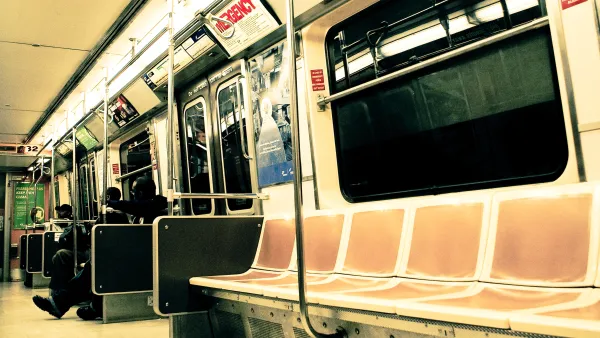
New York MTA to Spend $4 Billion for New Subway Cars
Over 1,600 new subway cars may be ordered, a minimum of 200 with open gangways, by the Metropolitan Transportation Authority. The first 500 will be purchased from the Japanese company, Kawasaki, to be assembled in Yonkers and Lincoln, Nebraska.

Planetizen Federal Action Tracker
A weekly monitor of how Trump’s orders and actions are impacting planners and planning in America.

The state-sanctioned urbicide of Austin
People don’t kill cities. Freeways do.

US to reduce Colorado River water deliveries to Mexico
A new Colorado Treaty amendment reduces Mexico’s Colorado River water allocation by 250,000 acre feet.

LA Metro’s ultimatum: no extra buses for LA28 if federal funding isn’t imminently secured
If Metro does not provide additional buses, LA28 organizers will have to find a new way to manage Olympic traffic. LA28’s budget does not include a line item for transit.

Colorado’s Largest Data Center Could Rise Next to Homes — Without a Public Hearing
The proposed campus would consume 11 times the power of Denver International Airport; as it has across the country, opposition mounts.

5 New England states march closer to 800 megawatt wind energy project
Securing federal approval for the project may be complicated under the Trump administration, which has historically been hostile towards domestic wind power.

FREE Course: Walkable City 1: Why Walkability?
After describing his path towards focusing on walkability as the essence of good planning, Jeff Speck marches through his five principal reasons for making more walkable places.
Reinventing Malls: Planning Alchemy—Turning Gray Fields Into Gold
The course focuses on the opportunities and imperatives that shape reinvention of mall sites.

Eagle County Government
Harvard University Graduate School of Design
Nashville Planning Department
The Architects Foundation
University of Cincinnati Online
The Pocatello Development Authority
The Urban Renewal Agency of the City of Pocatello
Journal of the American Planning Association