We've seen builders responding to high demand for residential housing Manhattan and Seattle, but could it be happening in San Francisco? Sort of, according to San Francisco Chronicle business columnist, Kathleen Pender.


"Could the Bay Area’s housing shortage turn into a surplus?" asks Pender. "Given the number of high-density residential projects that seem to be popping up everywhere, the answer might seem to be yes."
Pender reports on housing permit figures in the five-county San Francisco metro area, consisting of Marin, San Francisco, San Mateo, and in the East Bay's Alameda and Contra Costa counties. Permits "are considered a decent proxy for new housing supply because developers don’t usually pull them until they are ready to break ground. The permit doesn’t typically say whether the home will be for sale or rent."
In the first two months of this year, 2,173 units were permitted, up 89 percent from the same period last year.
Last year, building permits for a total of 12,766 single or multifamily housing units were issued in the San Francisco metro area, 28 percent more than in 2014, according to U.S. Census Bureau data.
A quick look at The Chronicle's map, charts and city list of nine-county Bay Area housing permits points to the three main counties where building is occurring in the nine-county Bay Area: Santa Clara, San Francisco, and Alameda (in order), and the two cities of San Jose (Santa Clara County) and San Francisco.
What's somewhat startling is that the Bay Area's third largest city, Oakland, and second largest in the SF Metro Area and eighth in the state, shows a mere 1,332 permits pulled in the three years from 2013 to 2016. Recent articles may have given the impression of a boom underway there. The only boom would appear to be in rents in light of increasing demand and stalled construction.
Sign of a glut: free rent?
Back on the other side of the Bay, where much high density residential construction is underway, Pender reports on two projects, which, I might add, I ride by on my weekend trips in San Francisco as they are both close to the Caltrain depot. I appreciated seeing the rental prices.
In San Francisco, developer Equity Residential is offering one month free rent at the new Azure Apartments in Mission Bay and at Potrero 1010, a 453-unit complex going up by the Interstate 280 extension. One-bedroom apartments at the Azure start at $3,825 a month. At 1010 Potrero, the most affordable unit is a studio for $2,950.
Now a "glut of affordable $3,825 one-bedrooms and $2,950 studios" may not do much for most folks, but consider the market for these rentals. Per San Francisco Business Times:
Azure Apartments, which includes the tower and a completed five-story low-rise structure, offers 273 units and 396,200 square feet of for-lease residential space targeted to young (and well-paid) professionals commuting to the city’s Financial District and South Bay, said representatives from project developer Equity Residential.
However, as has been posted earlier, these projects moderate rental price increases elsewhere and "indirectly add to low income housing" in the city.
Pender also goes into depth tackling the other side of the housing market — demand, by looking at job creation data, which is largely driving the Bay Area housing market. "[B]uilding (housing) alone is no guarantee that prices will fall," explains Pender.
“It’s almost like adding an additional lane to a highway,” said Christopher Thornberg, founding partner of Beacon Economics. When you add a lane, traffic may not improve much because it encourages more people to drive. Likewise, when you build more housing, you encourage more people to move to California.
While I appreciate Thornberg's highway analogy, because he certainly gets that part right, I'd put the housing supply and demand relationship in a different way. When you build more housing, you may encourage more people to remain in the Bay Area who would otherwise leave.
Read the full story: Bay Area building boom may not end housing shortage

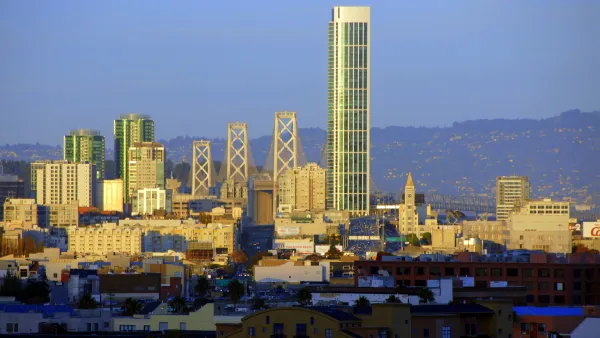
San Francisco Apartment Supply Catching up to Demand, If only Temporarily
If you can afford it, now would be a good time to move to San Francisco and rent in a new, high-end apartment building. Rents will still be among the highest in the country, but property owners are offering many perks.
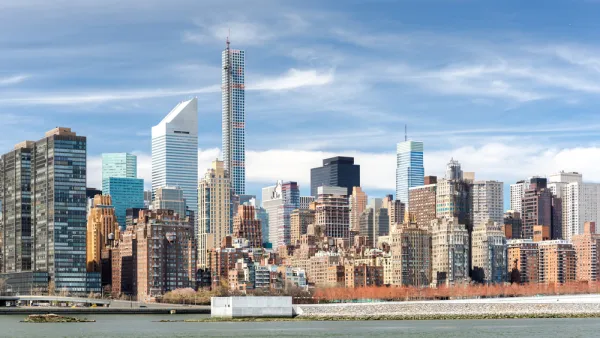
Manhattan's Glut of Condos Now a Glut of Apartments
Despite concerns than foreign investors would snatch up expensive condo properties around Manhattan, keeping the supply our of reach of local renters, analysts report rental prices are dropping as new supply enters the market.
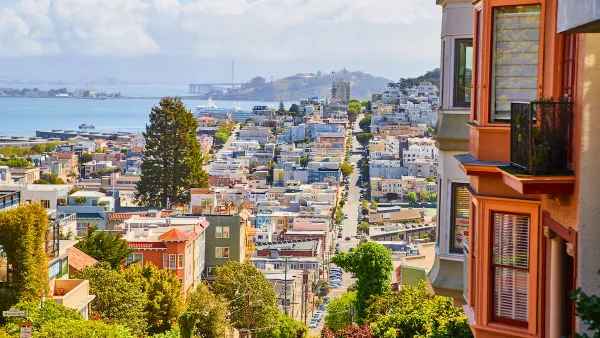
San Francisco Required to Change Restrictive Housing Approval Policies
State agencies want the city to speed up its alarmingly slow permitting process.

Planetizen Federal Action Tracker
A weekly monitor of how Trump’s orders and actions are impacting planners and planning in America.

‘Going backwards:’ Baltimore mayor, students rally against state's transit funding plan
Maryland's proposed six-year plan provides no funding for Baltimore’s BMORE bus program and reduces its road maintenance funding.

Detroit to transform waterfront with $2.2 billion investment
Developers will convert about 18 acres of unused parking lot space into civic spaces.

This Boston neighborhood is filling its roads with obstacles — intentionally
Somerville is embracing ‘extreme street makeovers’ to make its roads safer for pedestrians and cyclists.

Planned $2 billion courthouse in MA sparks tension with local government
Springfield owns an essential piece of the land developers intend to build on, and some city officials do not want to see the project come to fruition.

Californians can now transform balconies into power generators
Gov. Gavin Newsom has legalized plug-in solar technology, which allows residents to plug solar panels directly into their outlets

FREE Course: Walkable City 1: Why Walkability?
After describing his path towards focusing on walkability as the essence of good planning, Jeff Speck marches through his five principal reasons for making more walkable places.
Reinventing Malls: Planning Alchemy—Turning Gray Fields Into Gold
The course focuses on the opportunities and imperatives that shape reinvention of mall sites.

City of Thousand Oaks
City of Wisconsin Rapids
Harvard University Graduate School of Design
The Architects Foundation
University of Cincinnati Online
Northern Illinois Transit Authority (NITA)
The Pocatello Development Authority
The Urban Renewal Agency of the City of Pocatello