According to critic James Russell, Long Island City has come to resemble the new metropolises of Asia. A frenetic jumble of old and new, the area's "dystopian" qualities aren't all bad.


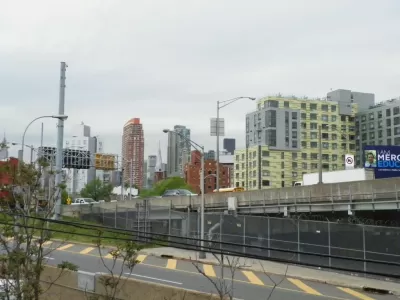
While James Russell considers Long Island City to be mildly dystopian, it's a dystopia that grows on you. With a built environment reflecting the diversity of its inhabitants and uses, the area is transcending its previous status as a way into Manhattan.
Russell sees a fascinating parallel between this section of New York and the wave of urbanization sweeping the world. "Long Island City, which has seemed to exist only to feed rail and roads to Manhattan, now is convulsively transforming into the kind of opportunistic urban mashup that resembles the new skyscraper cities of Asia and the Middle East as much as New York."
Poking up amidst older buildings, luxury high-rises attract criticism. "Considering they are advertised as luxury product and command spectacular views, the towers, enabled by recent high-density rezoning, could not be lazier exercises in developer cynicism. With proportions ranging from merely dull to ungainly, they advertise mainly their cost-cutting compromises."
Russell emphasizes a constant interplay between old and new uses. "Dutch Kills Green is a lush patch of park at Queens Plaza that would be an absolute oasis but for the screech of elevated trains overhead. Blocks from MoMA PS 1 is the SculptureCenter, a trolley-car garage converted to gorgeous brick-faced galleries full of slanting daylight."
Read the full story: In Long Island City Real Estate Thrives on Dystopia
Mayor de Blasio Stresses Affordable Housing in State of the City Address
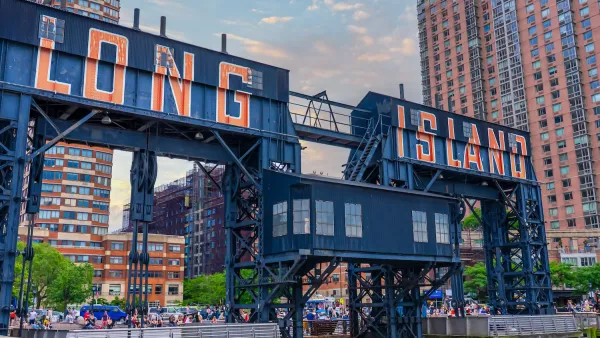
In his State of the City Address on Feb. 3, the New York City mayor made it clear that his overriding priority is affordable housing. He targeted six neighborhoods in all five boroughs where development will be required to include affordable housing.
Upzoning Could Bring 15K New Homes to Queens
A rezoning plan for Long Island City opens up prime waterfront land for residential development, but some critics say new housing could be prone to flooding and should be built farther inland.
Measuring the Coronavirus Effect on Development in Brooklyn, Queens
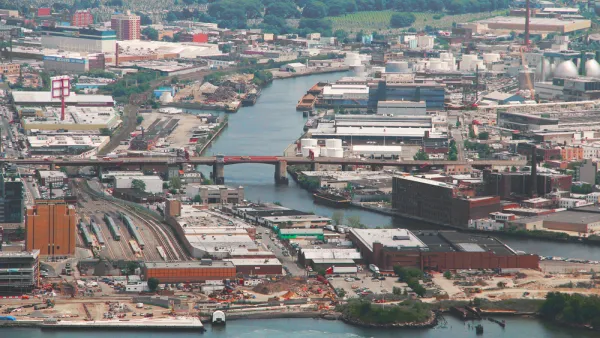
Two development markets charged by an early 2000s rezoning will test the reach of the coronavirus in New York City's development market.

Desperate measures: Advocates weigh draining Lake Powell to fill Colorado River
Draining the reservoir could reduce evaporation losses by a couple hundred thousand acre-feet.

Eastern Nebraska is running out of electricity
Data centers and electrification are straining eastern Nebraska’s grid, throttling economic development.

Move over, LA: St. Louis gears up for Olympics, invests millions in downtown redevelopment
The Missouri city will host the 2028 Olympic soccer group stage and knockout matches.

Mass. votes against statewide minimum lot size for single-family homes
Over 2 million residents voted on Question 7; it was decided by just over 30,000 votes.

Maryland’s $15 billion bridge project gains key approval
The Maryland Transit Authority said the project will create over 60,000 jobs and add $23 billion to the local economy.

‘No clear next steps’ for Chicago's permanent festival grounds
Eleventh Ward Ald. Nicole Lee has suggested Soldier Field as a possible location for the permanent event space.

FREE Course: Walkable City 1: Why Walkability?
After describing his path towards focusing on walkability as the essence of good planning, Jeff Speck marches through his five principal reasons for making more walkable places.
Reinventing Malls: Planning Alchemy—Turning Gray Fields Into Gold
The course focuses on the opportunities and imperatives that shape reinvention of mall sites.

City of Rosemead
Rutgers University, Edward J. Bloustein School of Planning and Public Policy
One Hundred Miles
University of Michigan School for Environment and Sustainability (SEAS)
Hunter College, City University of New York (CUNY)
The Architects Foundation
City of Cambridge
Montrose County
The Pocatello Development Authority