The MS4 Permit was designed as a way to clean up urban stormwater runoff in Southern California. Many of the smaller cities in the region, however, are struggling to pay the bill to cover the permits costs.


Local governments and state representatives in Southern California are working "to figure out what they can do to help cities pay for a plan that could reach $20 billion over 20 years for the 88 cities in Los Angeles County," according to an article by Steve Scauzillo.
State senators Ed Hernandez, D-West Covina, and Bob Huff, R-San Dimas, recently joined "city managers, mayors, city attorneys as well as staff members from the Los Angeles Regional Water Quality Control Board" for a meeting to examine potential solutions to the funding problems cities have encountered as a result of the Municipal Separate Storm Sewer System Permit (MS4 Permit). Local governments "have voiced complaints that permits required to rid toxic chemicals and bacteria from storm water imposed staggering costs that could bankrupt smaller cities."
Scauzillo cites the example of Monrovia, which faces a price tag of $231 million for its stormwater permits. That works out to more than $1,300 per parcel in the city. Adds Scauzillo: "The cost for the small, foothill city of Bradbury is more than $60 million. Santa Clarita would pay $499 million. The city of Hawthorne would be forced to pay $193 million over 10 years."
Scauzillo includes some of the potential solutions for the problem discussed during the meeting, and more background on the environmental concerns the permit attempts to address.
Read the full story: LA County cities have a $20 billion storm water cleanup bill but they want help

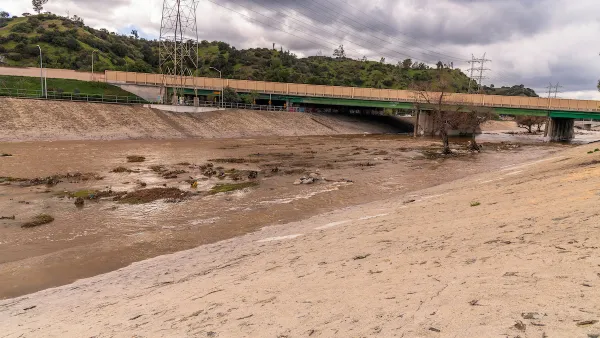
Los Angeles County Making Progress in Stormwater Capture
During this “super year” of storms, L.A. County has successfully captured 96 billion gallons of stormwater which is enough to meet the needs of about 2.4 million people a year.
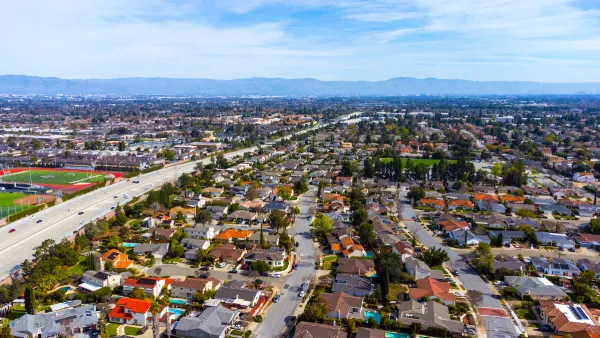
A Win for Single-Family Zoning in California
Five Southern California charter cities need not worry about lot splitting in their single-family zoned neighborhoods thanks to a Los Angeles County superior court ruling on April 22. Depending on a forthcoming ruling, 120 cities may join them.
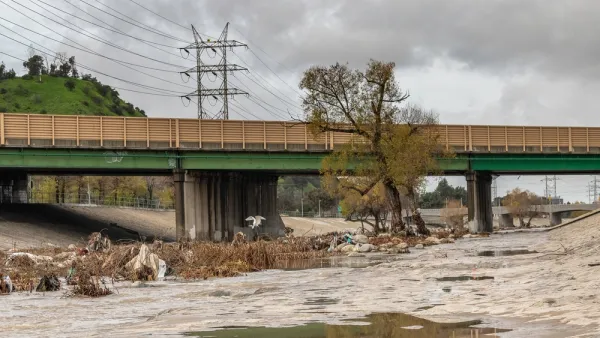
Downpours Yield 33 Billion Gallons of Captured Stormwater in L.A. County
County officials hope reclamation efforts will help the region reduce its dependence on imported water supplies.

Planetizen Federal Action Tracker
A weekly monitor of how Trump’s orders and actions are impacting planners and planning in America.

Amtrak, CN end decades-long dispute with eight-year agreement
The new operating agreement establishes an updated framework for the companies to work together, including processes to resolve disputes.

Judges permit Denver to divert 77,000 acre feet from the Colorado River for reservoir expansion
Overuse and climate change have caused the Colorado River’s water levels to plummet.

Idaho may see an 18% drop in federal surface transit funding — the largest estimated cut in the US
Transit systems in rural communities are much more reliant on federal funding to provide their services.

How ‘post-disaster gentrification’ alters neighborhoods after natural calamities
After hurricanes, fires or other calamities, the original residents of a community are often replaced by younger, wealthier residents.

Maryland local governments examine if they should have more power to raise property taxes
Maryland’s housing market is out of reach for the majority of moderate-income residents.

FREE Course: Walkable City 1: Why Walkability?
After describing his path towards focusing on walkability as the essence of good planning, Jeff Speck marches through his five principal reasons for making more walkable places.
Reinventing Malls: Planning Alchemy—Turning Gray Fields Into Gold
The course focuses on the opportunities and imperatives that shape reinvention of mall sites.

Harvard University Graduate School of Design
KFH Group Inc.
Greater Baltimore Committee
The Architects Foundation
University of Cincinnati Online
The Pocatello Development Authority
The Urban Renewal Agency of the City of Pocatello