County officials hope reclamation efforts will help the region reduce its dependence on imported water supplies.


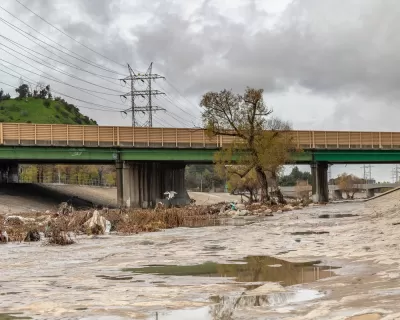
Los Angeles County captured 33 billion gallons of stormwater from the recent rains that drenched California, an amount that “could supply 816,000 people with water for a year,” reports Carlos Granda for ABC7. As Granda explains, “The county Public Works Department operates 14 major dams and 620 miles of rivers and flood control channels.”
One way the county collects rainwater during storms is through a series of ‘Valley Rubber Dams’ on the San Gabriel River, which can be inflated to hold water when needed. Water is then distributed to spreading facilities designed to let water soak into the earth to replenish groundwater supplies. “Approximately 98% of stormwater runoff collected from the San Gabriel River and Rio Hondo Channel is conserved, according to officials.”
Local officials plan to boost stormwater retention and use more local water supplies to reduce dependence on imported water. Southern California has historically drawn water from the state’s Owens Valley, the Colorado River, and other sources such as Mono Lake, where a conservation nonprofit recently requested a suspension of water diversion to Los Angeles to protect the lake’s critical Califoprnia gull habitat.
FULL STORY: LA County captures 33 billion gallons of stormwater from winter storms

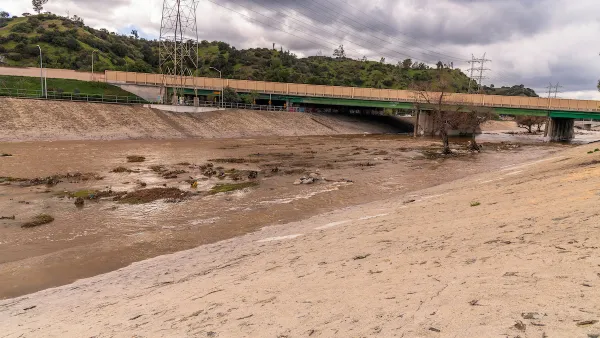
Los Angeles County Making Progress in Stormwater Capture
During this “super year” of storms, L.A. County has successfully captured 96 billion gallons of stormwater which is enough to meet the needs of about 2.4 million people a year.
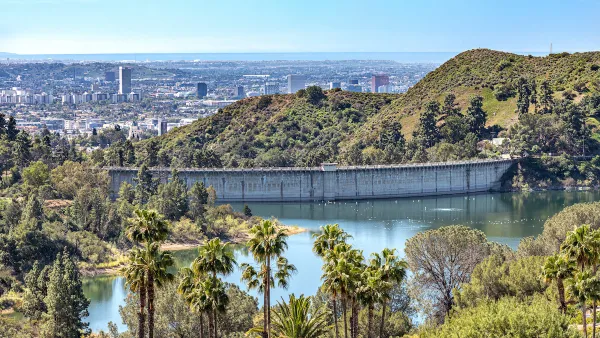
California's Stormwater Potential
A new study reveals that if California could collect and treat more stormwater in cities, it could provide enough water to supply a quarter of the state’s urban population.
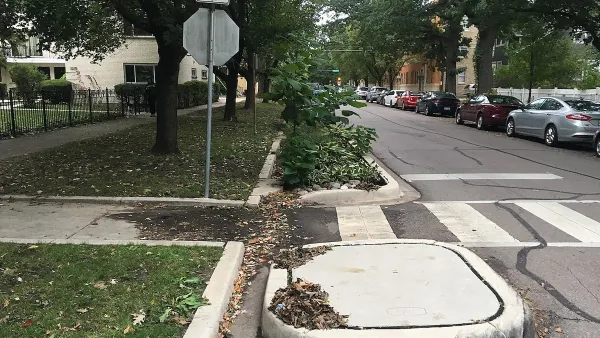
How Capturing Rainwater Can Make Cities Safer, More Resilient
Green infrastructure can help prevent flooding and replenish groundwater supplies, preventing subsidence that makes land sink.

The state-sanctioned urbicide of Austin
People don’t kill cities. Freeways do.

US to reduce Colorado River water deliveries to Mexico
A new Colorado Treaty amendment reduces Mexico’s Colorado River water allocation by 250,000 acre feet.

New Jersey’s second-largest city bans standalone data centers
Jersey City will continue to allow co-location facilities, such as those meant for research institutions that store their own data.

Amtrak not solely to blame for New Jersey commuter rail's unreliability, report finds
A new study from the Garden State Initiative found that NJ Transit’s budget grew 20% across a 4 year period, but reliability declined significantly over the same period.

EPA erases limits on planet-warming pollution from power plants
Under Monday’s plan, power plants would still have some limits on how much mercury, arsenic and other contaminants they can emit.

Phoenix announces new on-demand transit service, more frequent RAPID buses
Both new services will launch in October, and are part of Phoenix's Project Effective Access Solutions for Easing Congestion.

FREE Course: Walkable City 1: Why Walkability?
After describing his path towards focusing on walkability as the essence of good planning, Jeff Speck marches through his five principal reasons for making more walkable places.
Reinventing Malls: Planning Alchemy—Turning Gray Fields Into Gold
The course focuses on the opportunities and imperatives that shape reinvention of mall sites.

Eagle County Government
Harvard University Graduate School of Design
Nashville Planning Department
The Architects Foundation
University of Cincinnati Online
The Pocatello Development Authority
The Urban Renewal Agency of the City of Pocatello
Journal of the American Planning Association