An article details the nascent successes of an innovative program by Washington, D.C. to fund green infrastructure improvements to its stormwater and wastewater systems.


Julian Spector details the ongoing work in Washington, D.C. to overhaul the city's stormwater and wastewater systems with green infrastructure, such as "rain gardens, green roofs, permeable surfaces, and leafy drainage ditches known as bioswales that filter and store extra rainwater…"
Critical to the effort, and the focus of Spector's coverage, is the funding mechanism created by the District Department of Energy and Environment, namely a retention credit systemthat establishes a market for stormwater retention. The article details the challenges in establishing a market for stormwater retention and some of the solutions both government agencies and the private sector have found for those challenges since 2014, when trading started. Especially important in scaling up the program has been a $1.7 million investment by Prudential that will allow District Stormwater to "install green infrastructure in places deemed most ecologically beneficial, and then sell the credits." Spector adds, "If it succeeds in turning a profit, Prudential will recoup its investment, plus interest, and the approach could be considered for other cities…"
FULL STORY: Turning Stormwater Runoff Into Everyone's Business

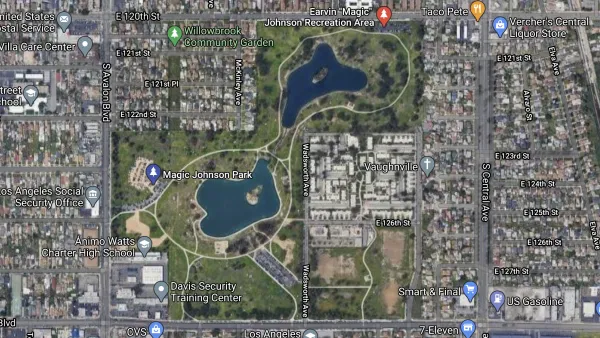
South Los Angeles Park Offers Hidden Benefits
Not only does the redevelopment of a large section of Earvin Magic Johnson Park in Willowbrook offer much needed green space and new amenities, it also helps to conserve water and improve water quality.
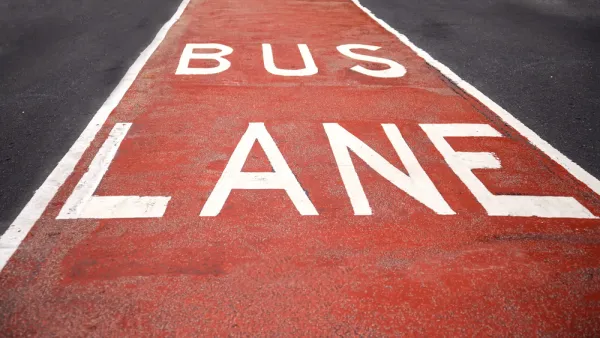
New Bus-Only Lanes Arrive in D.C.
The new bus lanes will operate at morning and afternoon rush hours starting today.
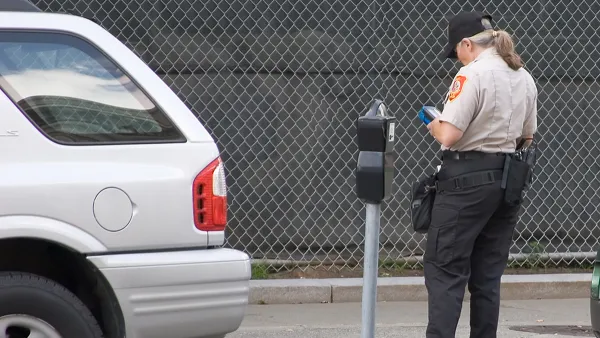
Vision Zero Proposal Includes Citizen Parking Enforcement
One perhaps overlooked detail of an ambitious Vision Zero bill proposed last week for Washington, D.C.: a provision that would allow ordinary citizens to issue parking tickets.

Planetizen Federal Action Tracker
A weekly monitor of how Trump’s orders and actions are impacting planners and planning in America.

The state-sanctioned urbicide of Austin
People don’t kill cities. Freeways do.

US to reduce Colorado River water deliveries to Mexico
A new Colorado Treaty amendment reduces Mexico’s Colorado River water allocation by 250,000 acre feet.

5 New England states march closer to 800 megawatt wind energy project
Securing federal approval for the project may be complicated under the Trump administration, which has historically been hostile towards domestic wind power.

Baltimore to break ground on $50 million Transit Priority Project
The project will bring faster bus trips, safer streets and better bike connections to Baltimore.

Airbnb launches $250 million 'last-dollar financing' housing accelerator, makes first investment in Austin
The company will put $6.4 million towards affordable housing development in Texas’ capital.

FREE Course: Walkable City 1: Why Walkability?
After describing his path towards focusing on walkability as the essence of good planning, Jeff Speck marches through his five principal reasons for making more walkable places.
Reinventing Malls: Planning Alchemy—Turning Gray Fields Into Gold
The course focuses on the opportunities and imperatives that shape reinvention of mall sites.

Eagle County Government
Harvard University Graduate School of Design
Nashville Planning Department
The Architects Foundation
University of Cincinnati Online
The Pocatello Development Authority
The Urban Renewal Agency of the City of Pocatello
Journal of the American Planning Association