Writer Alex Marshall looks to Kitsilano, a Vancouver neighborhood, for urban infill done right. Skyscrapers and mid-rise developments aren't always necessary to achieve more people per square foot.


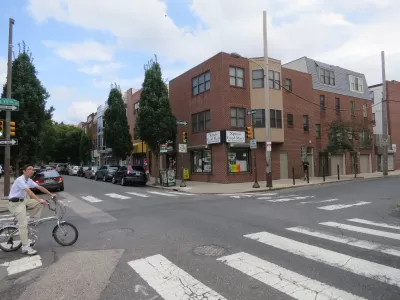
Outside planning circles, the prospect of dense development often conjures visions of high-rises, parking structures, and traffic: an end to tranquility. Alex Marshall discusses ways to compromise.
In the Vancouver neighborhood of Kitsilano, "Developers and architects have gotten good at swelling these homes with additional rooms and floors without much altering their curb appearance. Along back alleys, new freestanding homes, locally called 'laneway houses,' have been added."
This kind of infill can radically increase density without changing how an area looks too much. "The one thing that hasn't come to Kitsilano, however, is new tall buildings. The scale and character of the neighborhood has stayed much the same as it was when artists and hippies rediscovered the rundown area in the 1960s."
Marshall suggests shared parking as a means to capitalize on square footage that now goes unused. "What is exciting is that technology, similar to that which is making Zipcars and Uber-style services possible, will probably make sharing a parking space easier."
Read the full story: When Height's Not Right for Urban Planning

Seattle Adopts a New Growth Plan, but Major Zoning Battles are Just Beginning
Approving the comprehensive plan update is just the first step in rewriting the city’s zoning code to accommodate more density and affordable housing.
Seattle’s Zoning Reform Could Unlock a ‘Multiplex Boom’
A package of stackable density bonuses could make it easier for developers to build 12-plexes.
Seattle’s Upzoning Plan is Ambitious, Light on Details
The city passed a ‘bare-bones’ framework to comply with state housing laws that paves the way for more middle housing, but the debate over how and where to build is just getting started.

Planetizen Federal Action Tracker
A weekly monitor of how Trump’s orders and actions are impacting planners and planning in America.

Amtrak, CN end decades-long dispute with eight-year agreement
The new operating agreement establishes an updated framework for the companies to work together, including processes to resolve disputes.

Judges permit Denver to divert 77,000 acre feet from the Colorado River for reservoir expansion
Overuse and climate change have caused the Colorado River’s water levels to plummet.

NYC DOT wants faster, more permanent street upgrades
The city is examining ways to build more concrete infrastructure without getting entangled in 'decades-long' projects.

'Something we’ve never seen before:' rising utility rates could strain city finances nationwide
Data centers, climate change and other factors have caused utility rates in the United States to increase by 38% since 2020.

Trump to overrule local leaders, lease millions of acres of America’s Pacific Island territories’ seafloors to mining companies
International law says that the Indigenous people of America’s territories have a right to prior and informed consent regarding projects that impact their countries.

FREE Course: Walkable City 1: Why Walkability?
After describing his path towards focusing on walkability as the essence of good planning, Jeff Speck marches through his five principal reasons for making more walkable places.
Reinventing Malls: Planning Alchemy—Turning Gray Fields Into Gold
The course focuses on the opportunities and imperatives that shape reinvention of mall sites.

Harvard University Graduate School of Design
KFH Group Inc.
Greater Baltimore Committee
The Architects Foundation
University of Cincinnati Online
The Pocatello Development Authority
The Urban Renewal Agency of the City of Pocatello