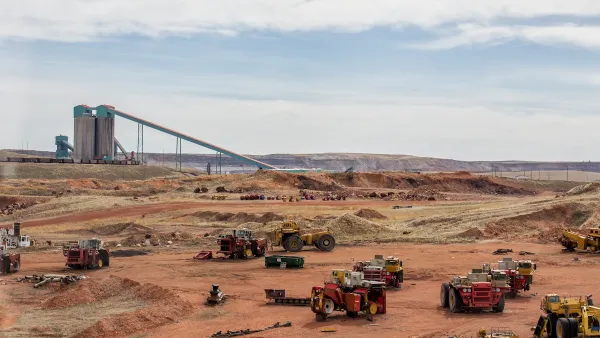
Arch Coal's plans to develop a mine in Otter Creek Valley, east of Billings, is the latest casualty in the death throes of the coal industry.


"Arch Coal suspended its application for a major mine in southeastern Montana on Thursday, two months after the mining giant filed for bankruptcy protection and amid broader struggles for the coal industry that have reversed its once-bright prospects in the state," reports Matthew Brown.
Mike Dennison reported on the project back in 2010, when the "state Land Board…voted 3-2 Thursday to approve leasing 570 million tons of state-owned coal for development of a mine in southeastern Montana’s Otter Creek Valley." That approval came despite 45 minutes of anti-mining protest at the beginning of the hearing. St. Louis-based Arch Coal Inc. paid a $85.8 million up-front bid for a ten-year window to develop the mine, located 150 miles east of Billings.
Back to 2016: Brown reports that the demise of the project was preceded by a decision last year to put a $400 million railroad to the mine on indefinite hold. "The loss of the two projects sinks near-term hopes for a coal-fueled economic boom in southeastern Montana," according to Brown.
The article also includes details on how the decision to end the project will affect the state's gubernatorial race. Elizabeth Harball and Madelyn Beck reported in a separate article about how the Obama Administration's climate rule is affecting the politics of that campaign.
Read the full story: Bozeman Daily Chronicle


Feds Finally Kill $400 Million Tongue River Coal Railroad Proposal
The unraveling of the coal industry, as exemplified by the demise of Arch Coal, was on display again as federal regulators put the final nail in the coffin of a proposed coal railroad.
Plans Nixed for a Proposed Rail Line to Move Coal from Montana
The sudden collapse of the coal industry has been as swift as it has been shocking.
A Win for ‘Keep it in the Ground’
Coal mining in Wyoming will take a major hit as a result of a U.S. Department of Interior plan to cease future leasing of coal mines in the nation's most productive coal mining basin. The decision casts a spotlight on the presidential election.

Planetizen Federal Action Tracker
A weekly monitor of how Trump’s orders and actions are impacting planners and planning in America.

‘Going backwards:’ Baltimore mayor, students rally against state's transit funding plan
Maryland's proposed six-year plan provides no funding for Baltimore’s BMORE bus program and reduces its road maintenance funding.

Detroit to transform waterfront with $2.2 billion investment
Developers will convert about 18 acres of unused parking lot space into civic spaces.

HUD, USDA agree on framework to simplify housing environmental review standards
Their agreement is a requirement of the 21st Century ROAD to Housing Act.

Cost of water rising at a faster pace than inflation, median household income
California and Maryland residents have seen their water bills grow especially high.

NYC building owners overwhelmingly comply with new emissions limits
The New York City Department of Buildings is fining owners who did not file emissions reports.

FREE Course: Walkable City 1: Why Walkability?
After describing his path towards focusing on walkability as the essence of good planning, Jeff Speck marches through his five principal reasons for making more walkable places.
Reinventing Malls: Planning Alchemy—Turning Gray Fields Into Gold
The course focuses on the opportunities and imperatives that shape reinvention of mall sites.

planning NEXT
City of Thousand Oaks
City of Wisconsin Rapids
The Architects Foundation
University of Cincinnati Online
Northern Illinois Transit Authority (NITA)
The Pocatello Development Authority
The Urban Renewal Agency of the City of Pocatello